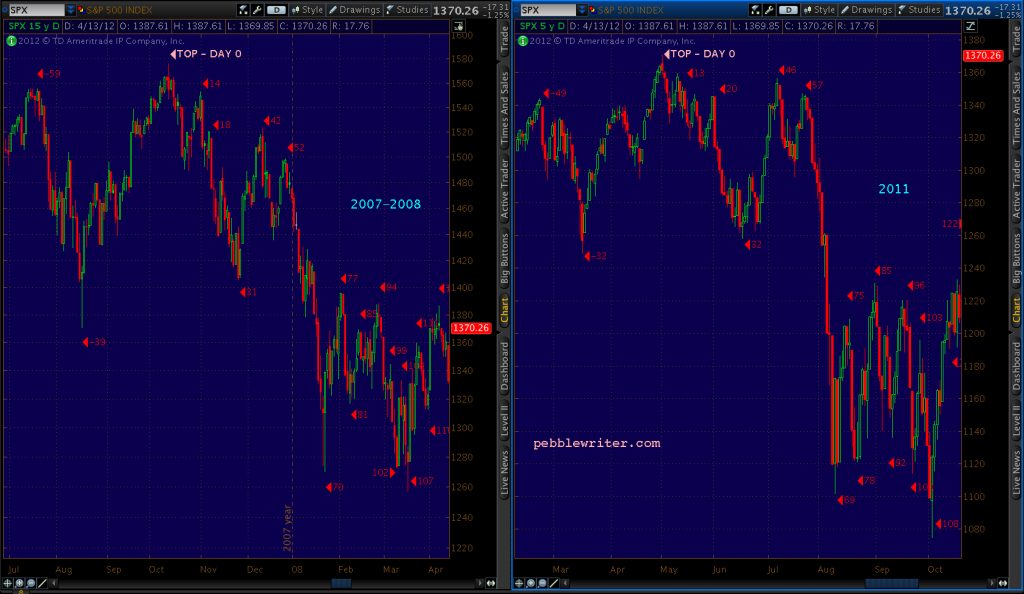

PCE came in below expectations. Headline was -0.1% MoM and 2.6% YoY. Core was +0.1% and 3.2% YoY. This was the smallest rise since April 21, and offers the Fed additional room to consider cuts in 2024 should the trend continue. Futures added to modest gains after the print. The key issue remains: whether the moderating inflation trend can continue unabated.
continued for members…
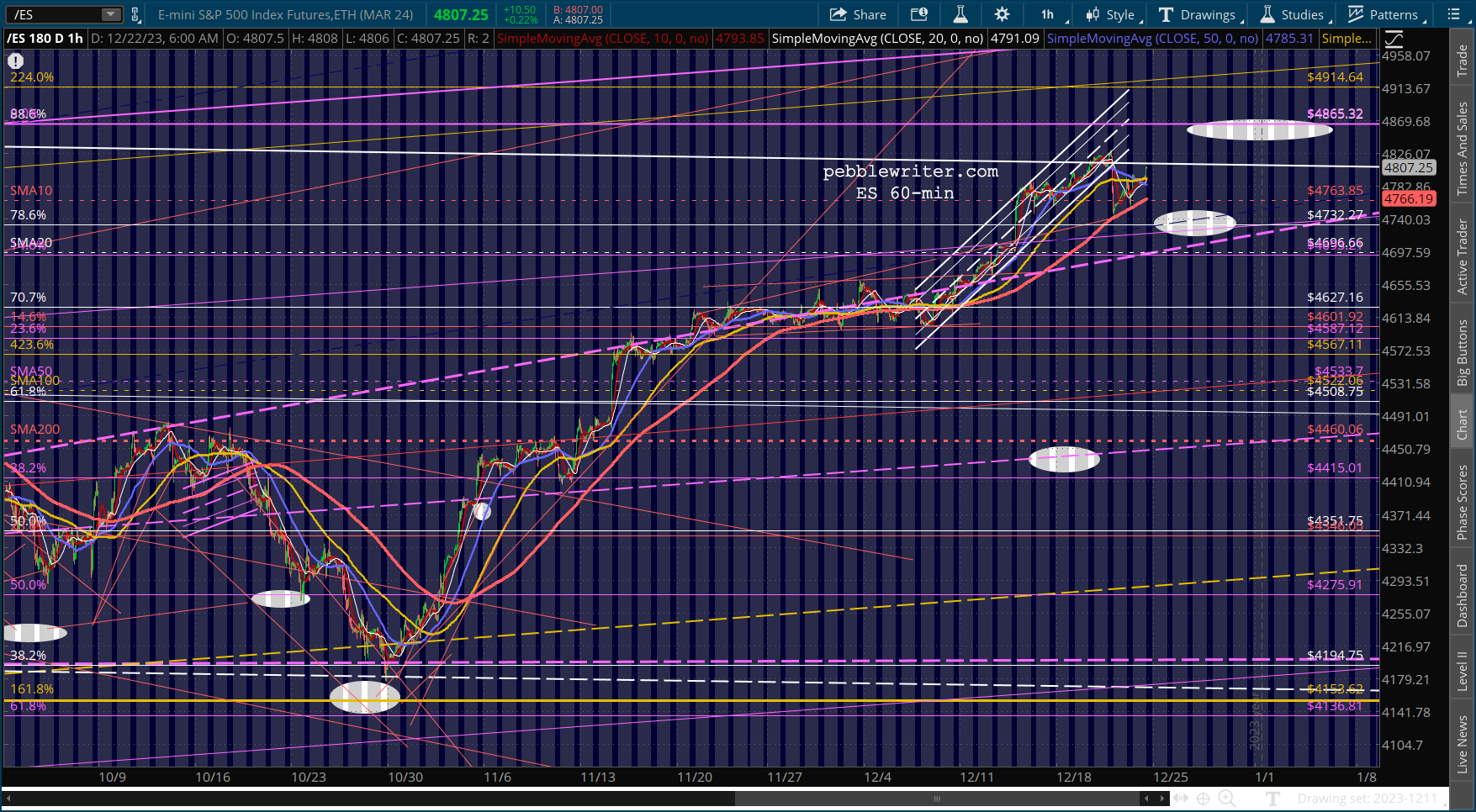
 SPX recently came within 50 points of its all-time highs.
 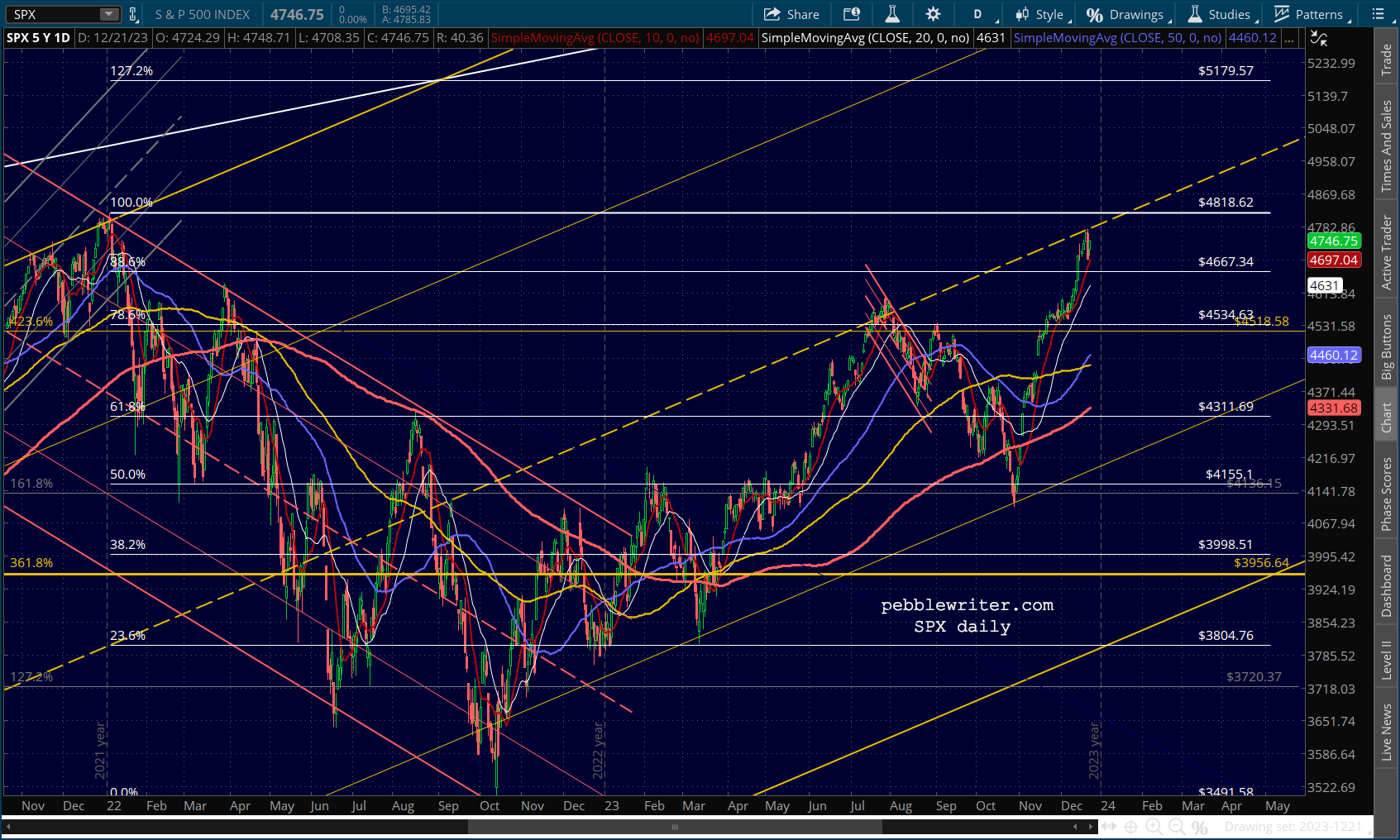 Though VIX has broken out, it faces signficant resistance at its SMA200 – currently at 16.22.
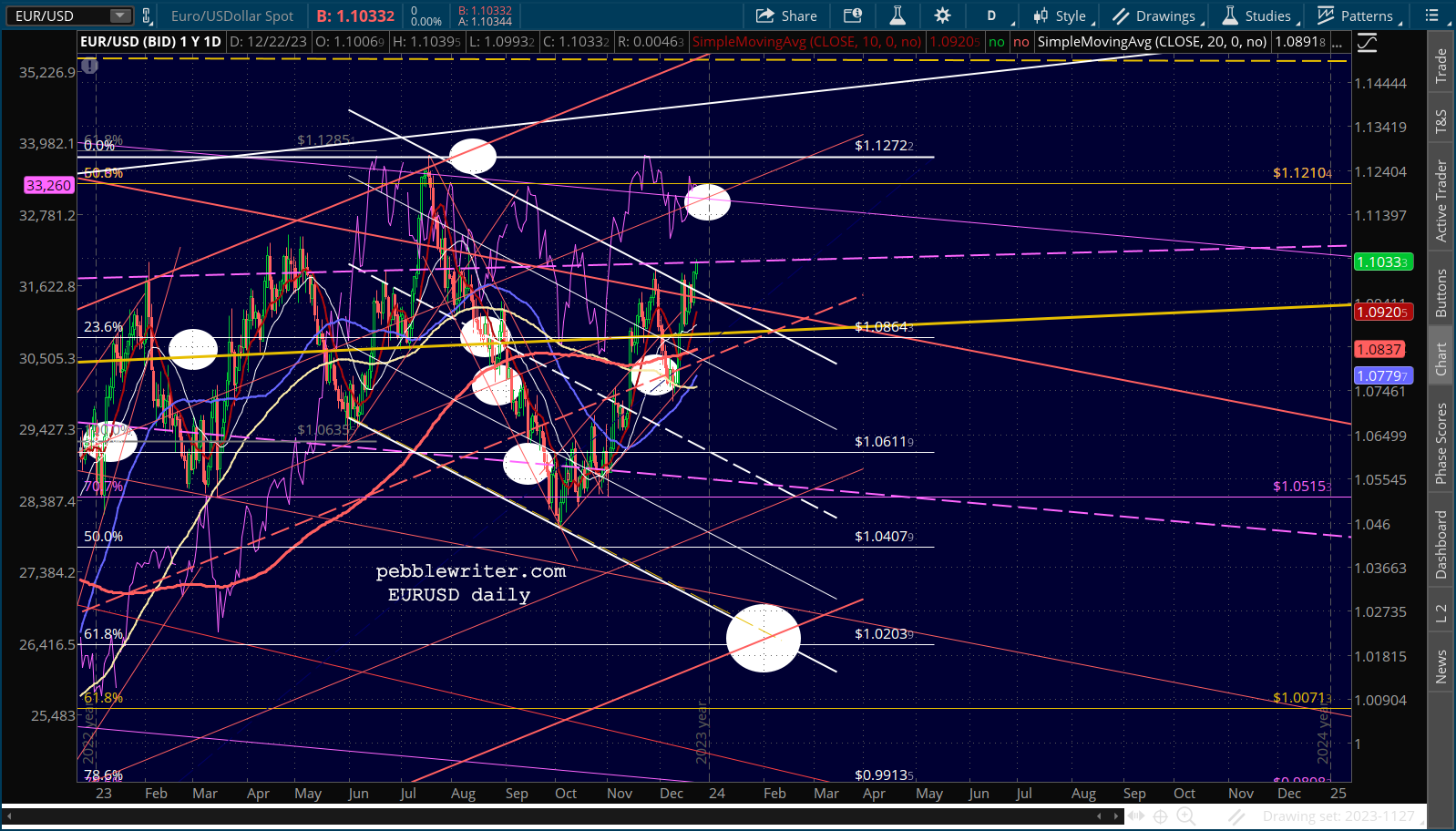
 EURUSD is making like it’s breaking out, but runs into a lot of resistance between here and 1.12.
 USDJPY still looks like it wants to backtest 137.90 – 140. DXY’s action this morning is suggestive of a breakdown. If it closes at these levels, we’ll look for 98.98.
  GC and SI have both rebounded from recent backtests – more on global unrest than inflation concerns.
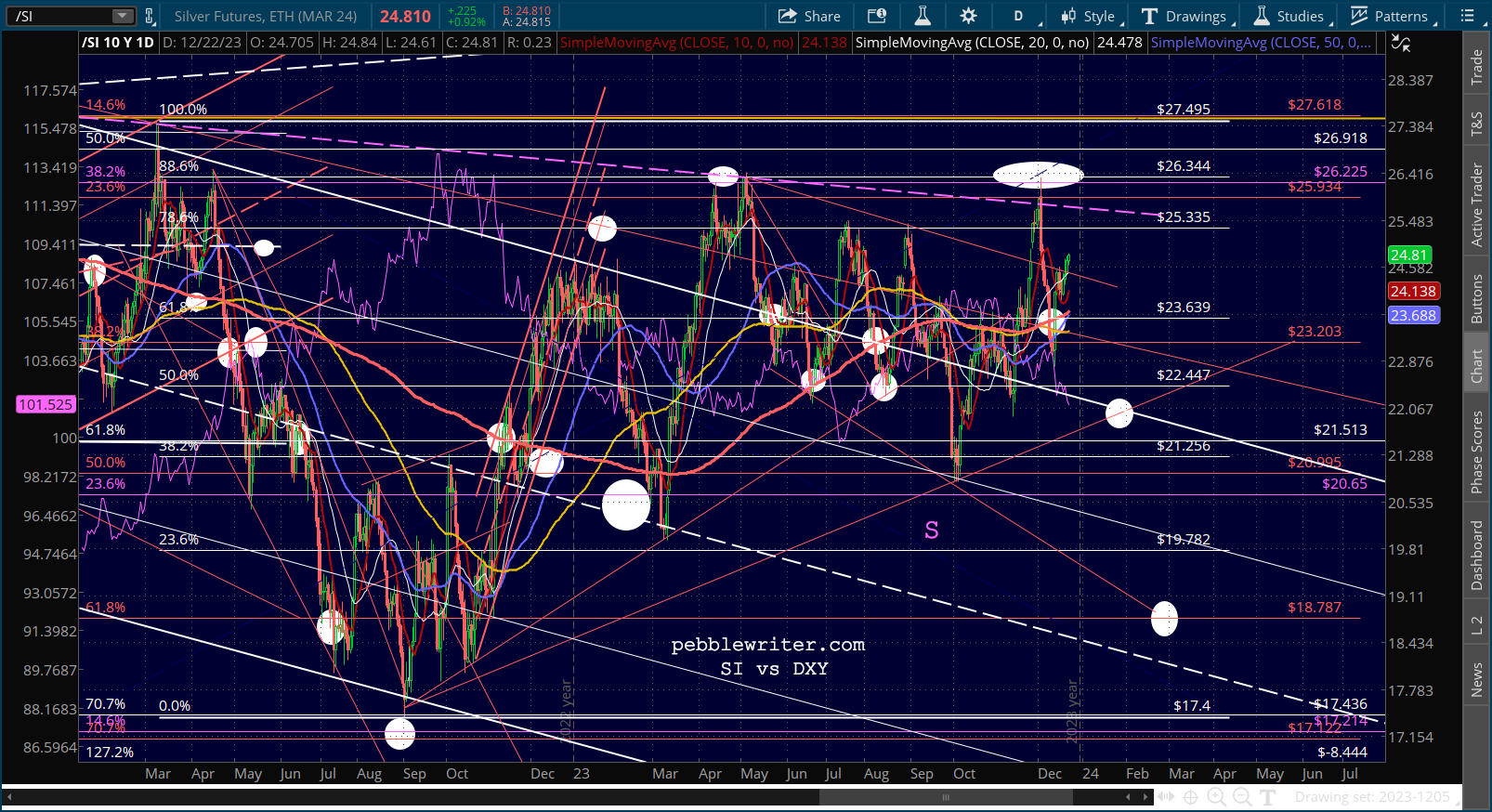 Ditto for CL/RB, which both getting bid on increasing tensions in the Middle East.
 The 10Y continues to slump thanks to lower inflation prints and flows.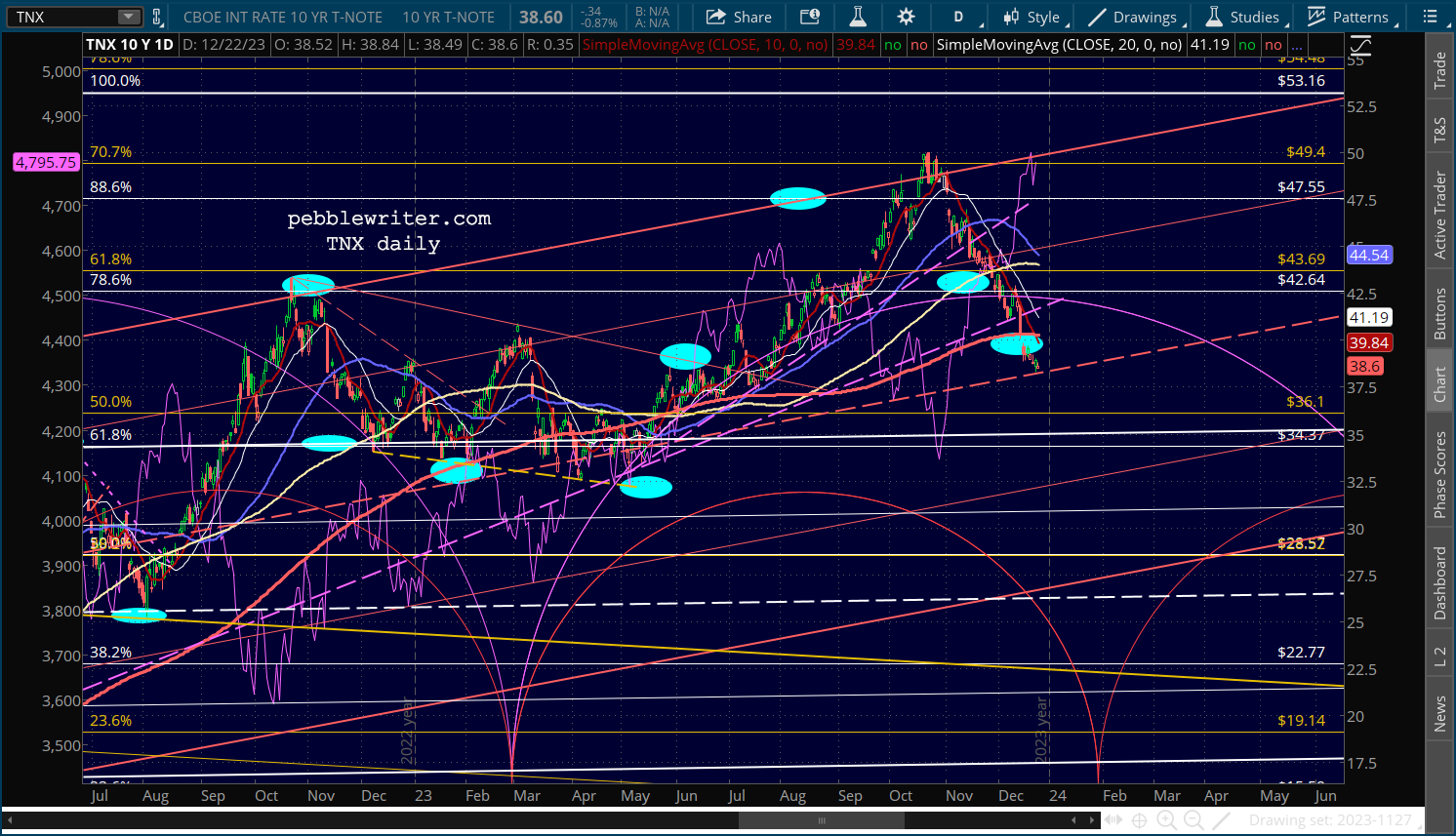
 I’m going to take next week off while working on a year-end review and a look ahead at 2024 that I plan to post on Dec 29. Should anything unexpected happen, I’ll let everyone know.
We’ve had a terrific year here on pebblewriter. As always, I appreciate everyone’s support. I wish everyone a safe, peaceful holiday and a 2024 full of much happiness and prosperity.
One last note…
As only a few of you know, I spent this past year battling colorectal cancer. I had gone a little longer than is recommended between colonoscopies, and a tumor was discovered when I finally got around to it. Thankfully, I was able to get treatment through the world-renowned Stanford Hospital: chemo, radiation and two surgeries, to be precise. My most recent scans came back NED – no evidence of disease.
I share this because colorectal cancer is almost completely avoidable. That is, almost all colorectal cancer starts with a polyp, and almost all polyps are detectable with regular colonoscopies. The standard has always been every 10 years for those over 50 years old. But, the US Preventitive Services Task Force recently lowered the starting age for those at average risk to 45.
“Average risk” is a tricky thing though. If you have colorectal cancer in your family history, you are at elevated risk. The official guideline changes to age 40 or 10 years before your first-degree family member was diagnosed, whichever is earlier. So, if your dad got it at age 40, you should start getting colonoscopies at age 30.
i would go further than that, though. Colorectal cancer is growing fastest among people younger than 50. It’s no longer uncommon among people in their 30s or even 20s. Scientists are unsure why. But, I lean toward the explanation that centers around our environment: processed foods containing hormones and antibiotics, pollution, microplastics, etc. As one patient put it, “it’s everything we eat, everything we drink, everything we consume… Americans put things into their food that the Europeans won’t allow in their yoga mat.”
Both of my parents died from cancer (breast and bladder) in their 40s. So, I had plenty of warning. I have never smoked, stopped eating meat in 2008 (consumption of red meat increases your risk), and we try to eat organic food as much as possible. But, only 15 percent of colon cancer patients younger than 50 have a genetic vulnerability and 25 percent of cases have a strong family history. The other 60 percent have no risk factors. And, many have few symptoms – especially those experiencing early-onset disease who are more likely to pass it off as stomach upset or irritable bowel syndrome.
I had become lactose intolerant a few years ago, so I assumed my stomach upset and frequent diarrhea was due to occasionally indulging in yogurt or ice cream. Only after a friend was diagnosed with diverticulitis did I decide to get a colonoscopy. Doing so quite literally saved my life. My stage 3 cancer would have eventually spread and become much less treatable. The 5-year survival rate for stage 3 is 74%. For stage 4 metastatic disease, it’s 13%.
Bottom line, get a colonoscopy. For sure, get one if you have any symptoms: any change in bowel habits including more frequent diarrhea or constipation, blood in the stool, ongoing discomfort in the belly such as gas, cramps or pain, a feeling that your bowels don’t completely empty during a bowel movement, weakness or tiredness, and losing weight without trying.
If your doctor says you are too young or don’t have the risk factors, tell them you want one anyway. If they argue that you don’t need one since you had a recent x-ray/MRI/CT scan, explain to them that a state of the art MRI can only see a tumor once it reaches 1 cubic millimeter. And, by then, that tumor already contains a billion cancer cells.
If your insurance company won’t pay for it, get one anyway. If you look around a bit, you can get a self-pay colonoscopy for as little as $1,000 – a small price to pay for peace of mind. If I could do it over again, I would have booked a colonoscopy every 2-3 years. My children certainly will.
True, the prep isn’t exactly pleasant, but is better now that you can do it with a handful of pills versus drinking a gallon of that lovely laxative. And, I assure you it is much more pleasant than months of chemotherapy, radiation, neuropathy, diarrhea, nausea, and surgery – and that’s for the lucky ones. The unlucky ones will see years off their lives or worse.
Thanks for listening.