Category: Charts I’m Watching

  • Inflation: Off the Rails

    We already had ample reason to disbelieve the official CPI data – considering what happens when someone reports economic data Trump doesn’t like. So, February’s 2.4% CPI with its laughable 0.5% YoY new vehicles data point (actually 3.4% per industry sources) was already meaningless. The Iran war has made it even more so: the -5.6% YoY gas prices cited in the CPI report would instead by +13.5% at today’s prices. Guess what this will do to even the perennially understated CPI?

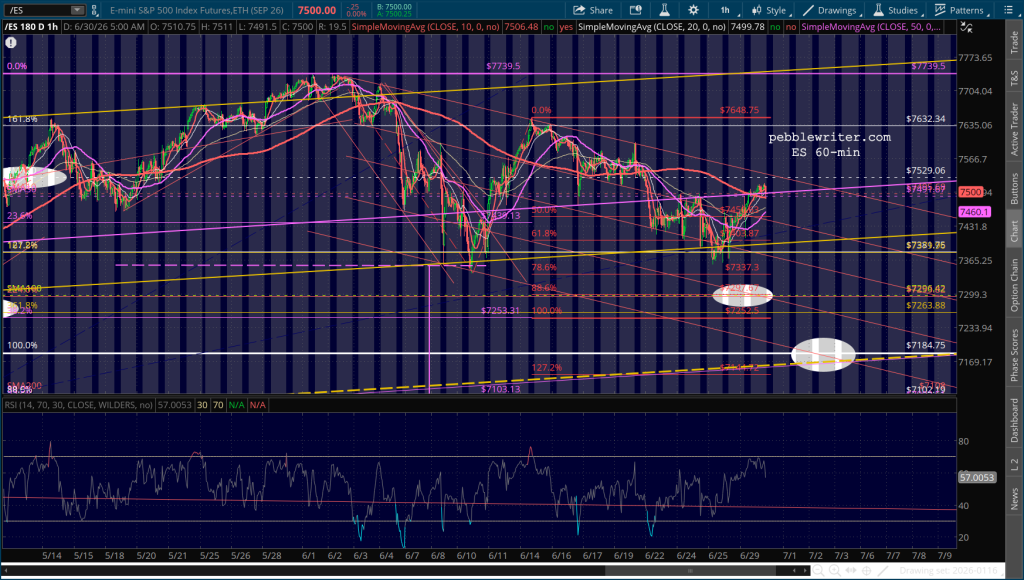
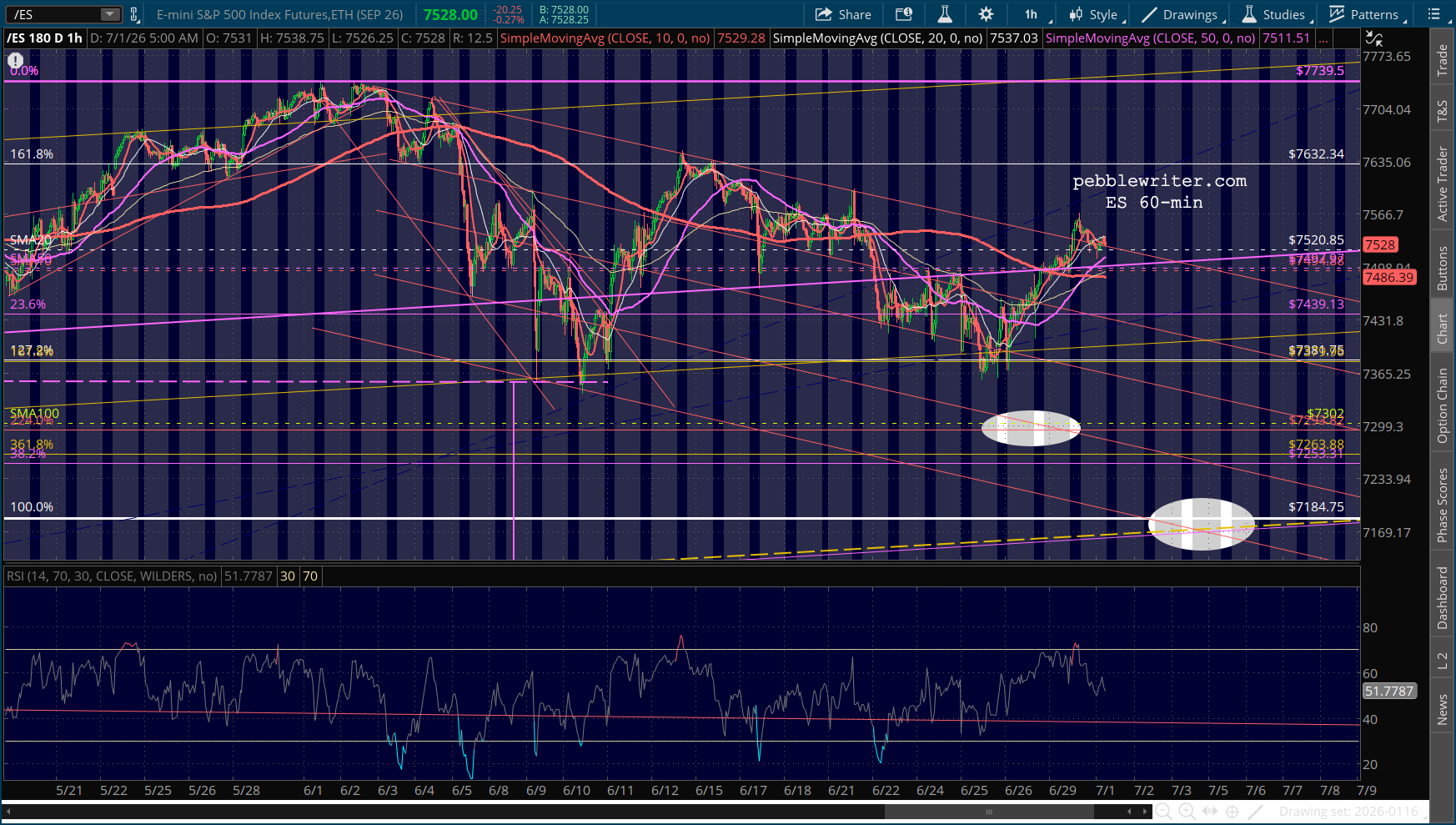
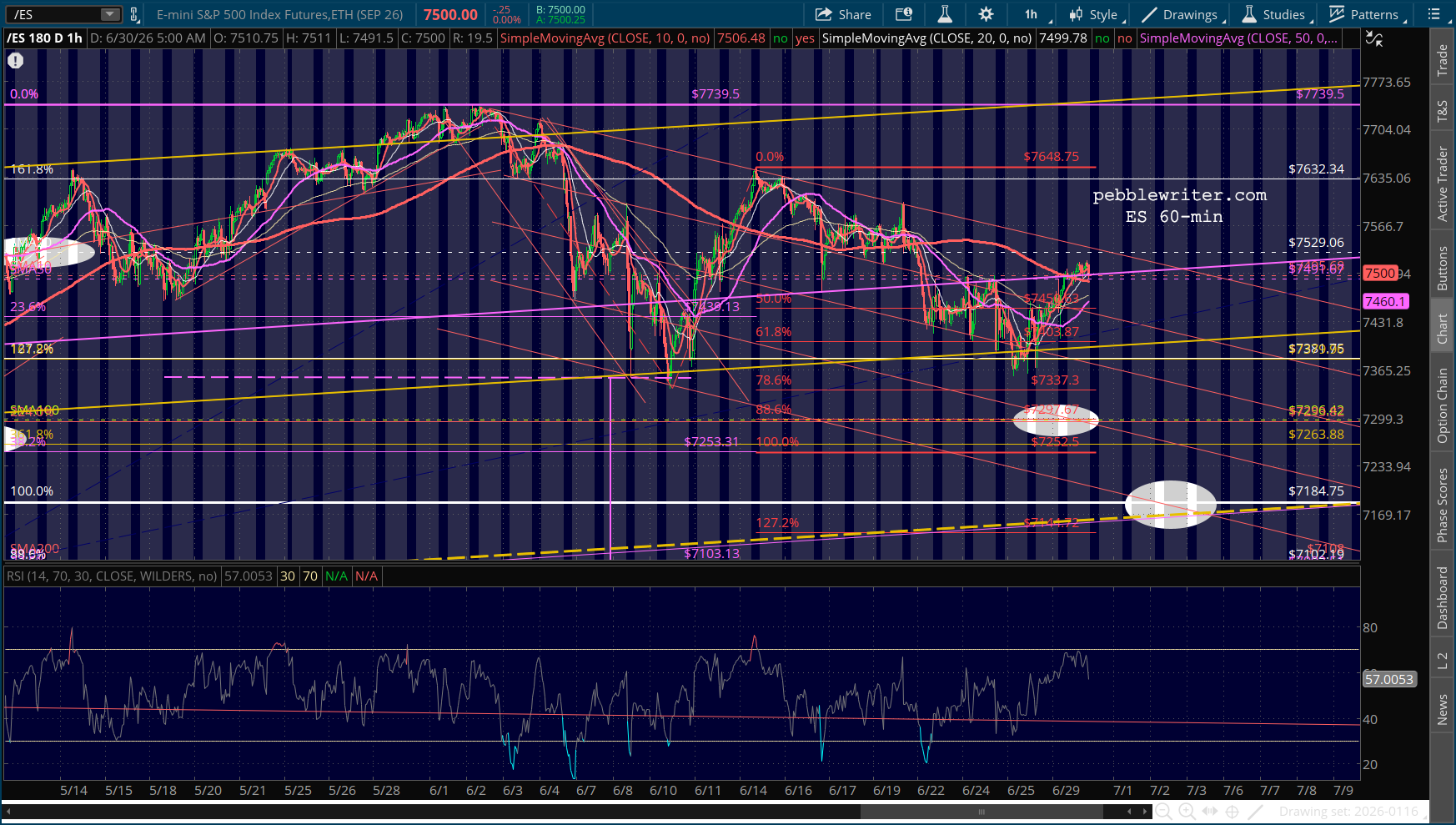
    Futures have been all over the map this morning as the algos are trying to come to grips with the growing disaster in the Middle East which is unlikely to be mitigated by SPR release gimmickry.

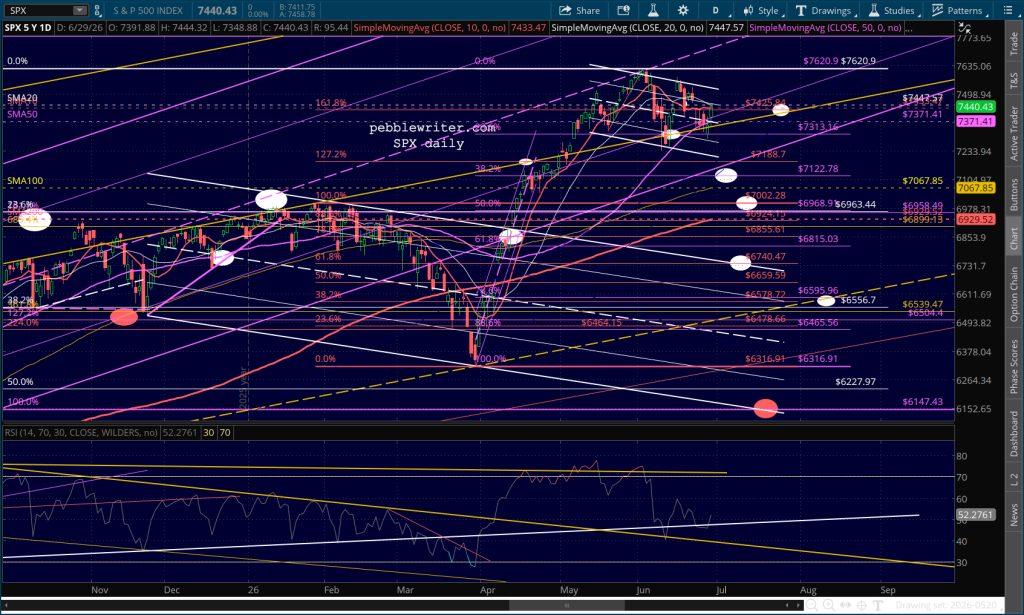
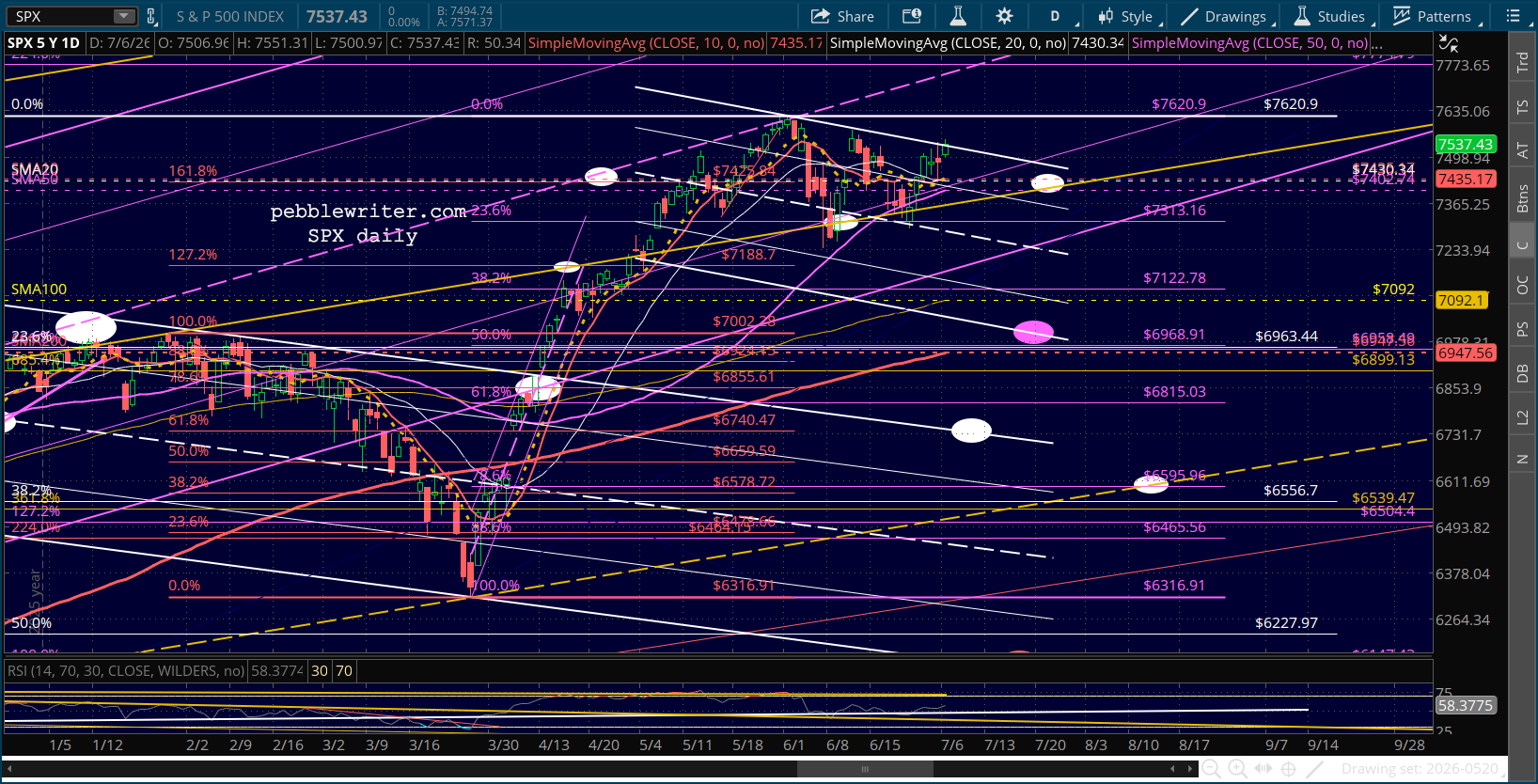
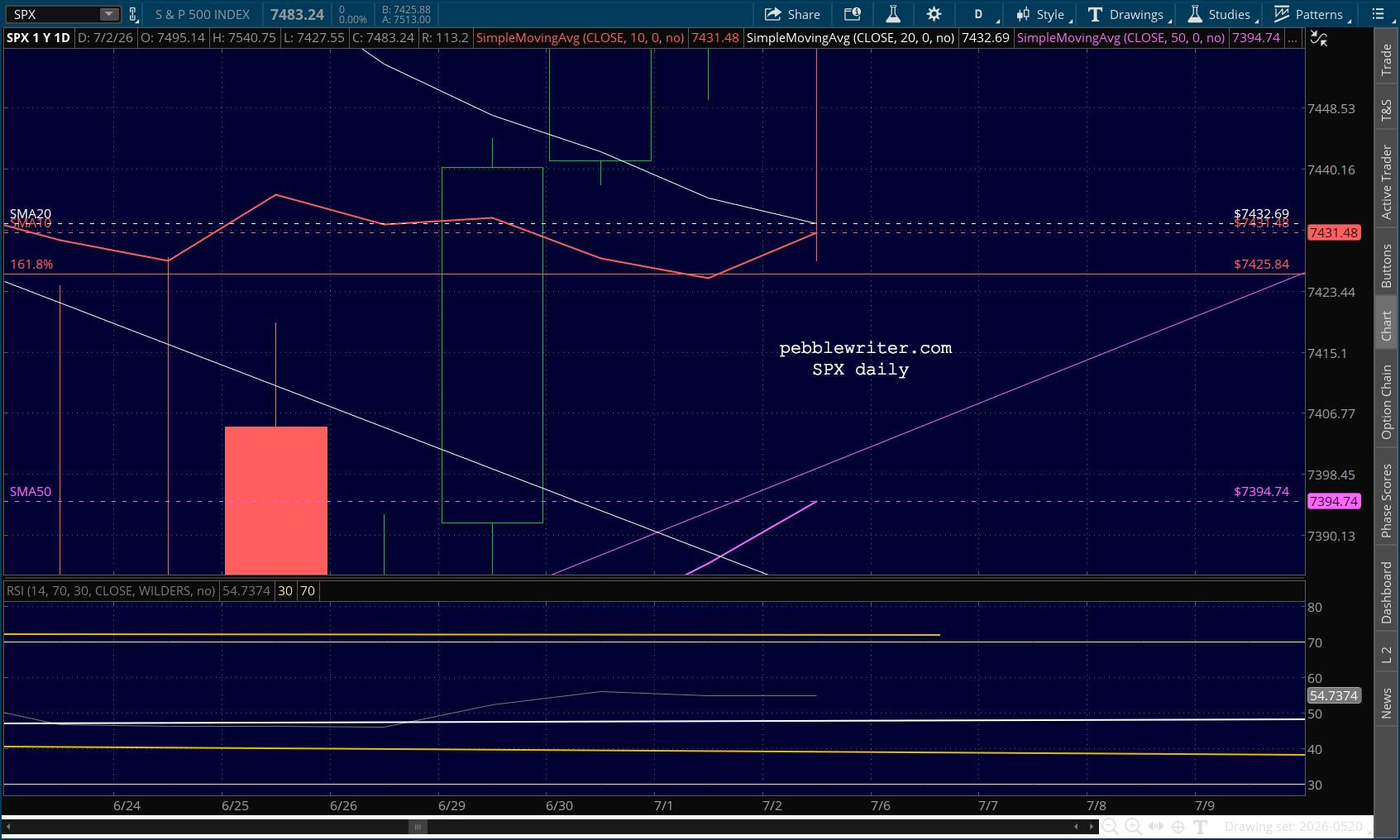
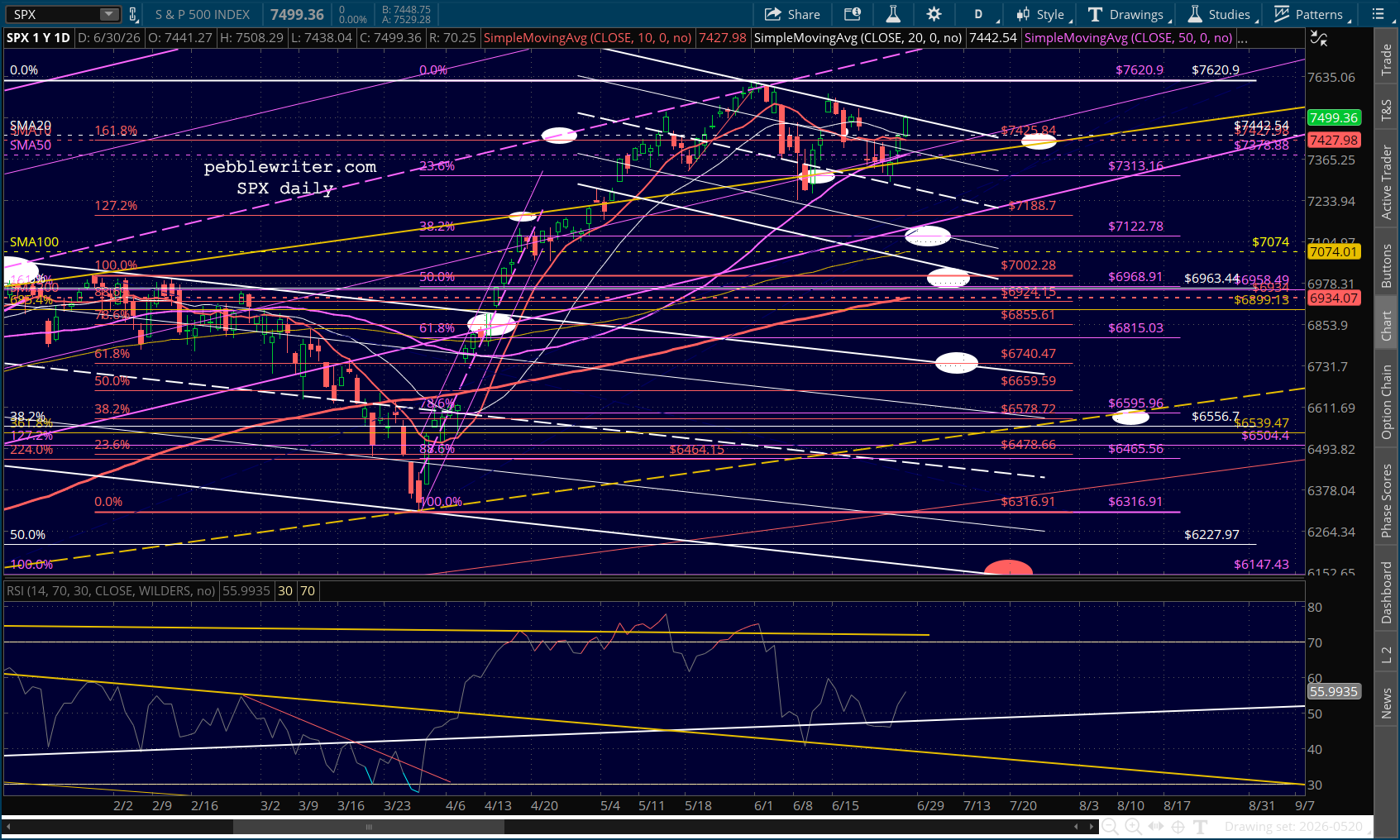
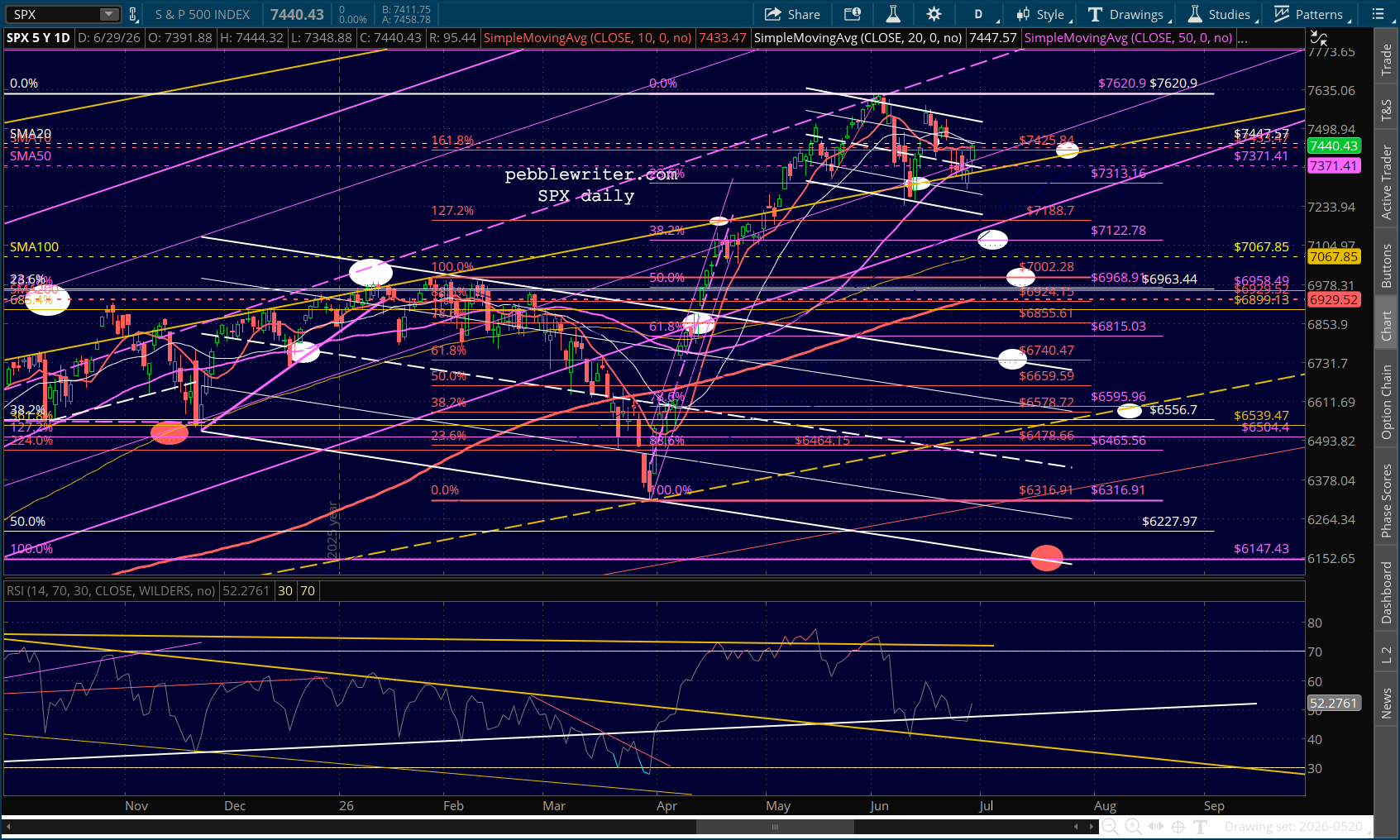
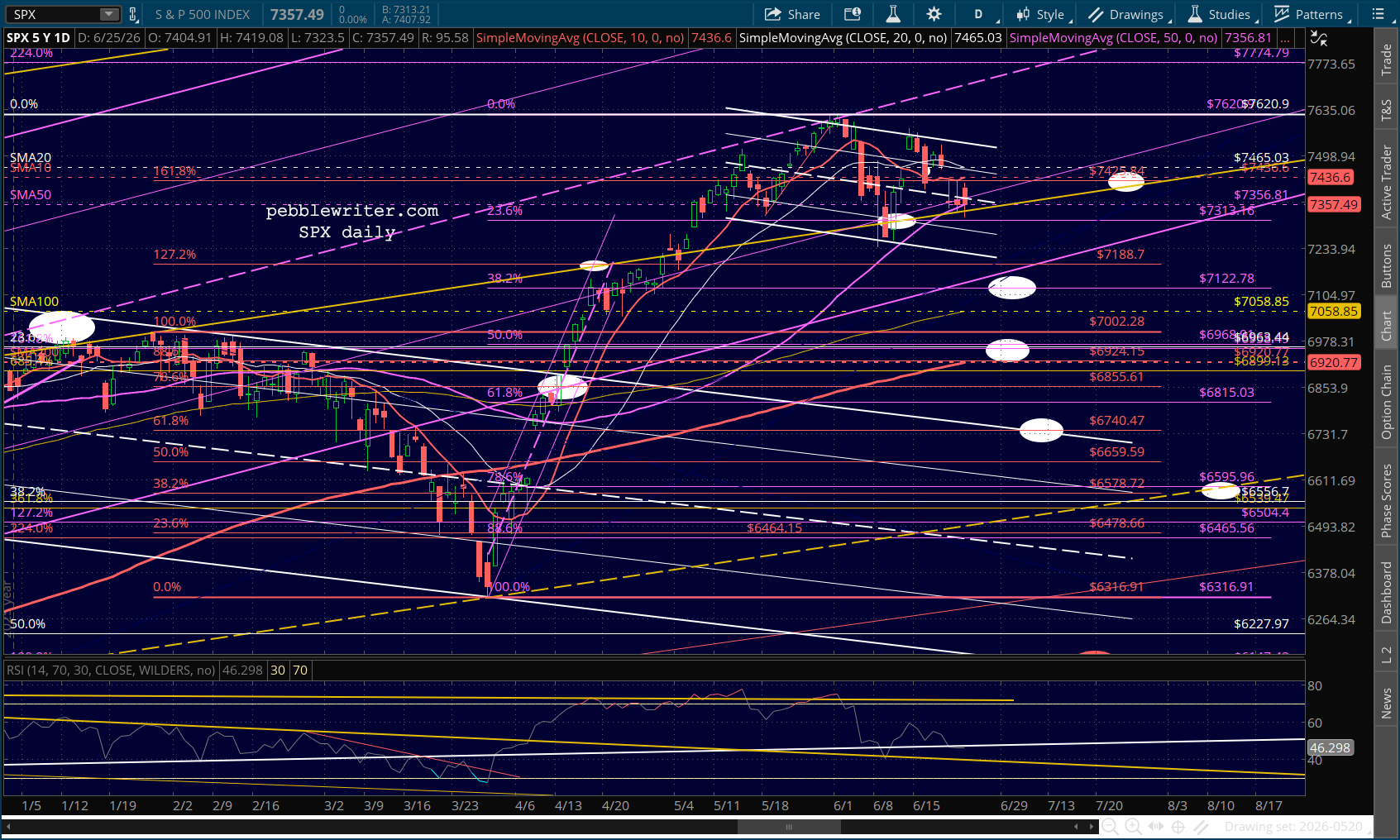
    SPX still owes us a tag of its SMA200. So, any bounce between now and the end of Q1 shouldn’t last.


     *  *  *

    I’m a little sore from overdoing my first extended hike following last week’s surgery. Then I think about my nephew Will, who is competing in his first Pierra Menta ski mountaineering race this week. Considered the most grueling such race in the world, it spans 4 days and involves over 30,000 feet of vertical gain in the French alps. Footage can be seen HERE. There’s an overview of the insanely difficult course at the 38:20 mark.

  • Iran War: Not so Easy

    Despite Trump’s assurances that the US air campaign would result in a swift collapse to Iran’s government and military, the war has dragged in multiple regional players, resulting in a dramatic surge in oil prices.

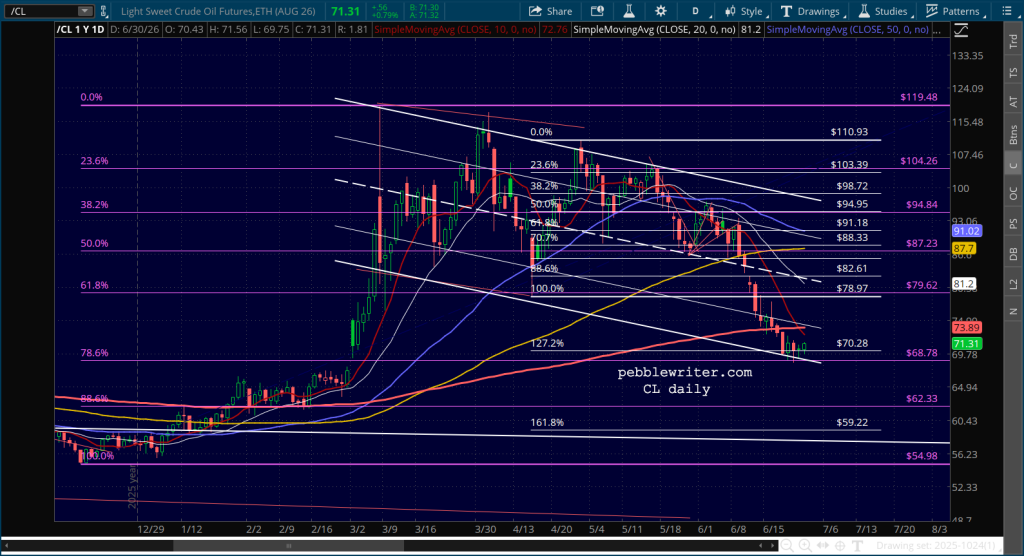
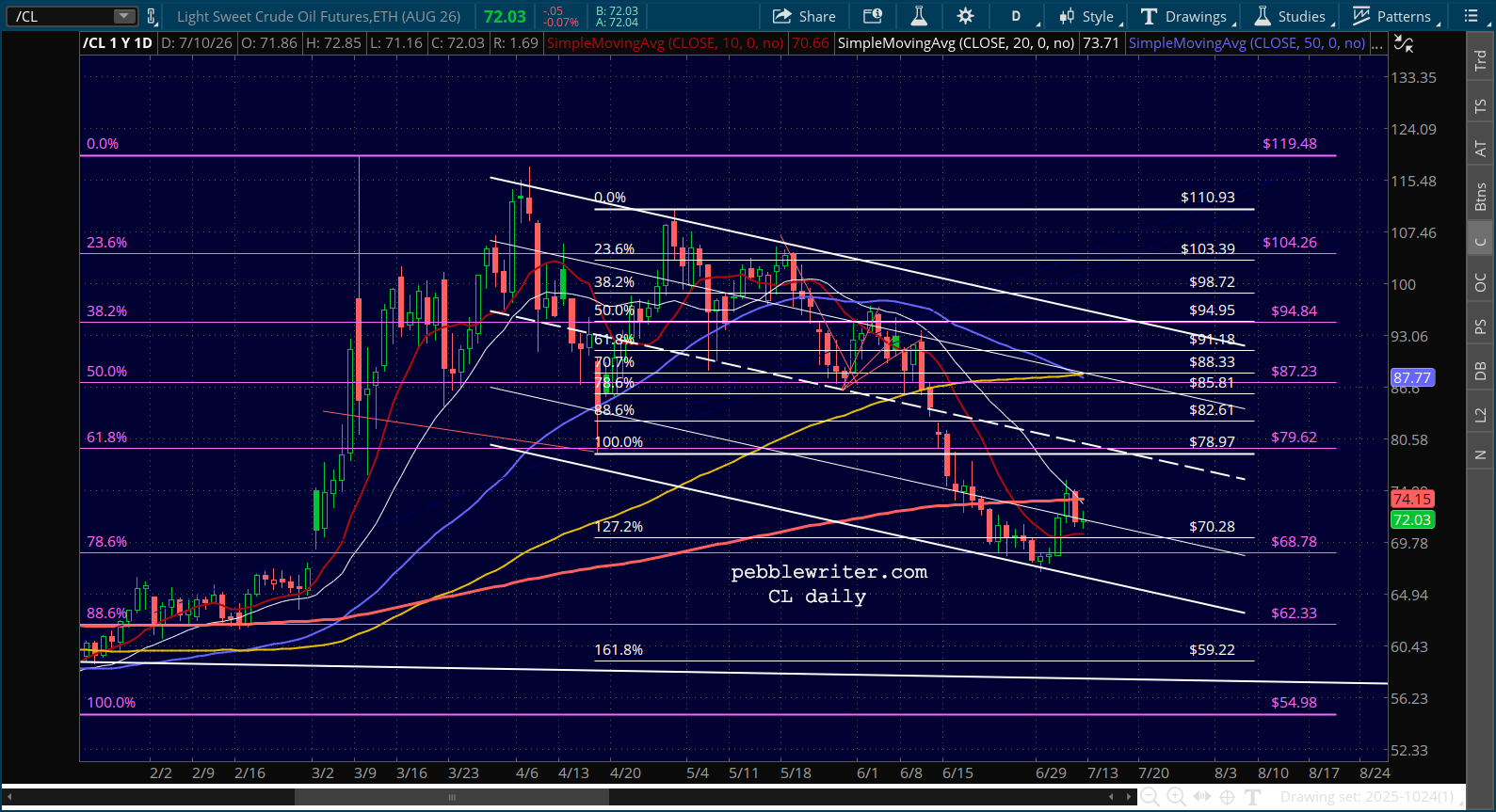
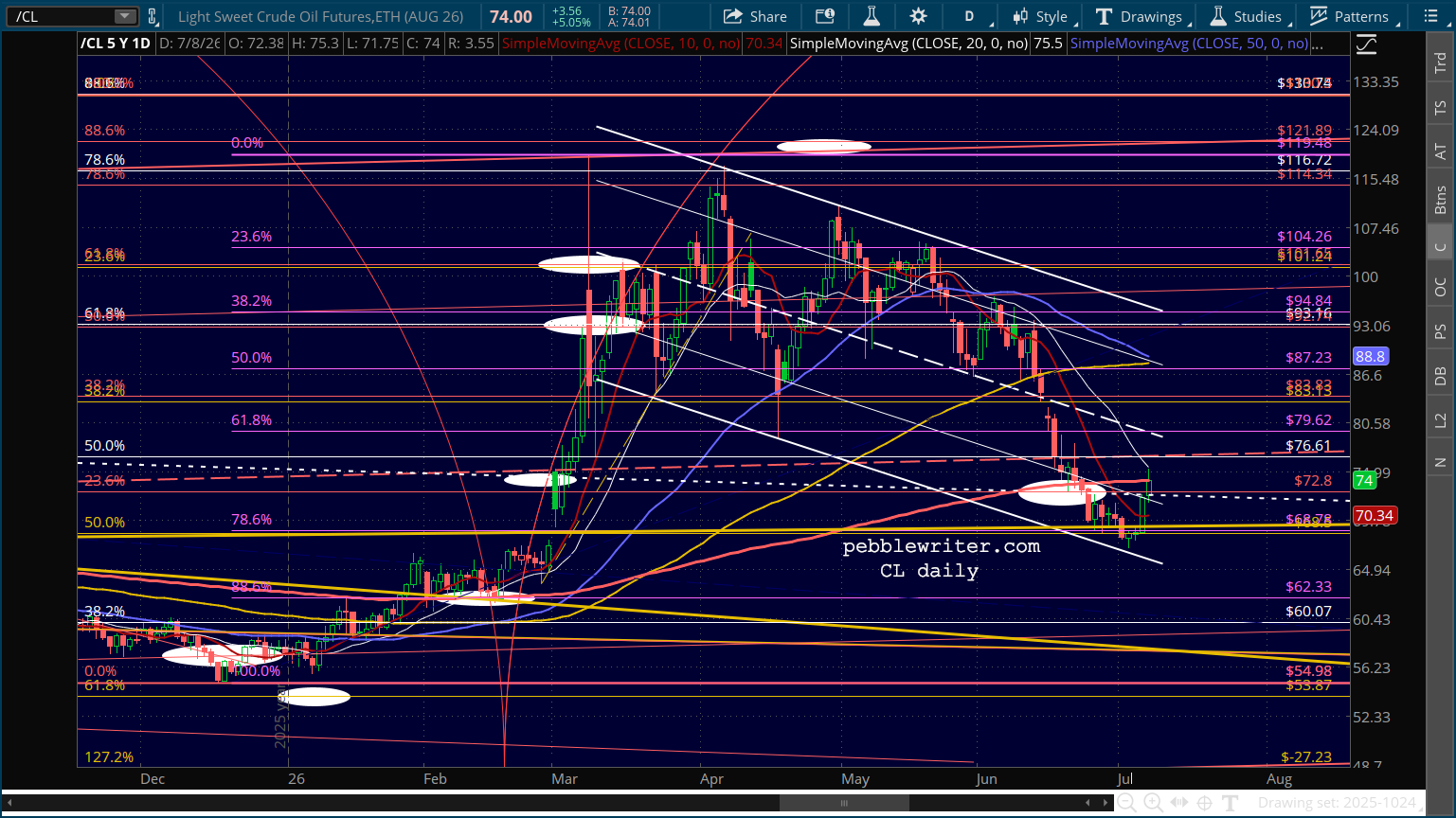
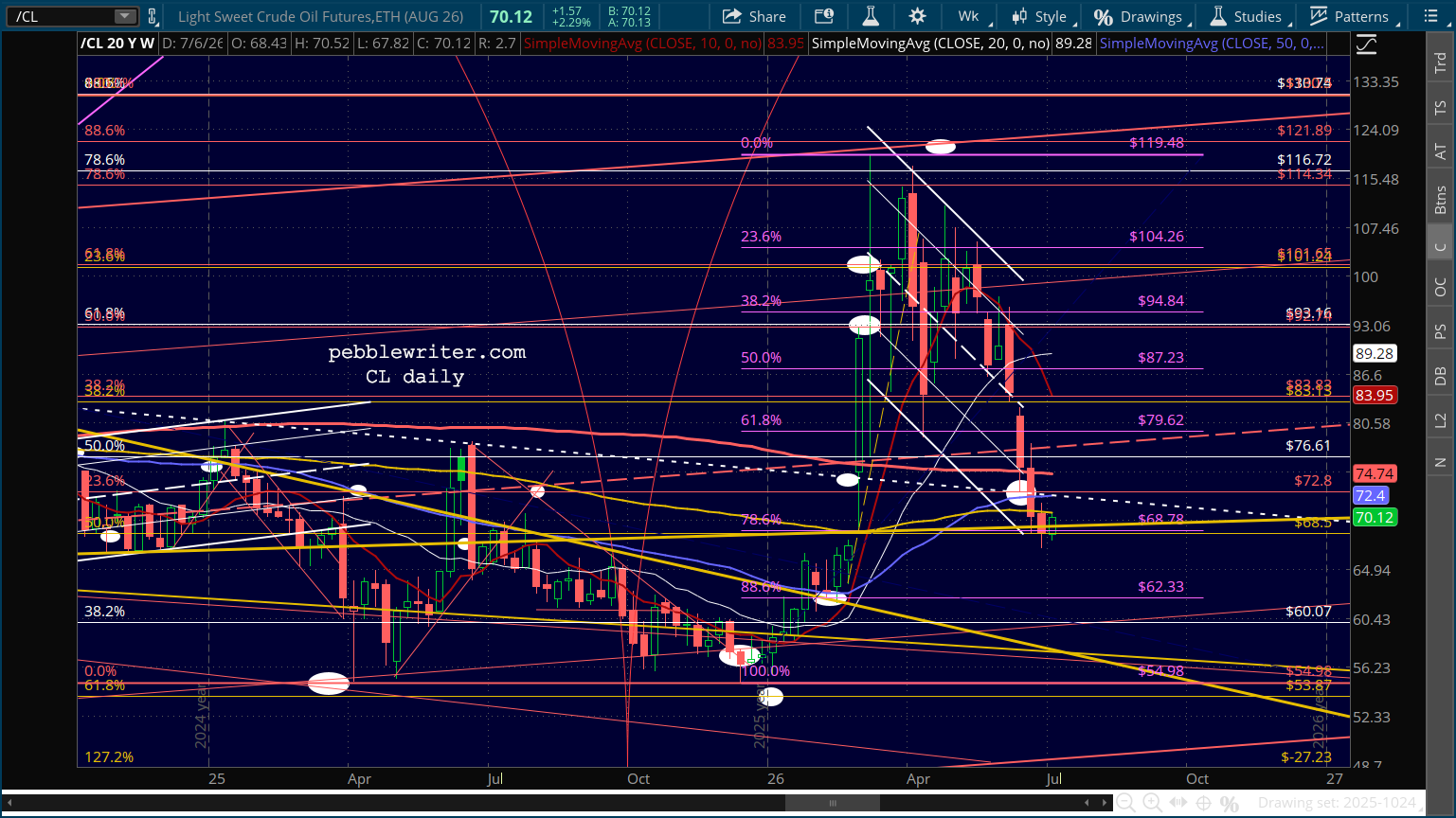
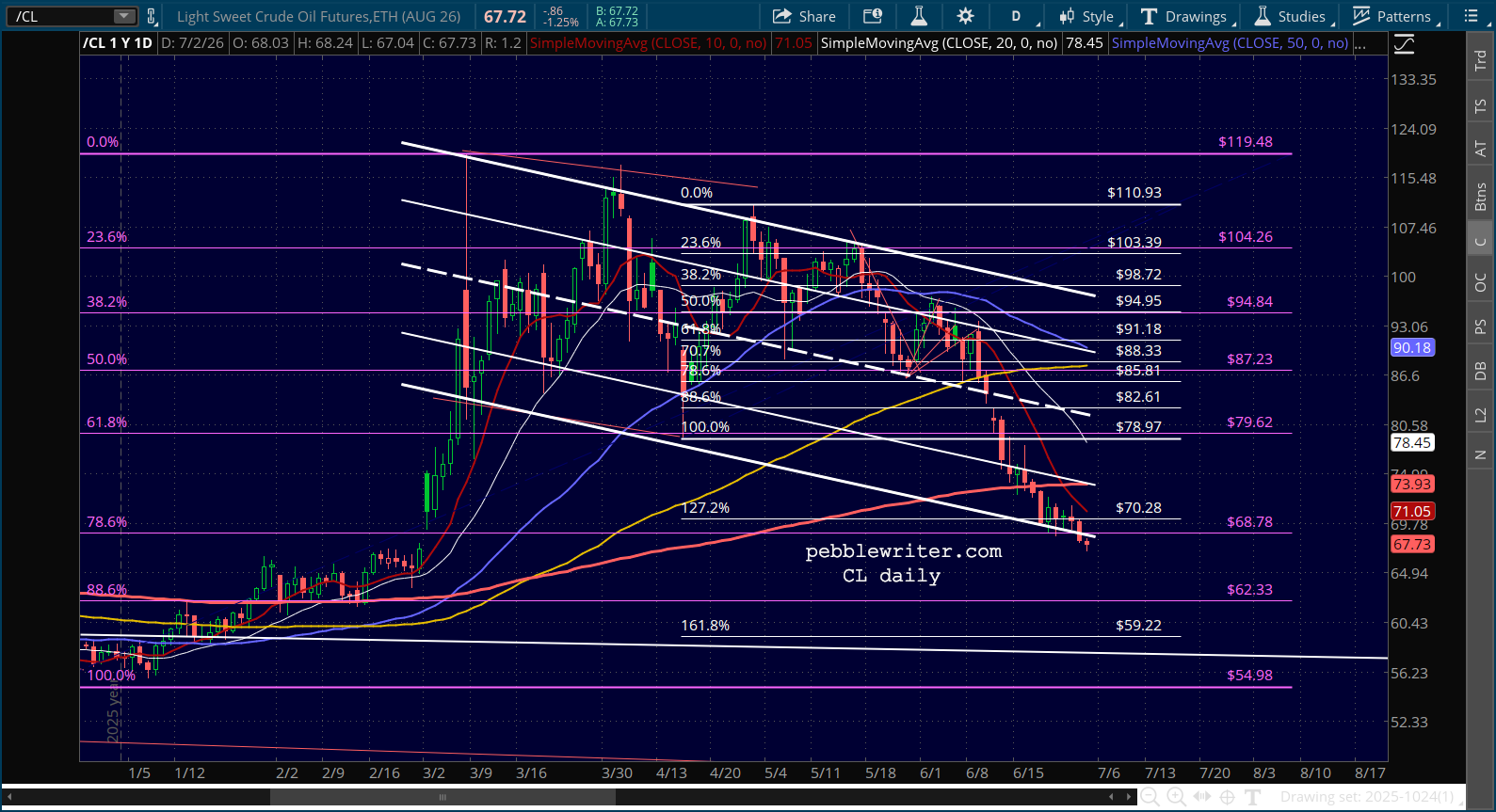
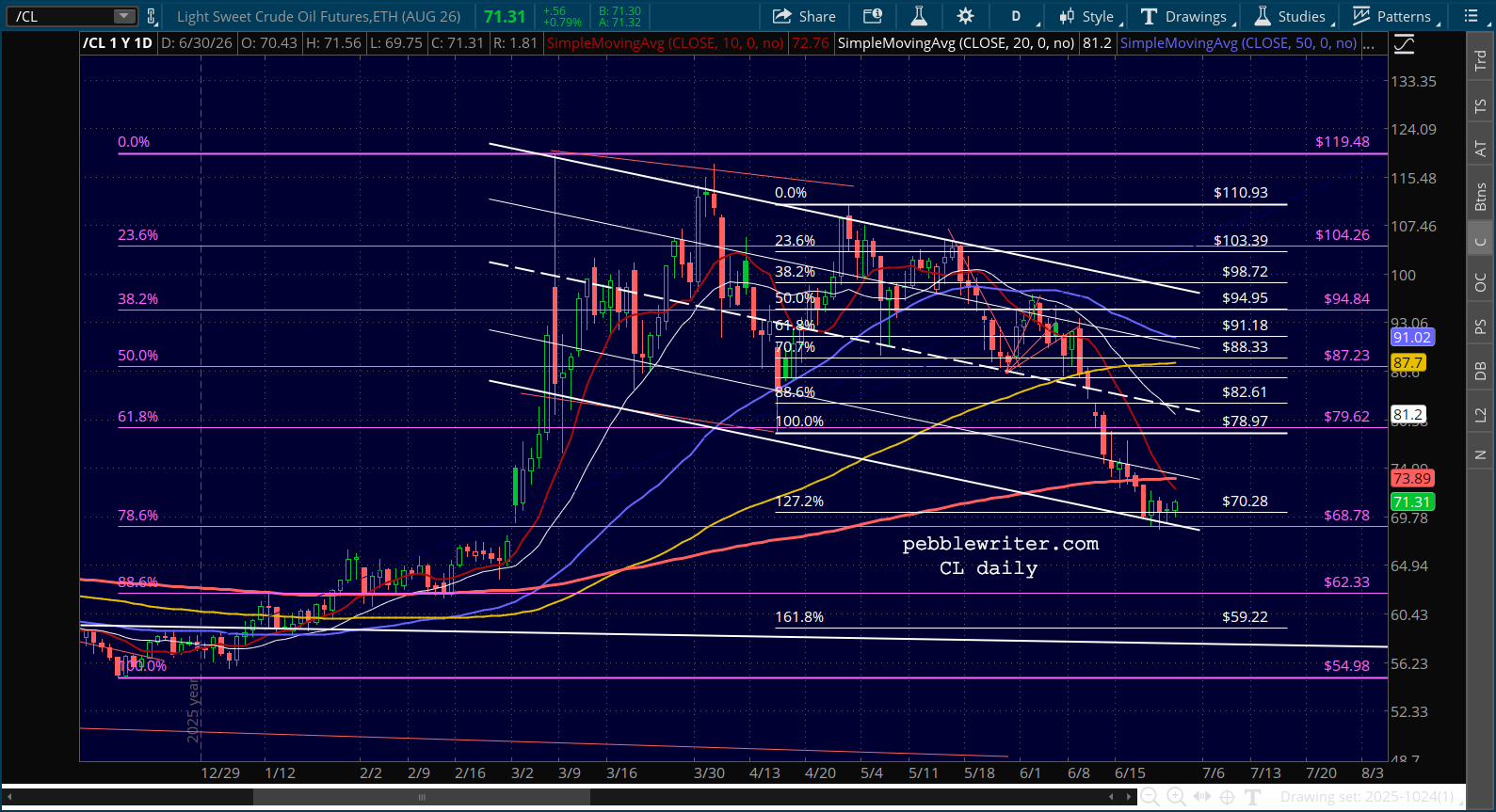
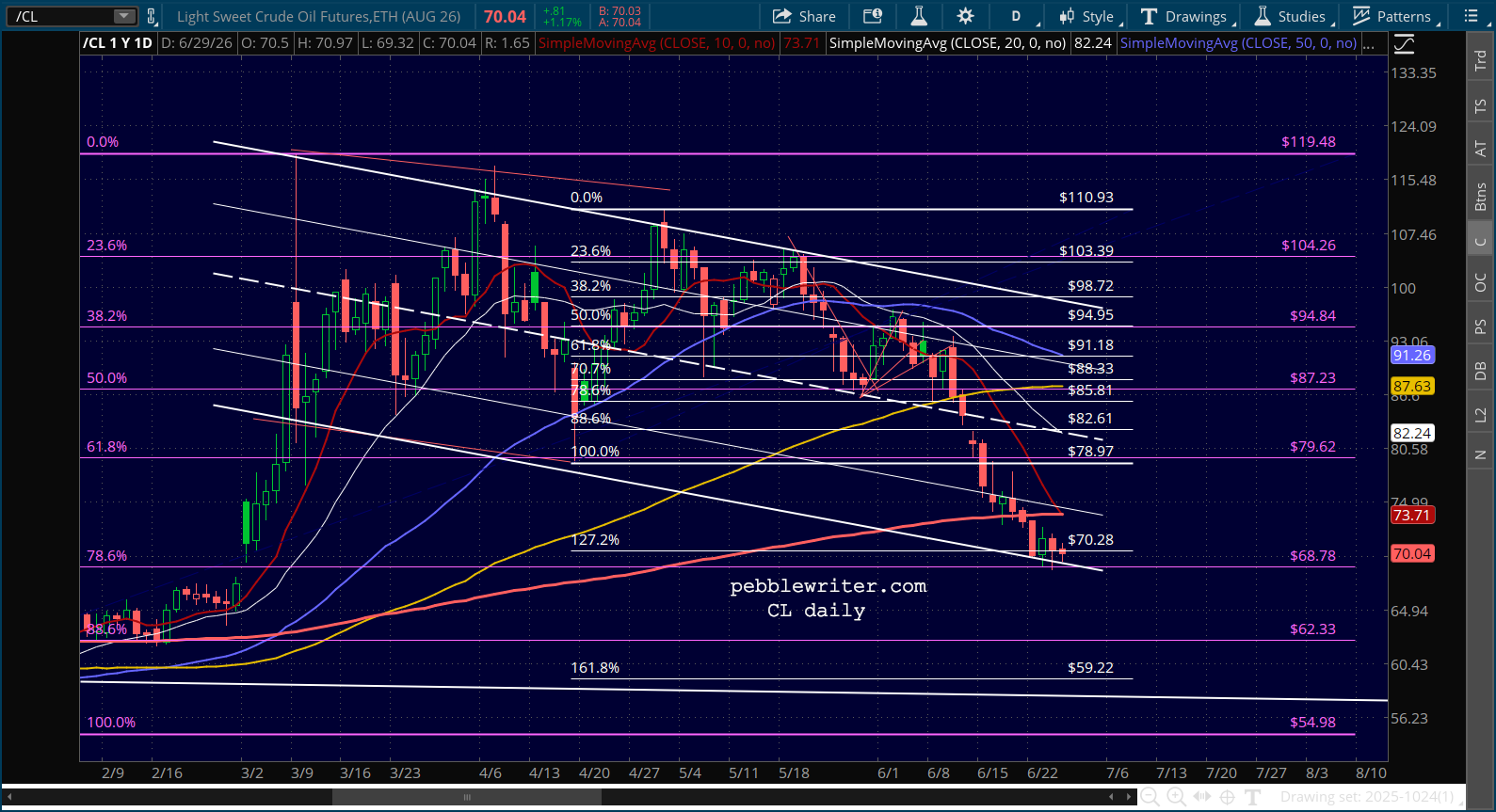
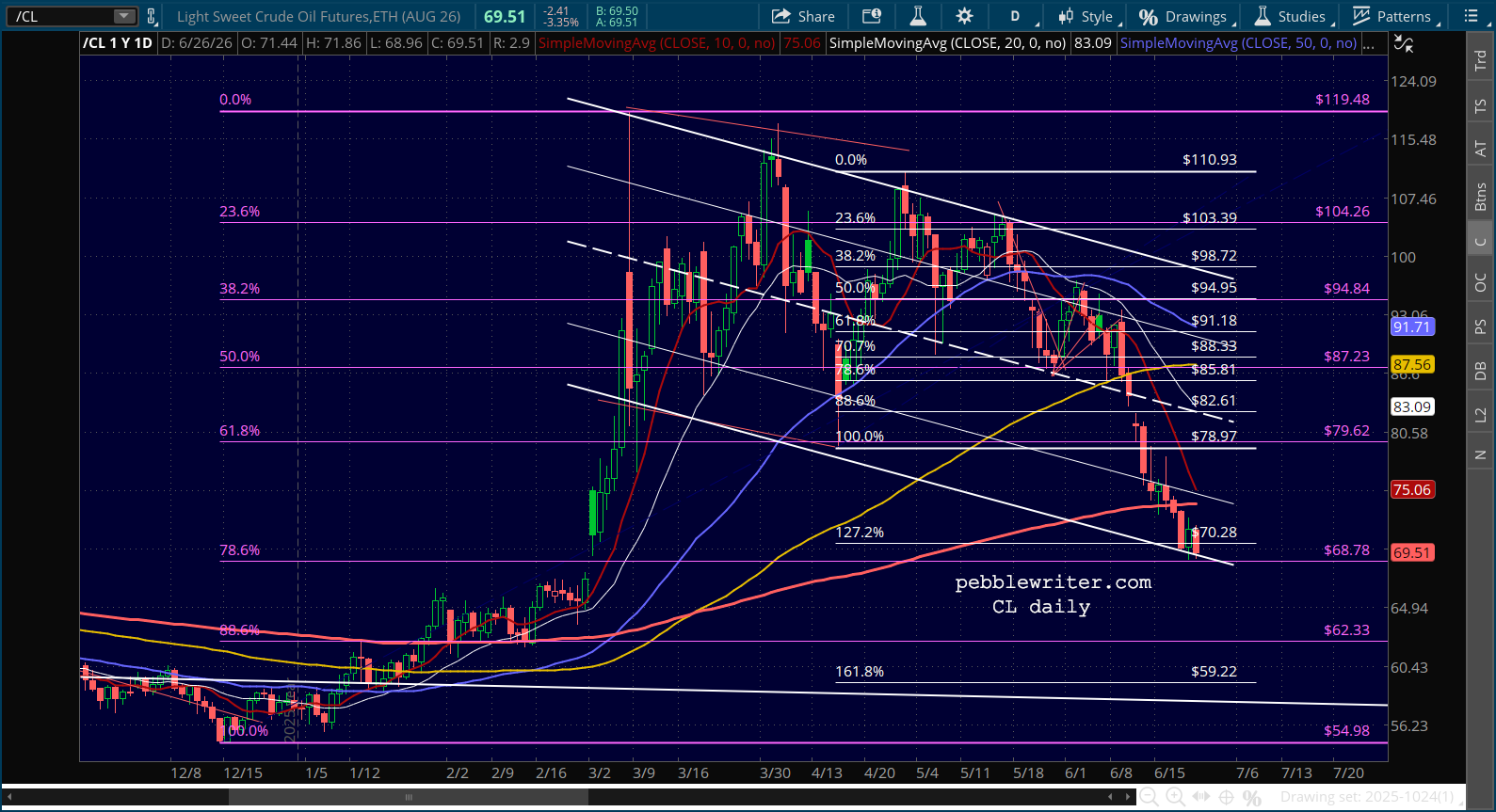
    CL easily reached our 93.16 and 101.65 price targets…
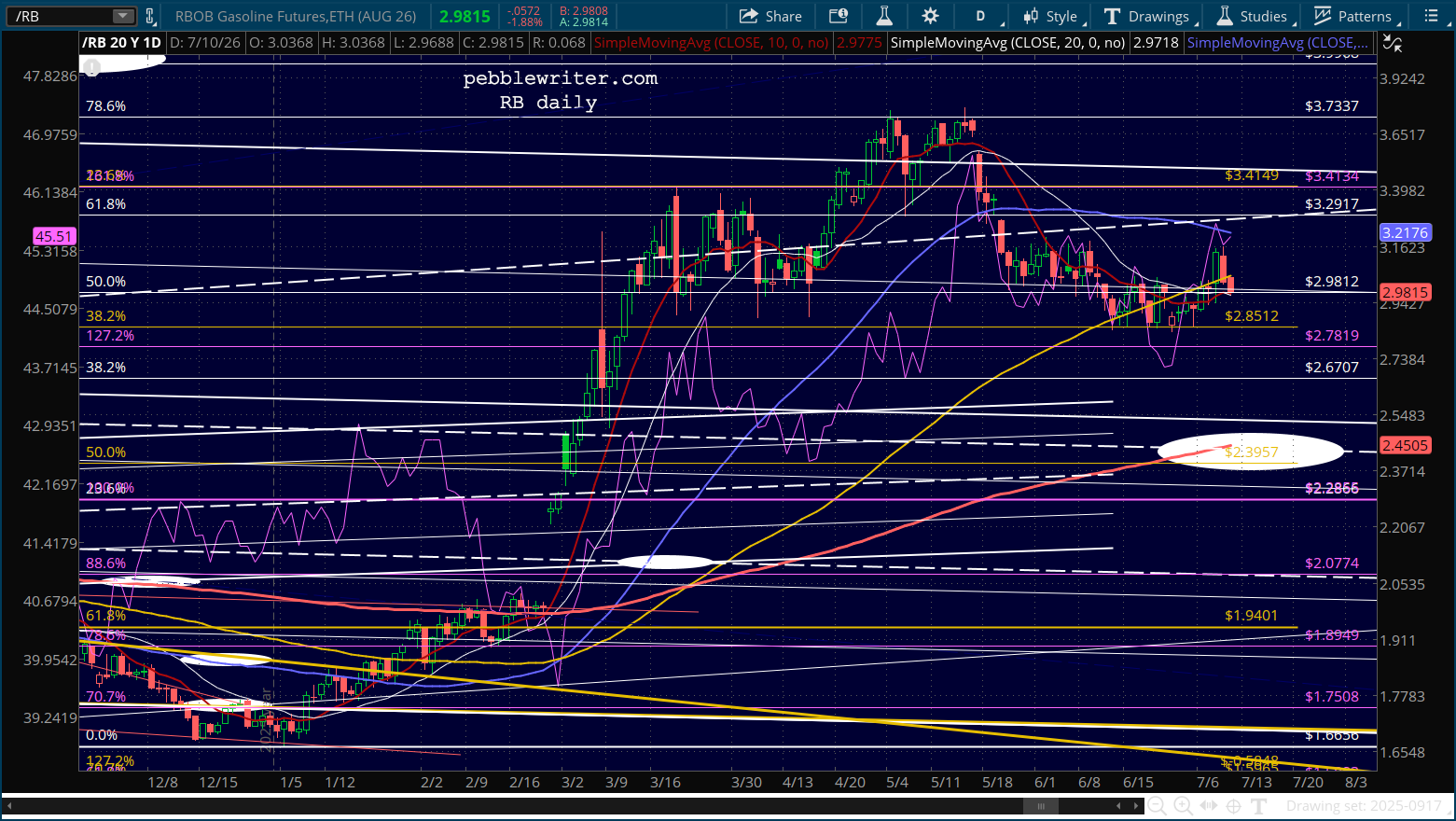
    …and RB easily reached the 2.57 breakout threshold.

    The Straits of Hormuz are effectively closed. Any attempts to bring tankers through – with or without US protection or insurance –  will make things worse. All it would take is one sunken ship to constitute a long-lasting blockade. With tankers and storage facilities full, oil producers are shutting down production and capping wells – meaning that even after the war is over, prices will remain elevated.

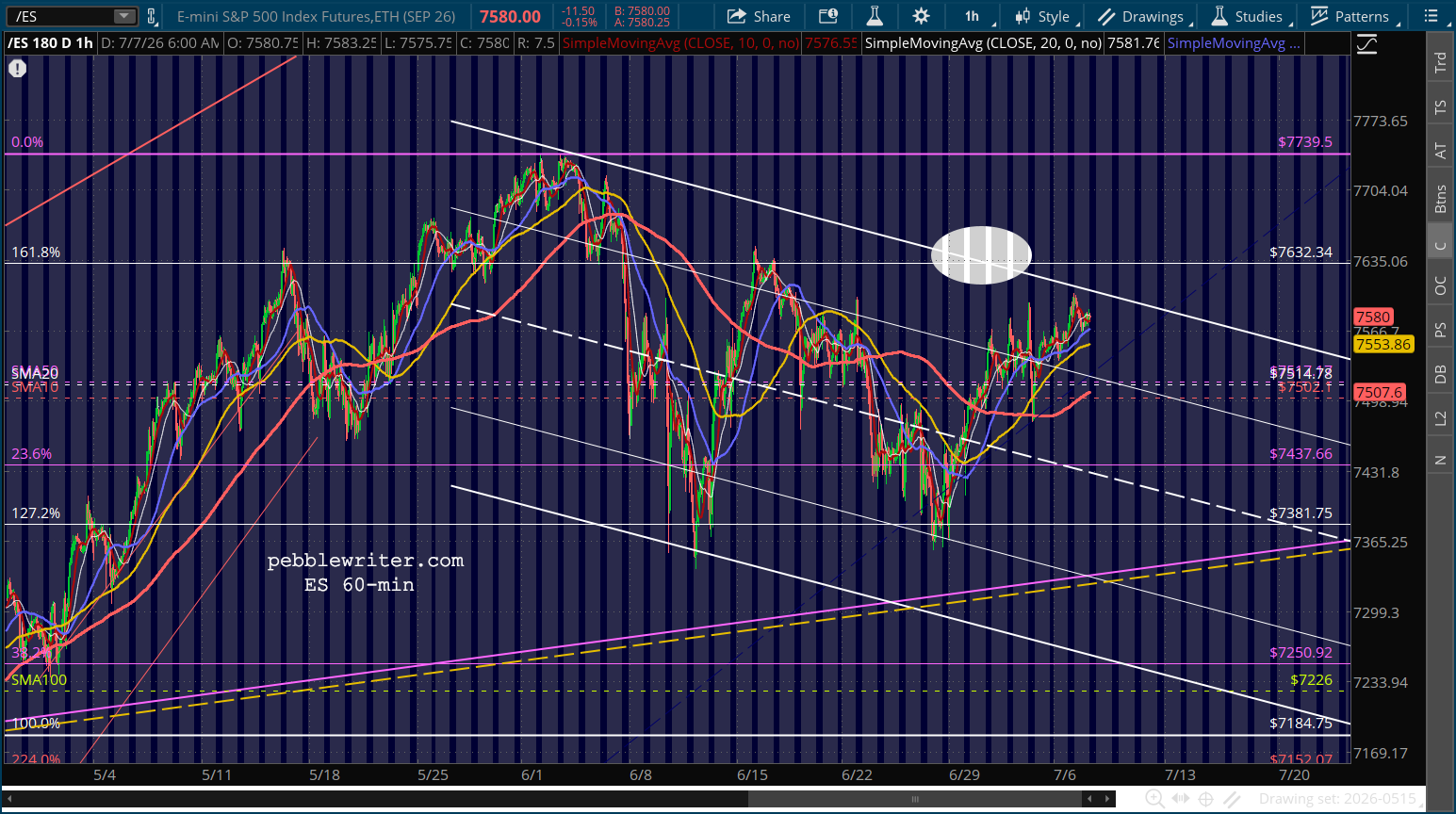
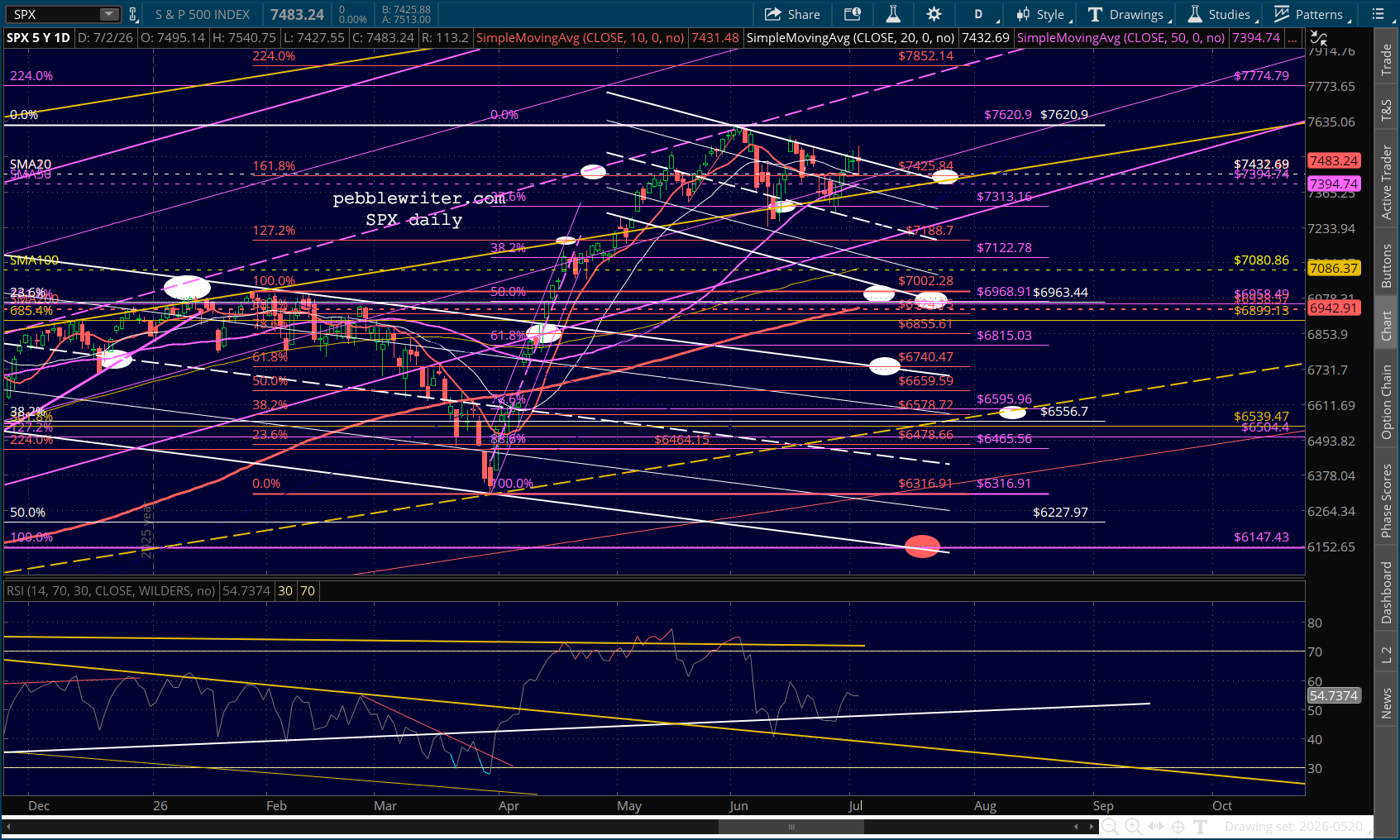
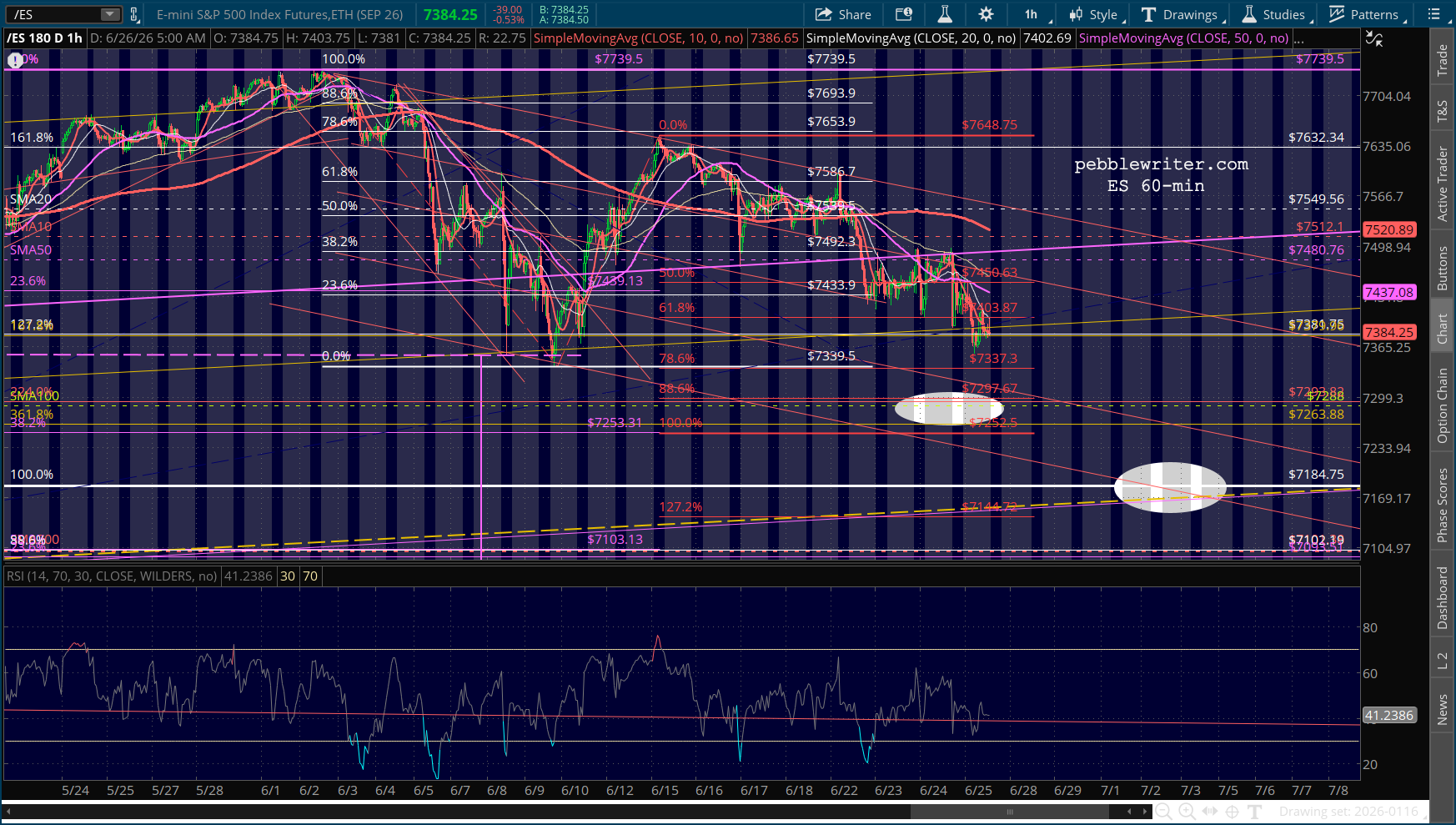
    As we outlined last week [see: More of the Same], ES tagged its SMA200 – though in the after hours, to prevent those pesky retail options traders from cashing in. TPTB wasn’t able to stem the losses until facing a lower low.

    The rescue effort was clumsy, though, as SPX never reached its SMA200, now at 6586 – quite close to the .886 Fib at 6576.68.

    This likely means another leg down today, before any potential end-of-quarter bounce. After that, however, the charts still point to lower lows.

    In today’s NY Times Dealbook, Andrew Ross Sorkin asks: “Does the S&P 500 now dictate U.S. foreign policy?” Of course it does (though Trump prefers the DJIA – bigger numbers.)  Making the Dow Higher is #1 on Trump’s to do list. It’s his own internal scorecard. And, like his golf score card, it is a record of his attempts to “win” by cheating.

    He’s not the only president to have ever cared about stock prices. But, he’s the most obsessed and the most obvious about it. Needless to say, higher stock prices are good for the economy, to a point. They support healthy capital formation and, all else being equal, contribute to a wealth effect that buoys consumer confidence and helps folks retire.

    But, stock prices that depart from the fundamentals raise the risk of severe downdrafts – the sort that we discussed in our 2026 Forecast. We saw this in the dot com bubble of 2000-2003, the Great Financial Crisis of 2007-2009, and the COVID crash in 2020-2021. I don’t know what they’ll call this one. But, like the others, it represents an avoidable unforced error.

    Trump was so determined to drive the Dow to new highs that he harangued the Fed, abandoned our allies, made unwise deals with Russia, Israel and OPEC, and attacked Iran. He reasoned that if interest rates were lower, the Dow would keep rising – usually a safe bet. But, with stocks already at nosebleed levels, the market balked. So did the Fed, which regards inflation which has remained stubbornly above target as incompatible with rate cuts.

    Trump, who has likely never passed a marshmallow test, was not content to wait for Powell and Cook to be ousted. He also refued to let the economic reporting apparatus of the US government announce that we were in a slowdown that justified a rate cut. The only lever he had available, then, was to try and force inflation lower by lowering the price of oil.

    When OPEC drew the line at $55/bbl, he forced the issue by attacking Venezuela, kidnapping its president, and turning it into a “major oil supplier.”  Analysts called bullshit, as Venezuela’s oil is heavy, dirty and costly to refine. And, it is only about 1% of the world’s total oil production. The price of WTI didn’t drop. It didn’t even budge. Trump needed a bigger boat – or so he reasoned.

    The challenge was finding a big oil producer who could be convinced to produce more. He had pissed off Canada (6%.) The rest were Saudi Arabia (11%), Russia (11%), China (5%), Iraq (4%), Brazil (4%), UAE (4%), Iran (4%) and Kuwait 3%.)  Like Venezuela, Russia and Iran were under sanctions. Lifting the sanctions on those regimes was problematic, as they had earned their stripes. Though, Trump waived certain oil-related sanctions on Russia yesterday – the same day we found out that Russia has been providing intelligence to Iran on the location of US forces.

    But, if he could quickly and cheaply assume control of the Iranian spigot, he could pump up the volume, flood the market, lower prices, get inflation down to 2%, get Fed Funds down to 2%, and get the Dow up to 60,000!

    If only it were that easy…


  • More of the Same

    Higher oil prices, higher VIX, lower stock prices, and additional Trump rants that seem to preclude a speedy end to the war.

    “I don’t have any concern about [higher oil prices]…”
    “There will be no deal with Iran except UNCONDITIONAL SURRENDER…”
    “I have to be involved in the appointment, like with Delcy [Rodriguez] in Venezuela…”
    “MAKE IRAN GREAT AGAIN (MIGA!)”

    ES has almost reached our 6680 target, egged on by…

    …oil prices that continue to break out…

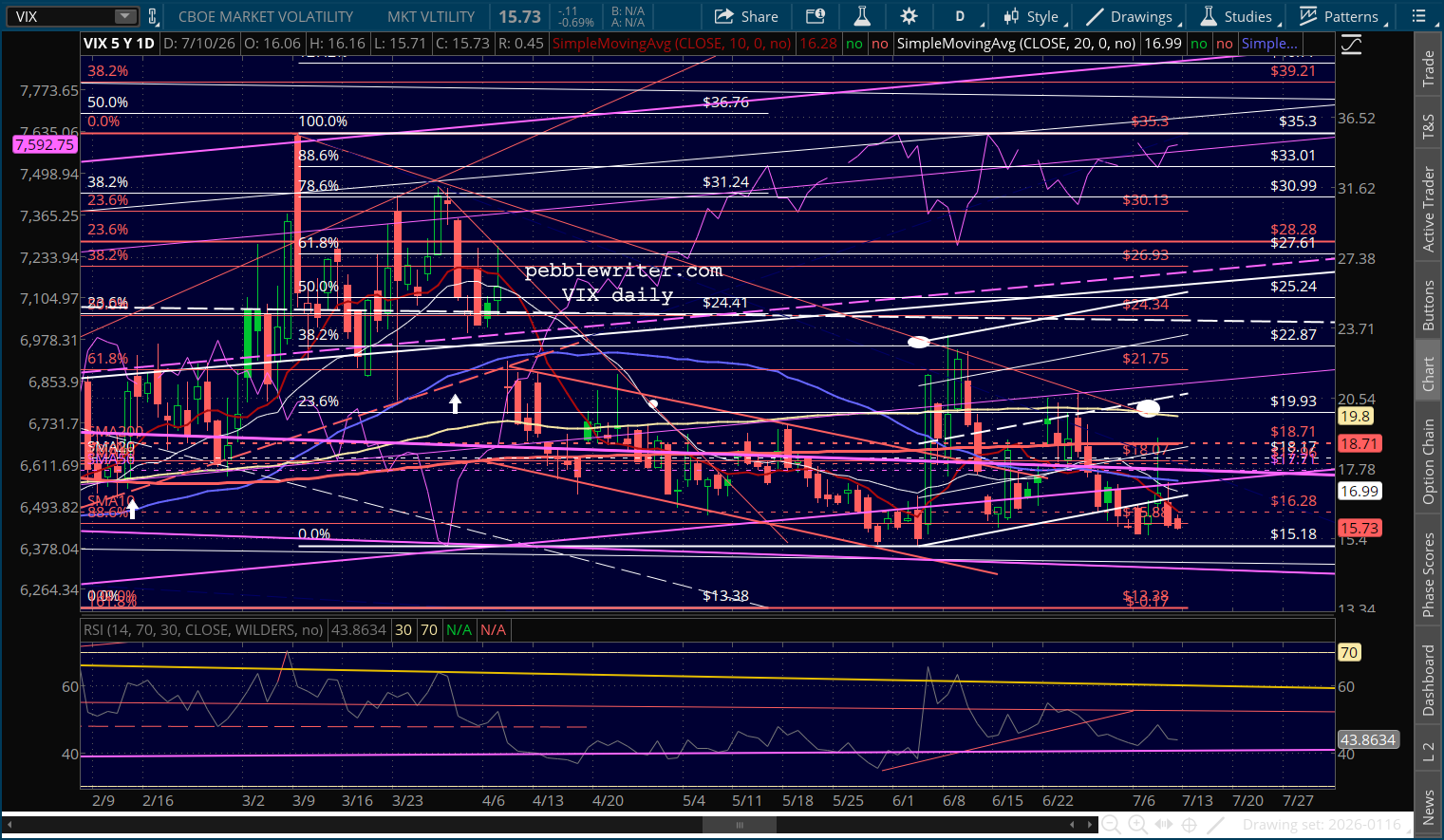
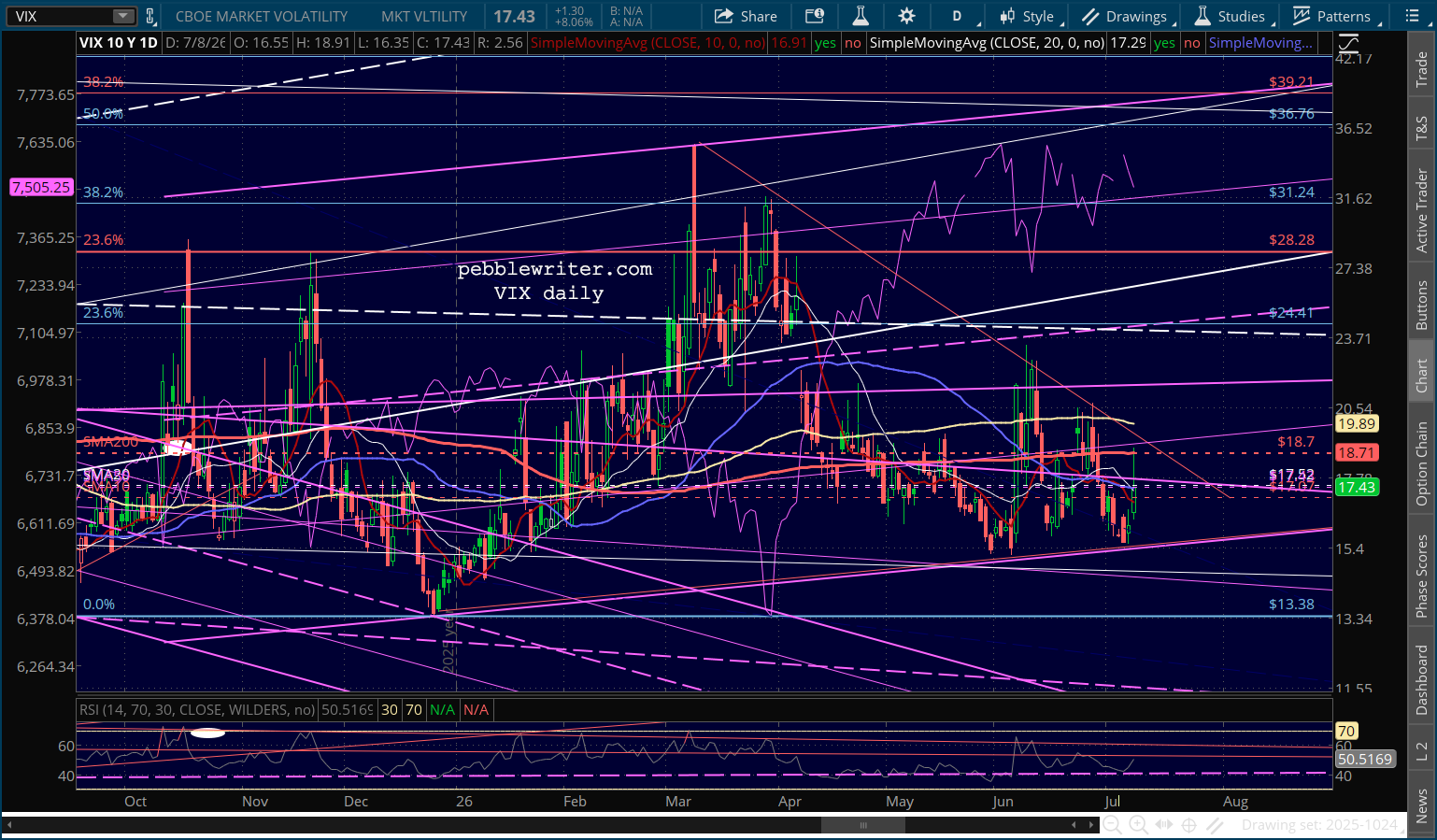
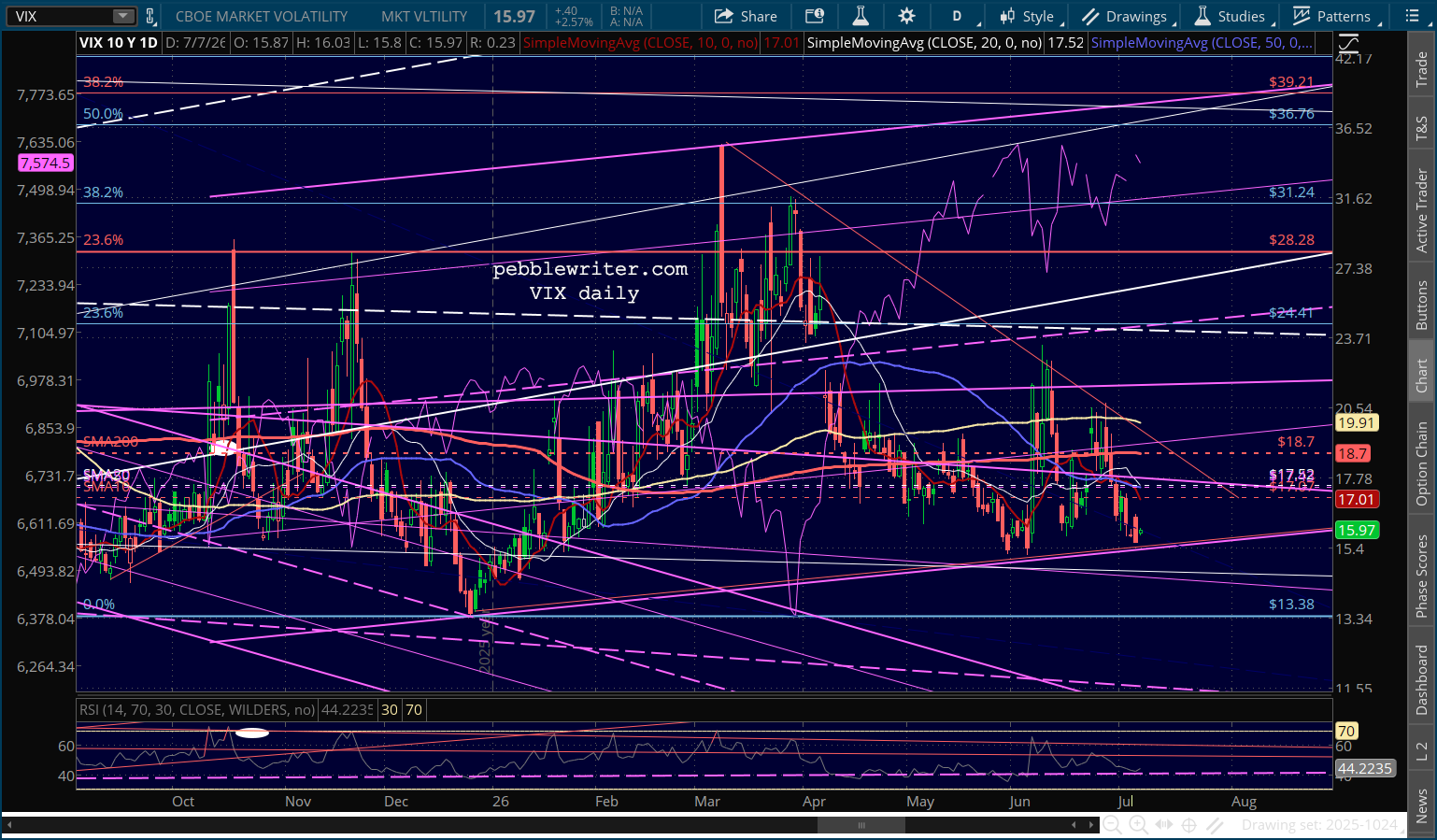
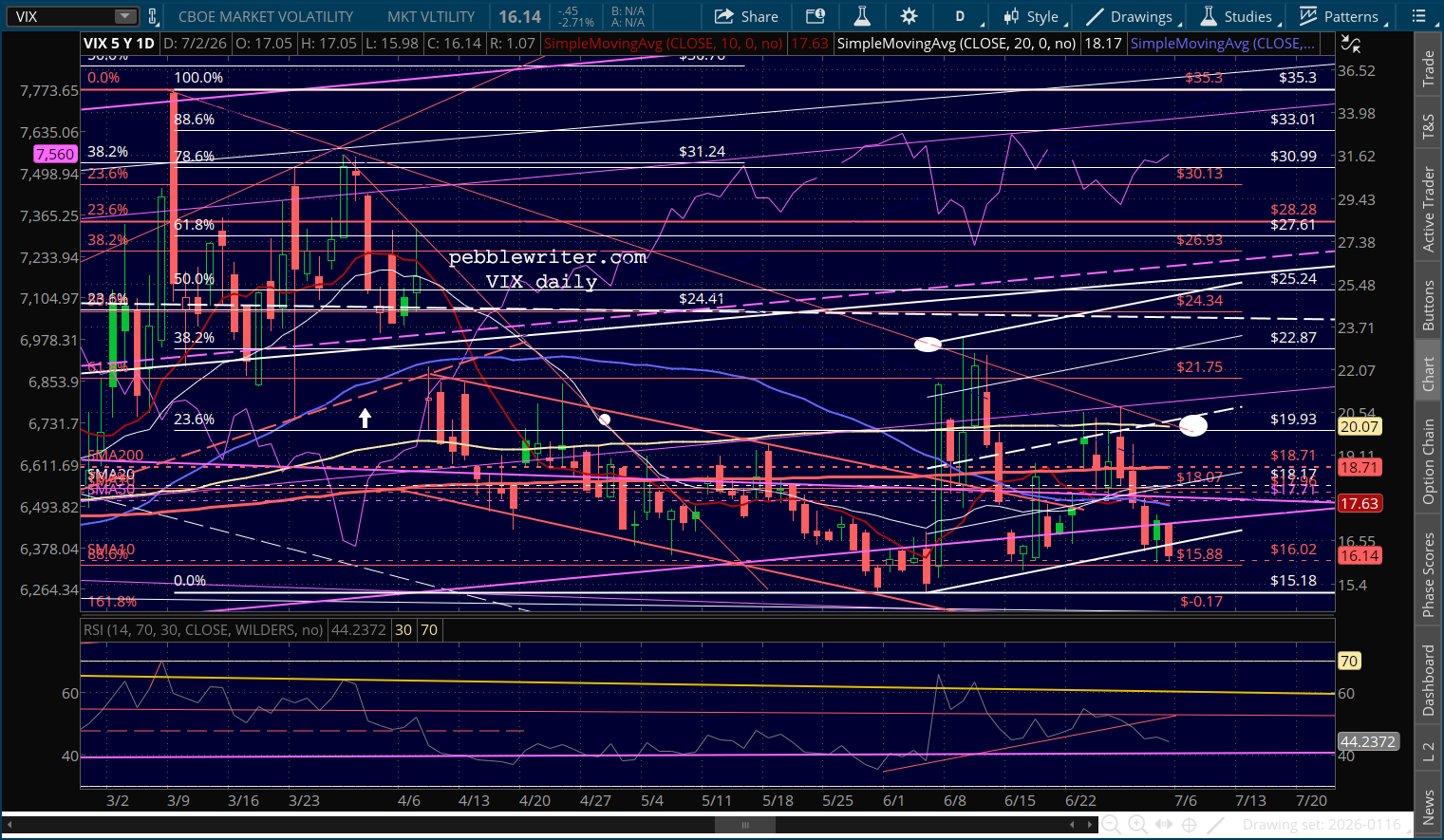
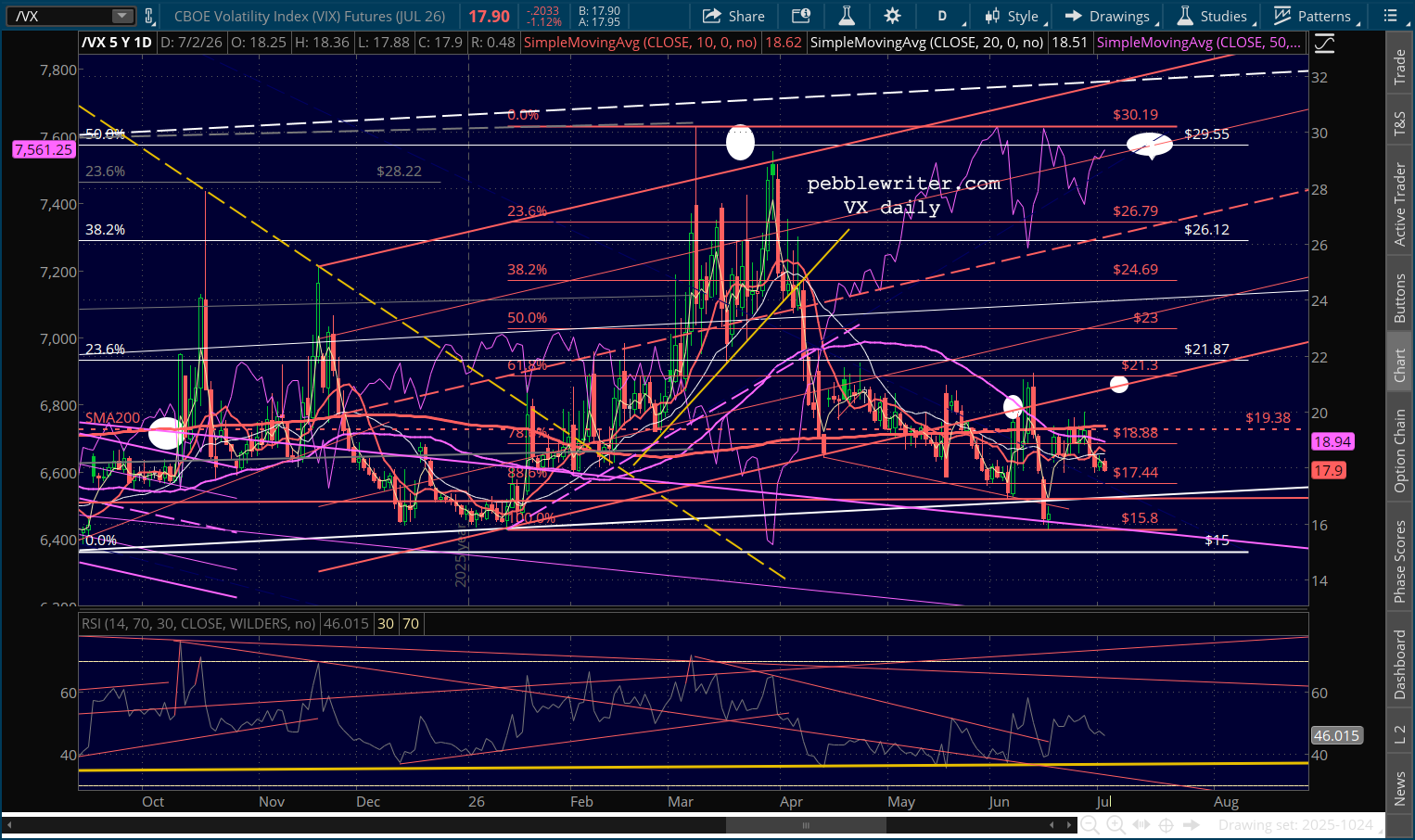
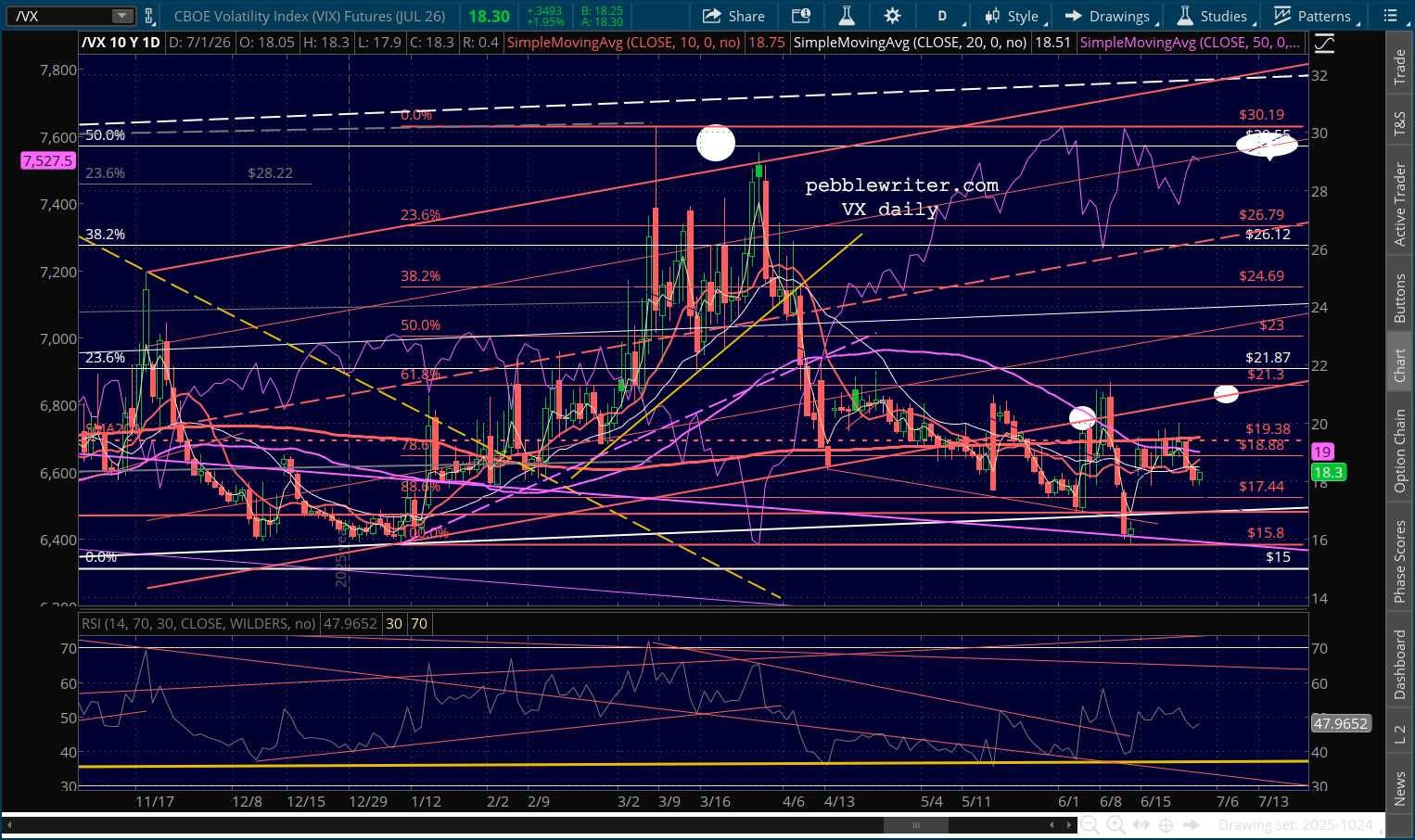
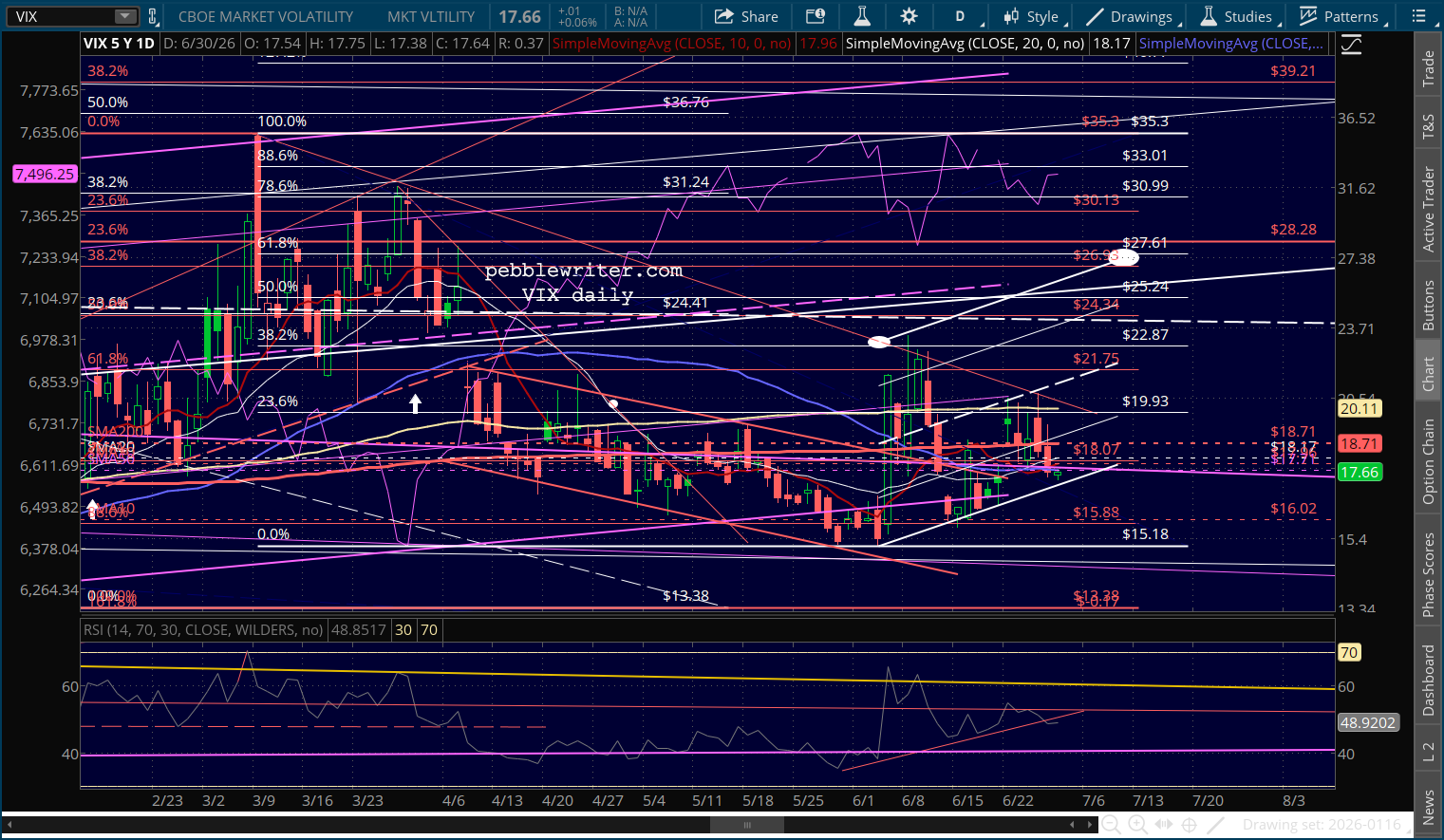
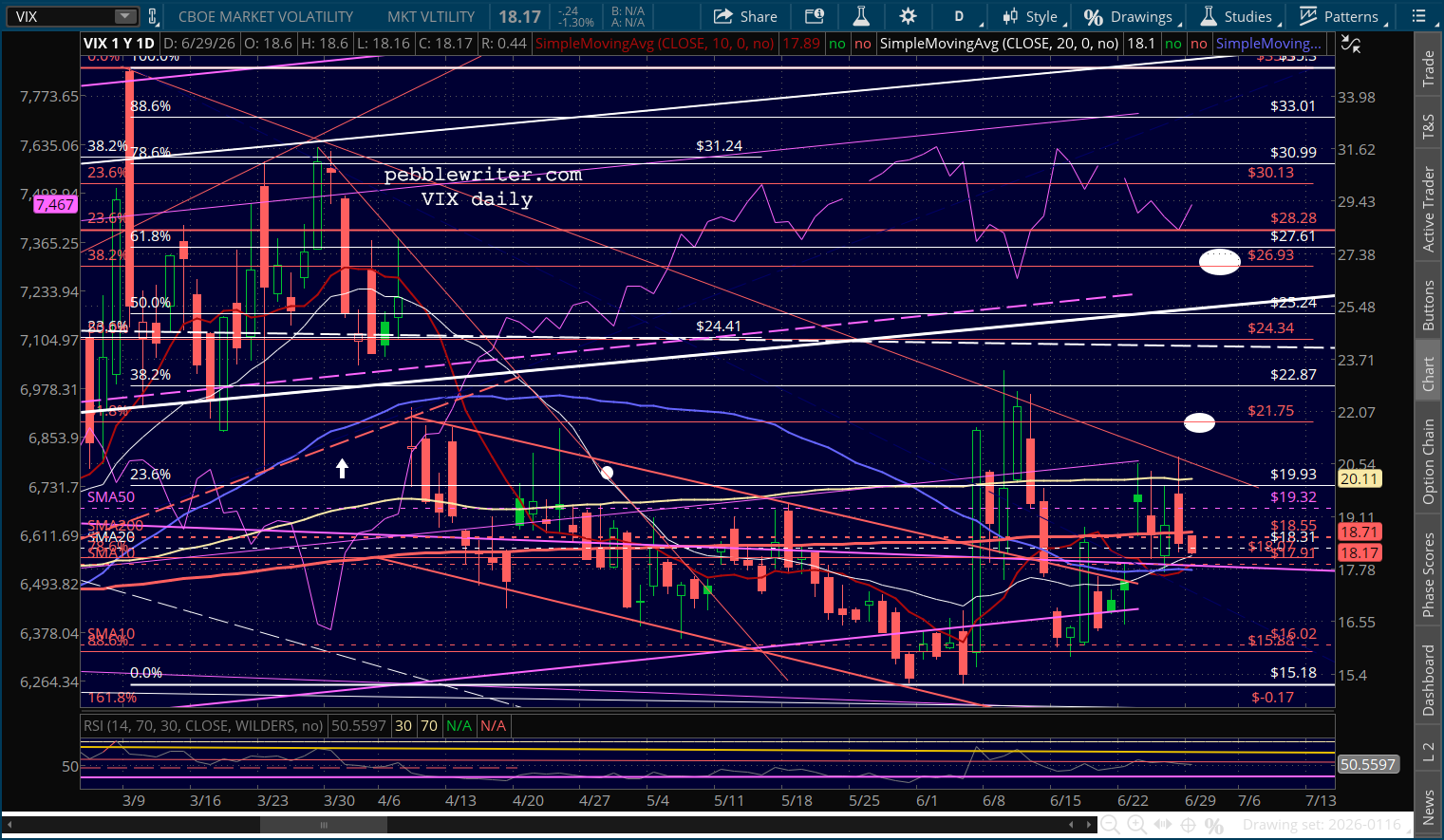
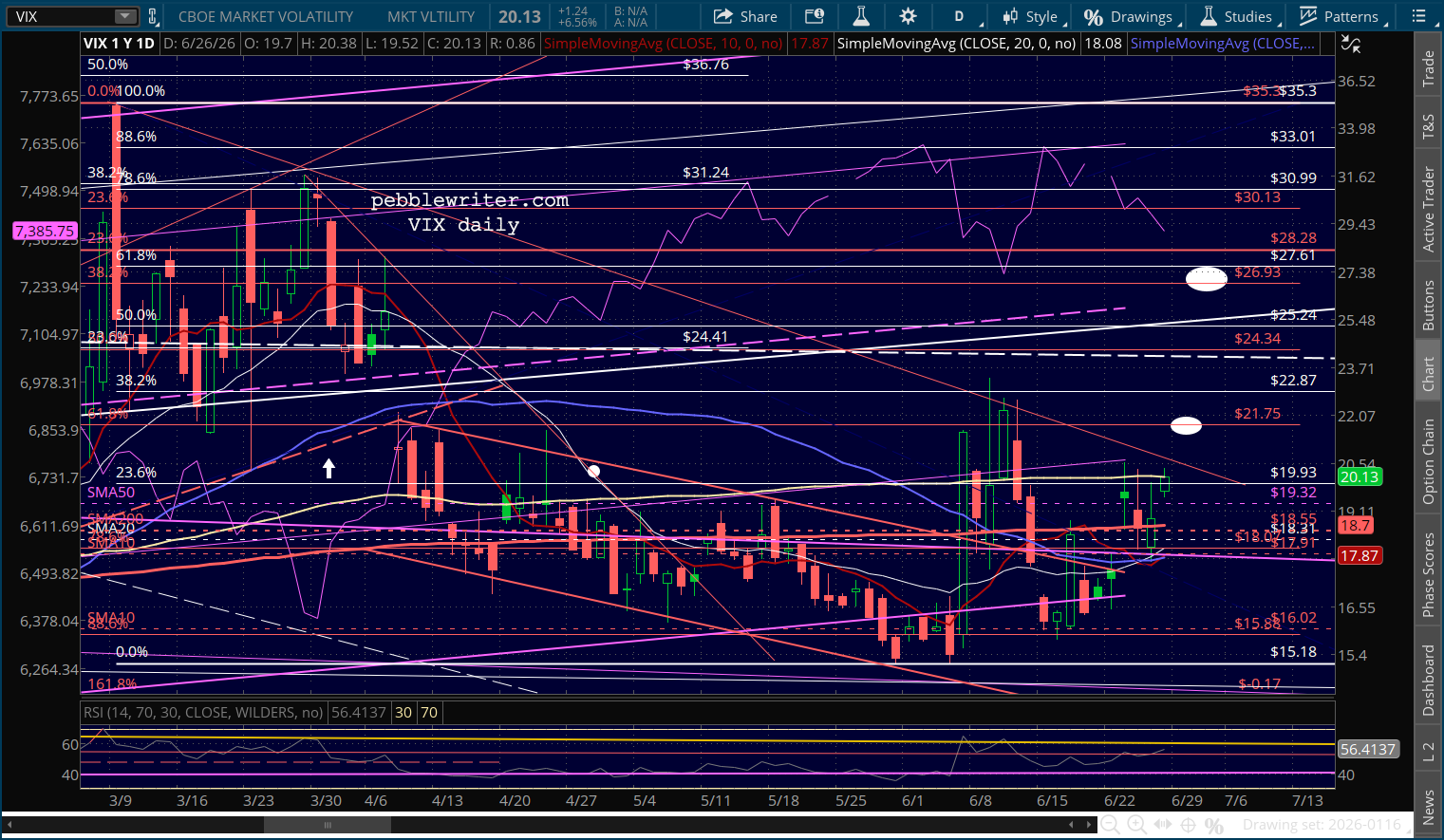
    …and rising vol.

    As we’ve discussed many times, SPX’s RSI chart confirms what the Fibonacci ratios have told us: we’re nearing an important inflection point. A bounce at the SMA200 would be completely normal. A drop through it would point to potentially much lower prices.


    The most likely path at this point is probably a bounce at the SMA200 into the end of March (end of Q1 meltup) followed by another drop to 6624 around April 24. But, it Trump et al don’t lay off with the warmongering, we could get there (and lower) much sooner.

    Stay tuned…

  • Speaking of War

    The expanding Iran War has driven oil prices up beyond another trend line of resistance, adding to the market’s angst and increasing the odds of an equity breakdown. The yellow TL from 2022 has been broken numerous times, but sharp, swift pullbacks always followed.

    A newer line of resistance, the white dotted trendline, began to hold sway in July 2024. It has now been broken as well. Depending on whom you ask, this breakout could be more long lasting. The likely net result: higher inflation and much lower odds of those FOMC rate cuts that stocks have been banking on.

    There’s a differently-shaped pattern in RB that also shows a breakout. And, frankly, the transmission mechanism is stronger between YoY gas price changes and inflation than it is oil prices.

    Either the administration was wildly overoptimistic about the pace of the war or they just decided not to worry about inflation/interest rates/stock prices. Since there is zero chance of the latter, we’ll assume that they badly miscalculated the speed and ease with which they could take over Iran’s oil fields. If CL remains above 75, don’t look for stocks to recover any time soon.

    We’ve been looking to ES’ 200-day moving average for the past week or so, anticipating that ES might be allowed a tag once it reached a logical turning point. That point is now, here at the .786 Fib. It would form a nice little Gartley pattern and would give the bulls a reason to breath a sigh of relief.

    If the SMA200 doesn’t hold however – say in the wake of persistently high oil prices – there are many much lower targets on which to focus.

    SPX’s RSI certainly suggests much lower prices. It has been making lower highs since July 2025, a remarkable span of negative divergence that has accelerated since September and should pay off handsomely for bears.

    I’d like to thank those who have sent notes of encouragement over these past few weeks. I have been experiencing daily headaches for over a year. They were accompanied by vision changes, hearing changes, fatigue, and intracranial hypotension which caused my brain to literally sag within my skull. I was fortunate to connect with one of the world’s top experts in cerebrospinal fluid leaks who surgically repaired what was ultimately diagnosed as a venous fistula. The improvement in symptoms has been dramatic. Although I am very sore from spine surgery, I am looking forward to getting back to normal. Thank you for your patience and your support.

    I will be working over the next few days to finish the work on the website’s membership management system. So, this would be a good time to renew or update your memberships before everything is back behind a paywall.

    Stay tuned…


  • Is It Time to Start Worrying?

    There’s an excellent interview in The Market with William White, former chief economist for the BIS, who worries that America is turning against the very financial system it has built.

    William White is used to warning the powerful in politics and the financial world – and being ignored by them. The Canadian-born economist has worked for central banks for almost fifty years, including the Bank for International Settlements (BIS) in Basel, where he was chief economist until 2008. He was among the few voices warning of the financial crisis at the time.

    Today, he worries about bloated debt levels in most Western economies, complacent financial markets and a fragmentation of the world economic and financial system. «We could see the formation of two blocks, one dollar based, and the other renminbi based, where the renminbi block will be more and more backed by gold. People will choose their block in part based on whom they trust», White says.

    continued

  • Nvidia’s Mixed Bag

    NVDA’s shares are slightly higher after a lukewarm response to yesterday’s earnings and outlook. Shares popped up to tag the .786 Fib retracement in the after-hours, but quickly fell back to where they had closed. Who knows if the H&S pattern will play out. But a tag of the SMA200, currently at 174, seems a foregone conclusion.

    4Q revenue grew 73% and the first-quarter outlook beat estimates. But concerns remain over a perceived bubble in AI processors fueled by circular financing, where the company lends money to AI startups and cloud providers (e.g., OpenAI, CoreWeave), which then use those funds to purchase NVDA’s GPUs.

    Although the company vigorously denies it, investors (and short sellers) believe the practice creates artificial revenue growth and demand. Shades of Enron…

    When the company whose market cap is 8% of the S&P 500 sneezes, it’s no surprise that futures seem to be catching a cold.

    It’s an important session for stocks, at least so far as SPX’s RSI is concerned.

  • NVDA’s World

    It’s NVDA’s world, and we’re all just living in it. The earnings and outlook are due out today. If it plays out, the aging H&S pattern suggests a very large decline. But…

    The rest of the market is watching closely. It would be difficult to diverge from NVDA – in either direction.

    continued for members


    Oil and gas prices continue to rise, which should give Fed doves some pause. It highly unlikely that going to war with Iran would bring them down.


    Our 2s10s model continues to send a very strong warning.

    Stay tuned…

  • Post Schedule

    Friday’s post will be released in the afternoon/evening. There will be no posts next Monday-Wednesday while I’m stuck in hospital with minor surgery.

    Our forecast remains unchanged at this time.


  • Our Tariffied Markets

    Futures are off moderately following Friday’s bounce from the Supreme Court’s ruling that the bulk of Trump’s tariffs are illegal.  The benefits which might have ensued from tariffs being rolled back, however, were almost immediately negated by Trump’s insistence that alternatives to the current tariff regime would be implemented. It’s yet another chapter in the year-long tariff chaos that has pushed inflation higher and injected unwanted uncertainty into business and geopolitical dealings.

    continued for members

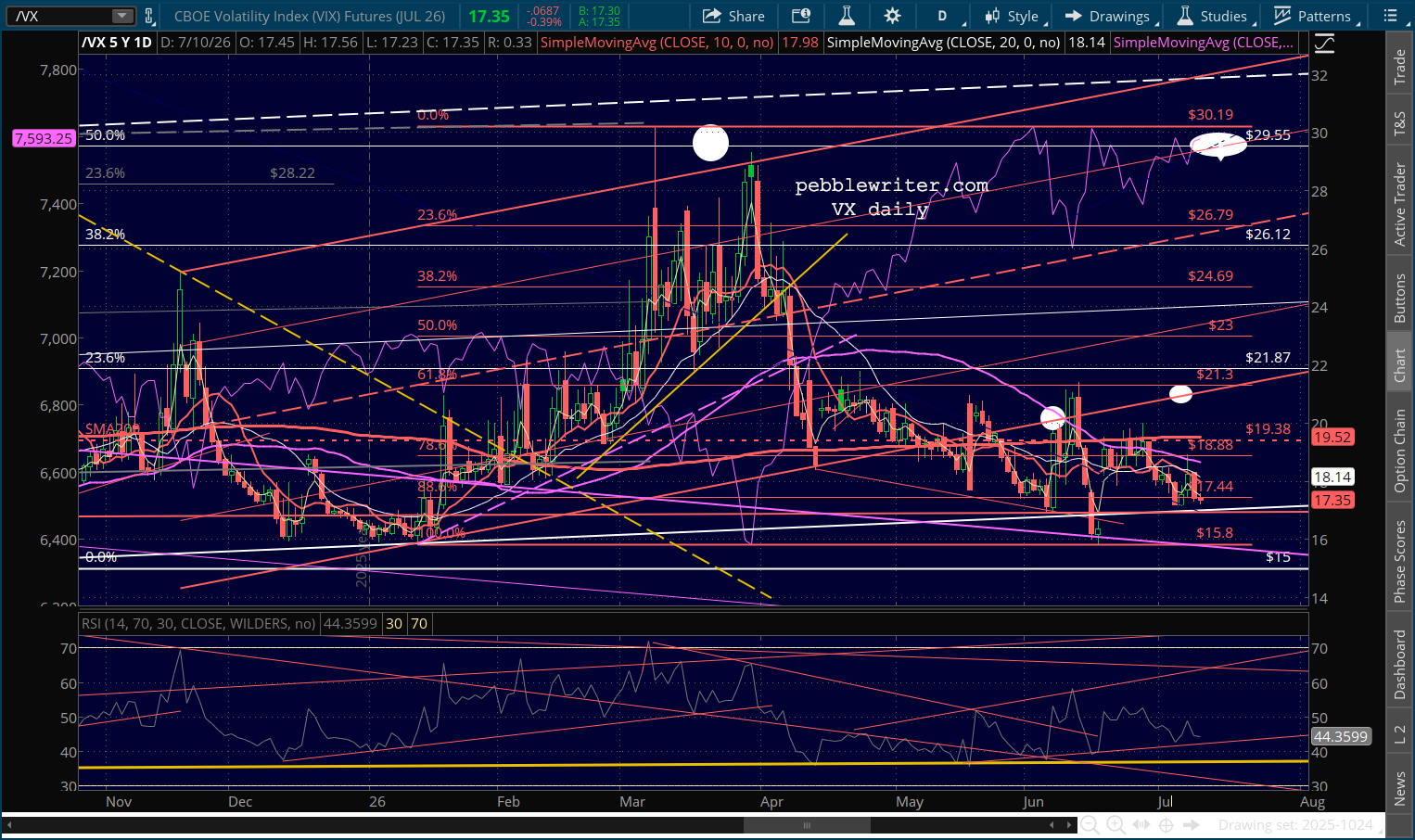
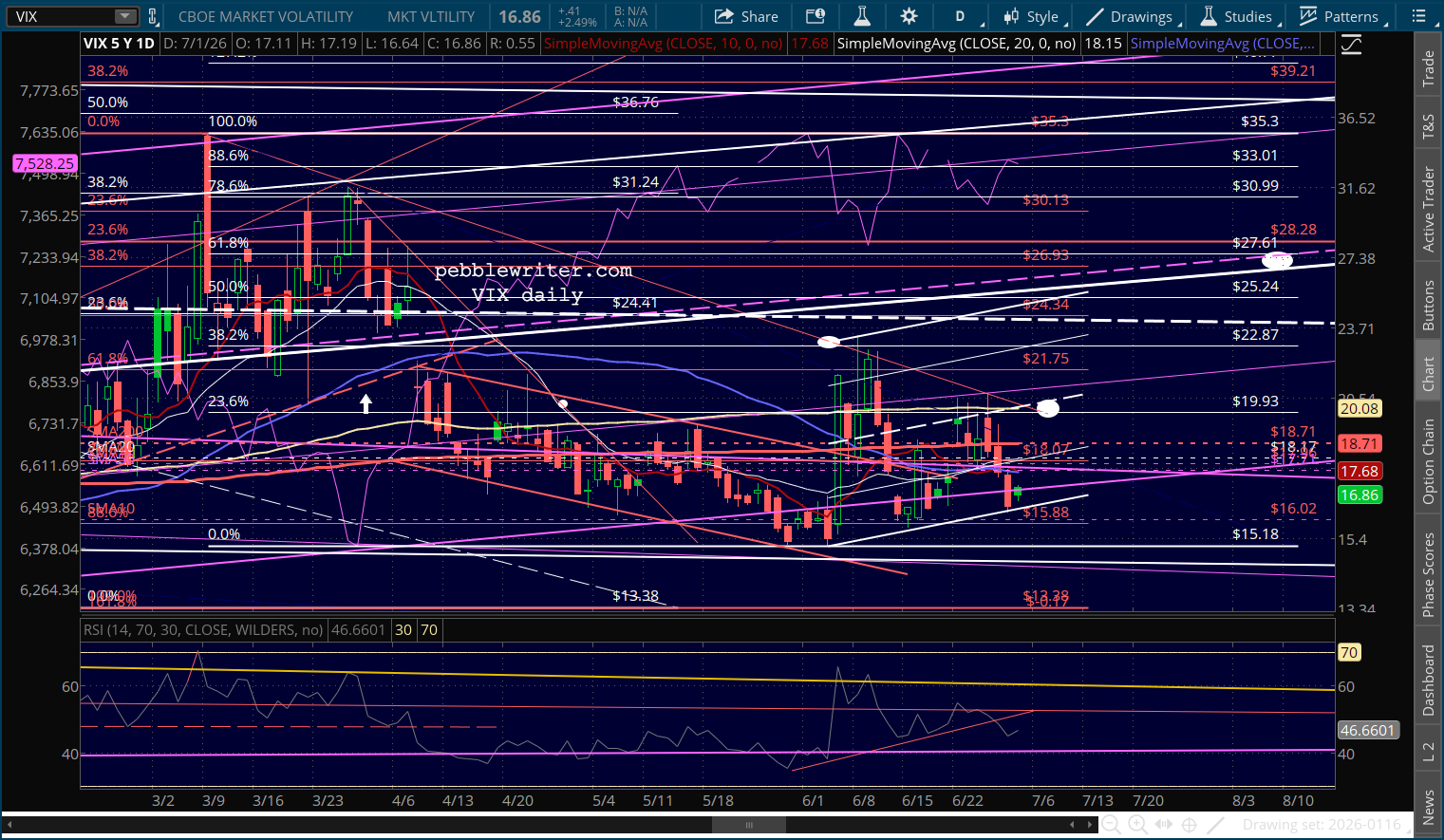
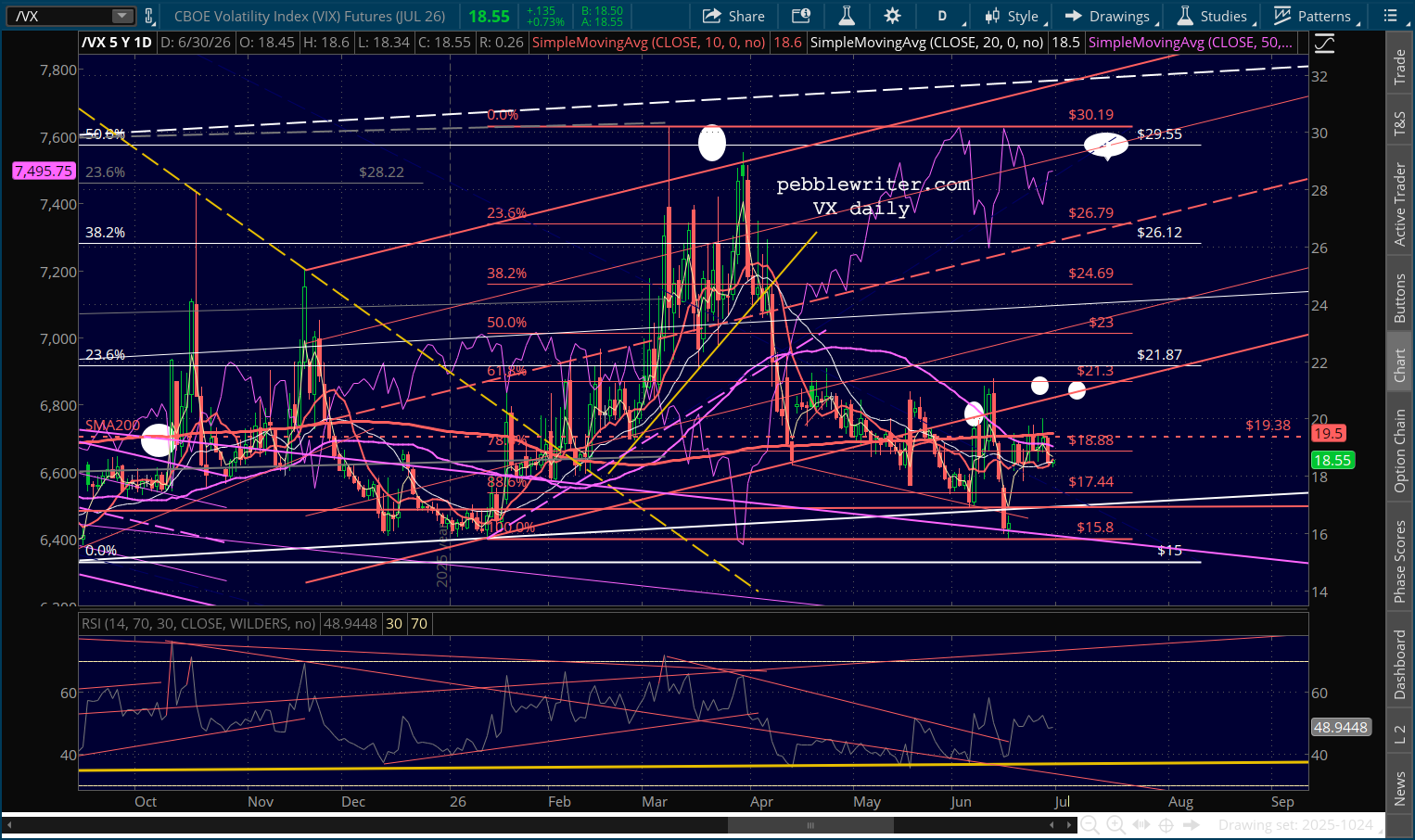
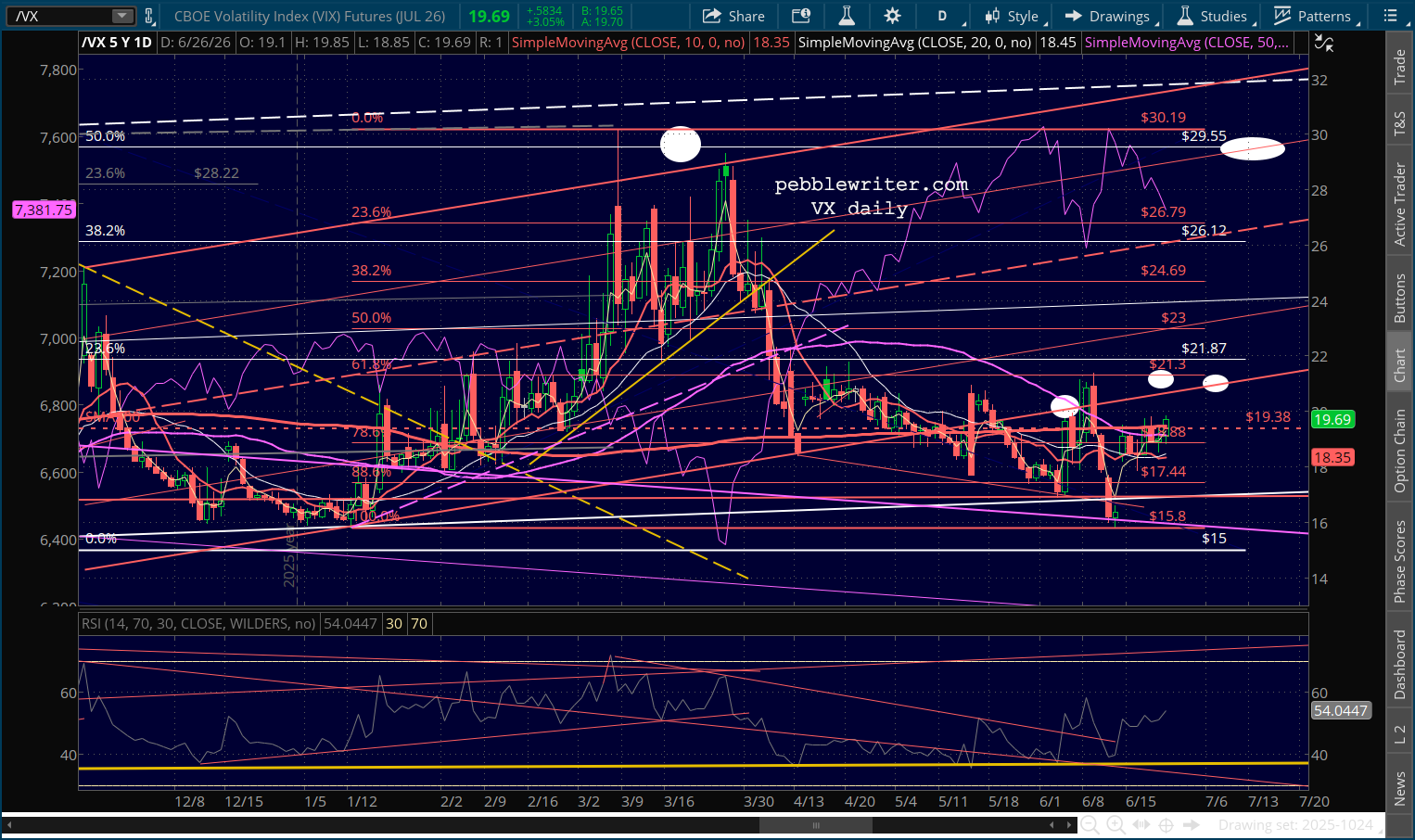
    VX is still broken out, but has yet to top last week’s highs.

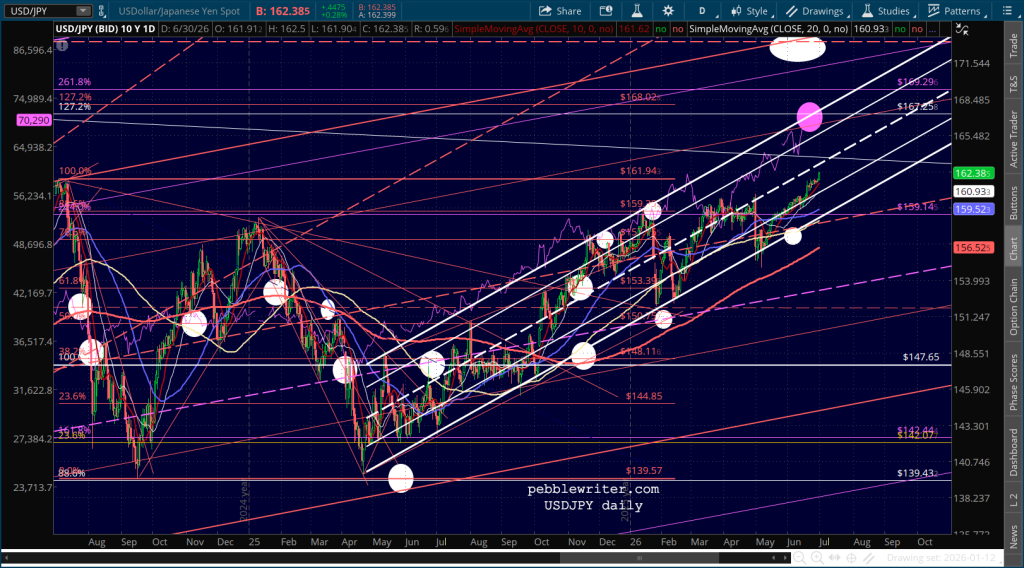
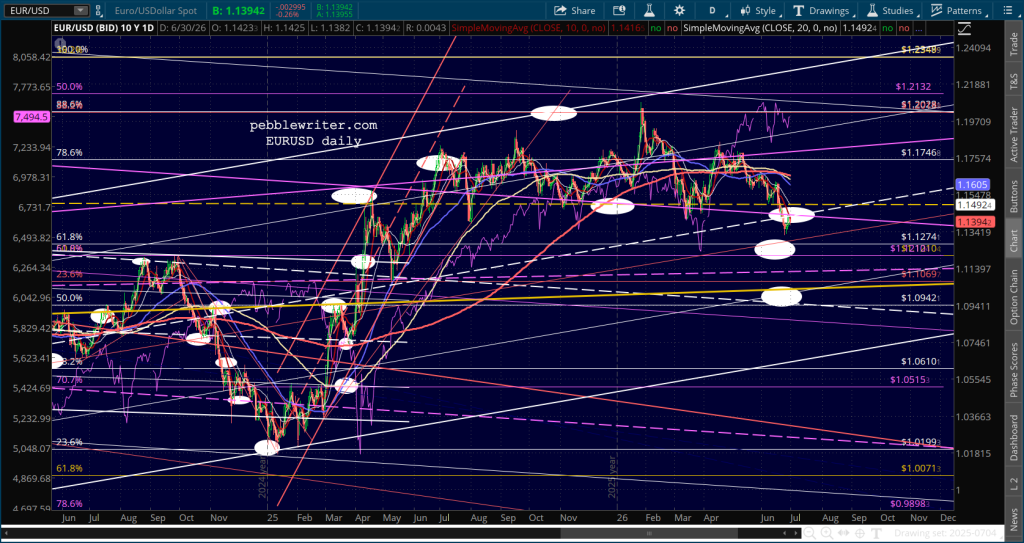
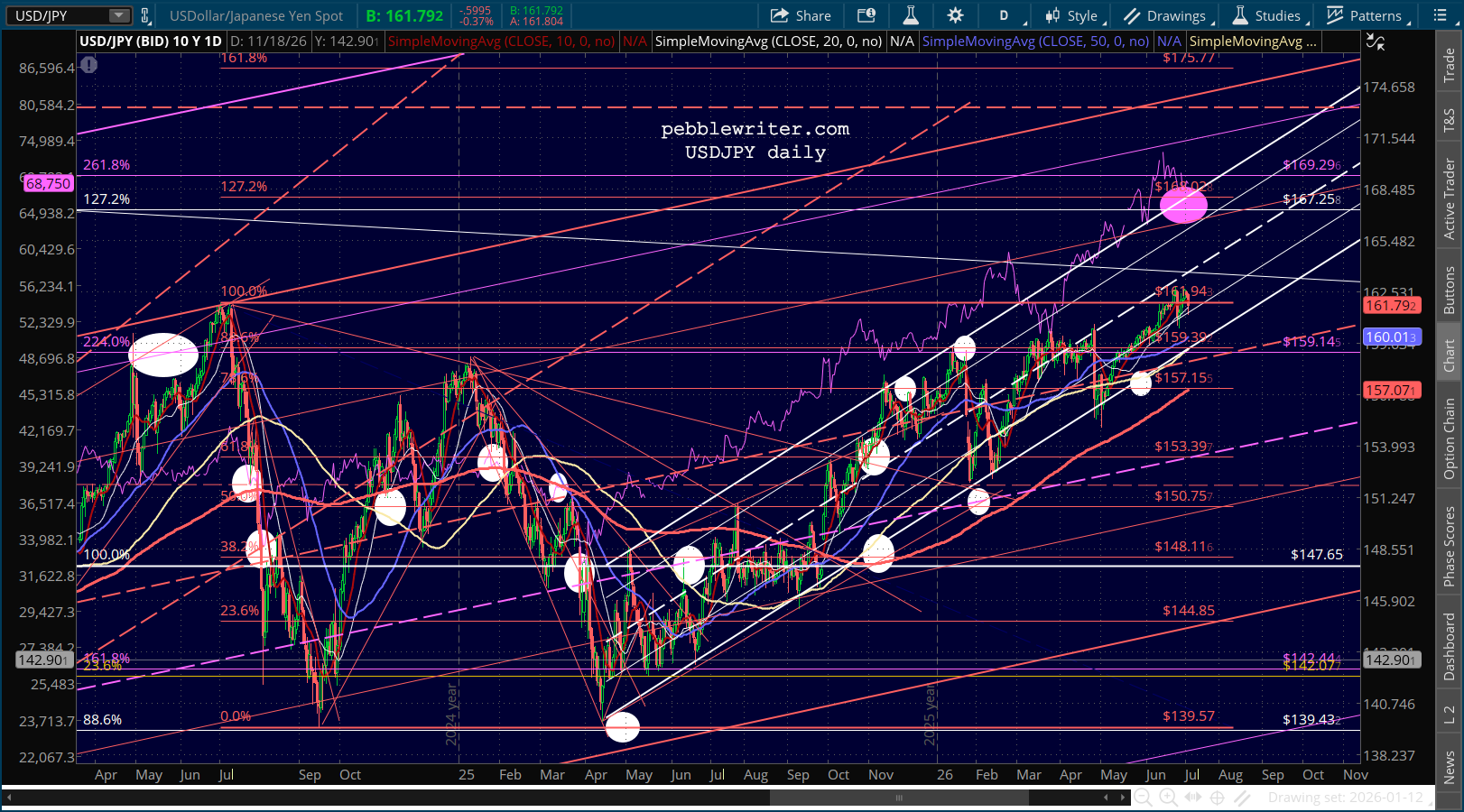
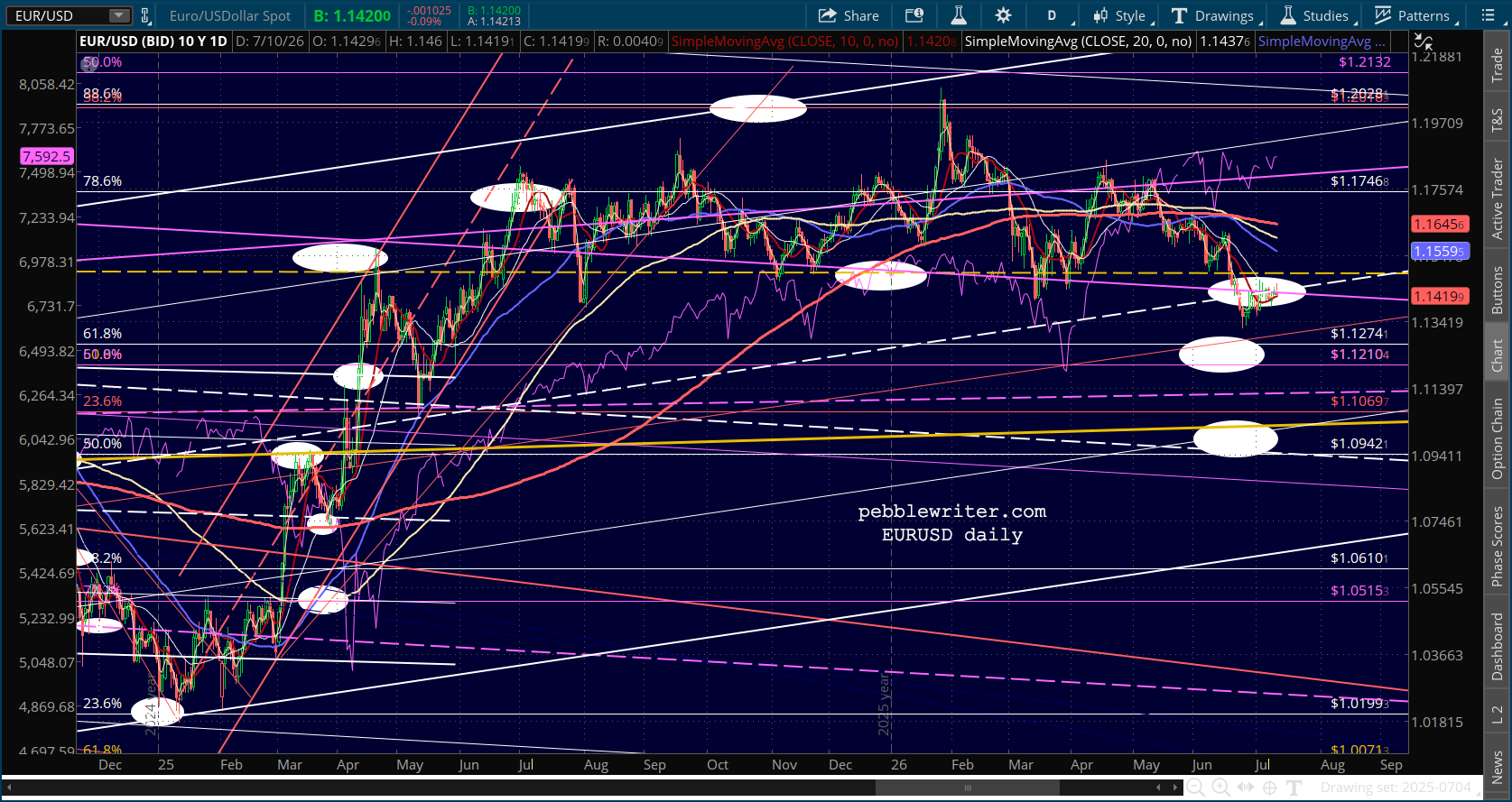
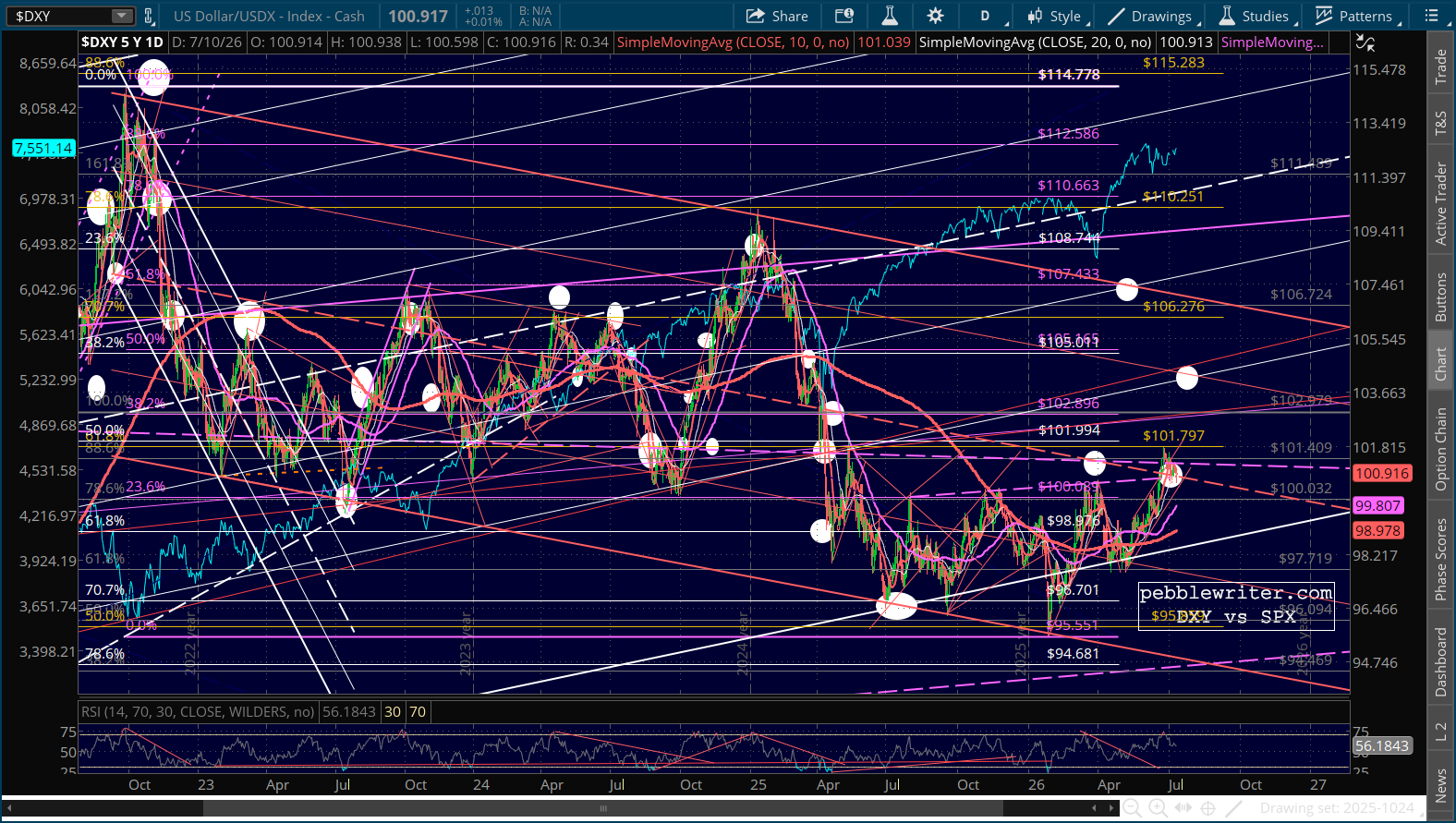
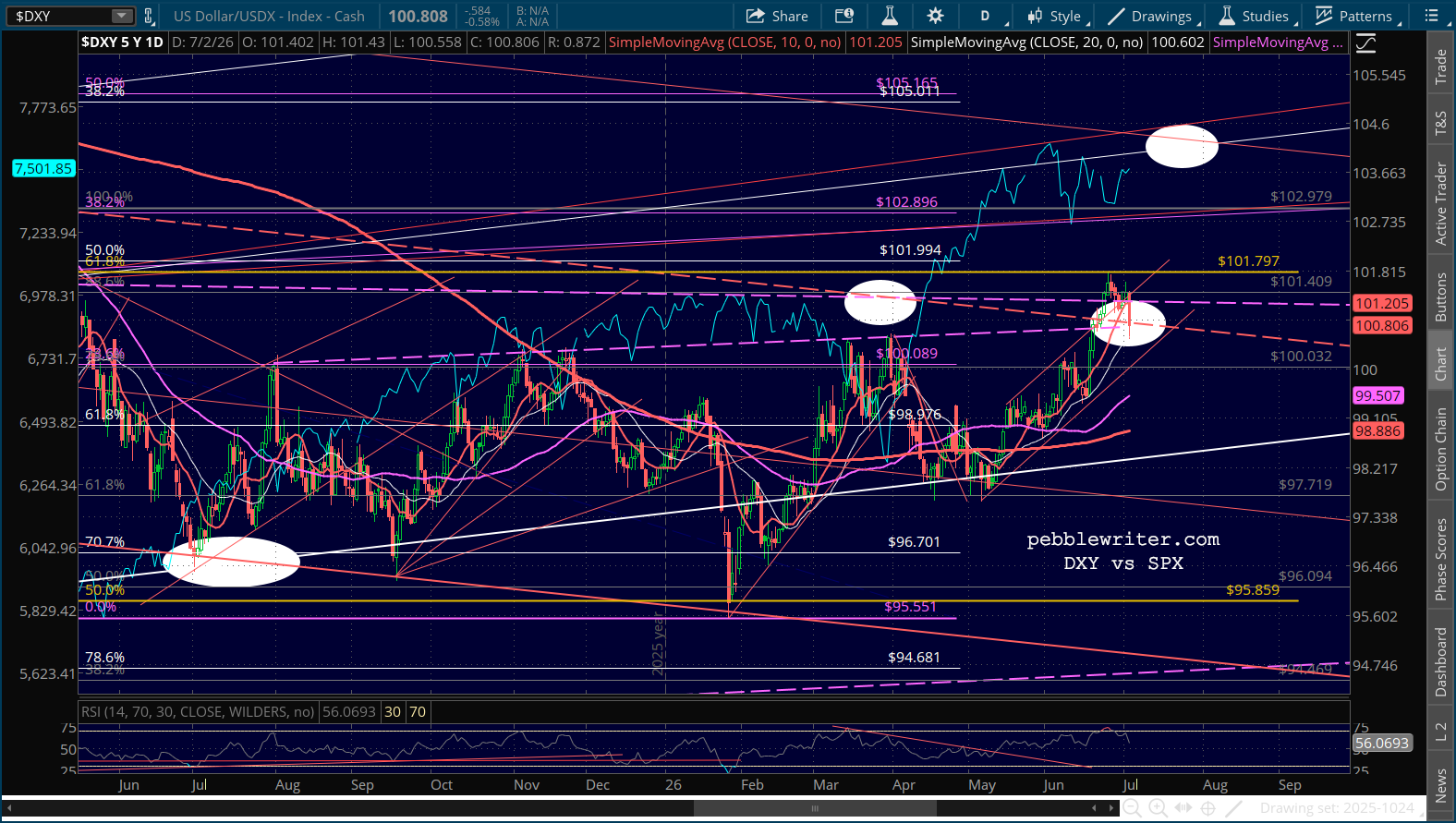
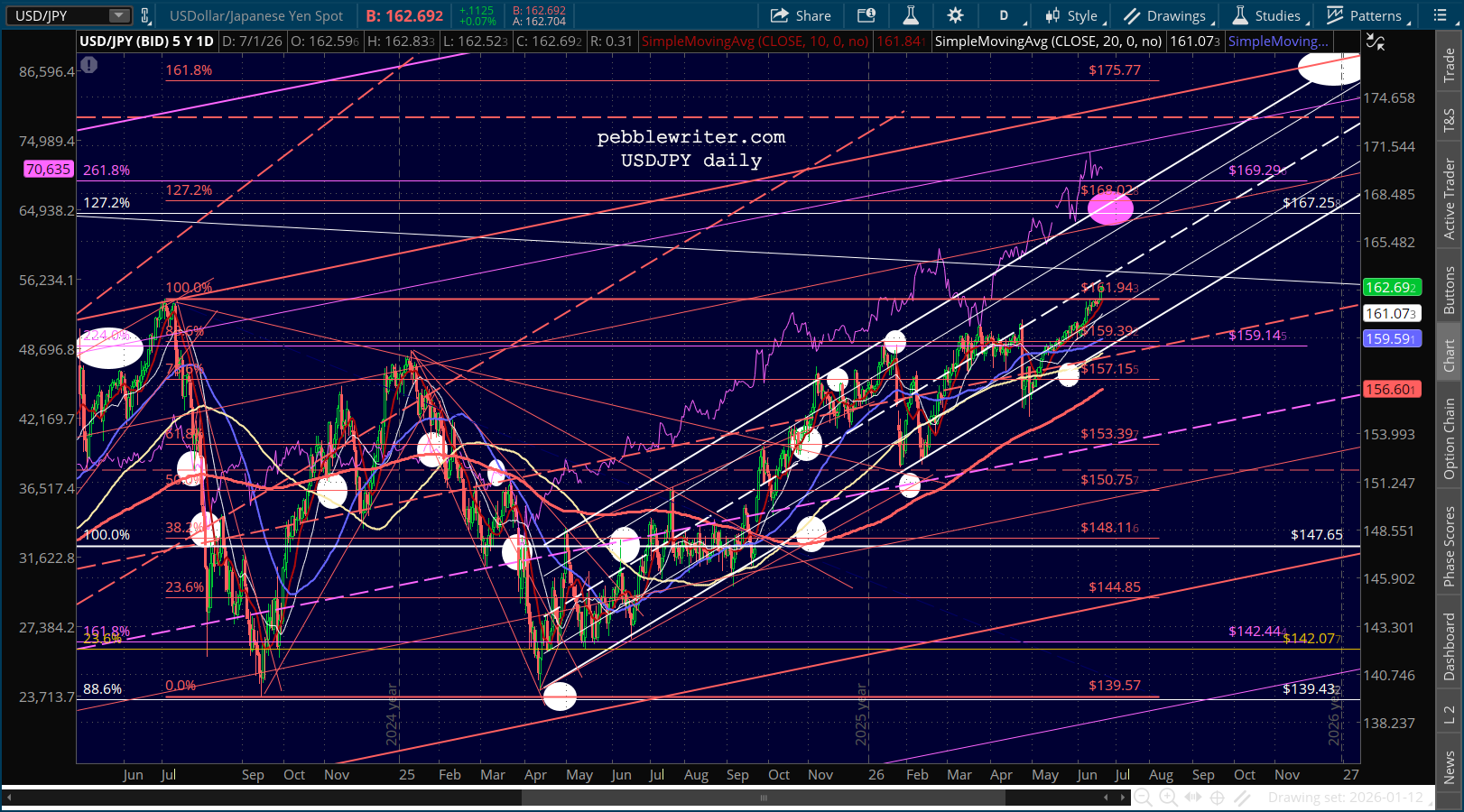
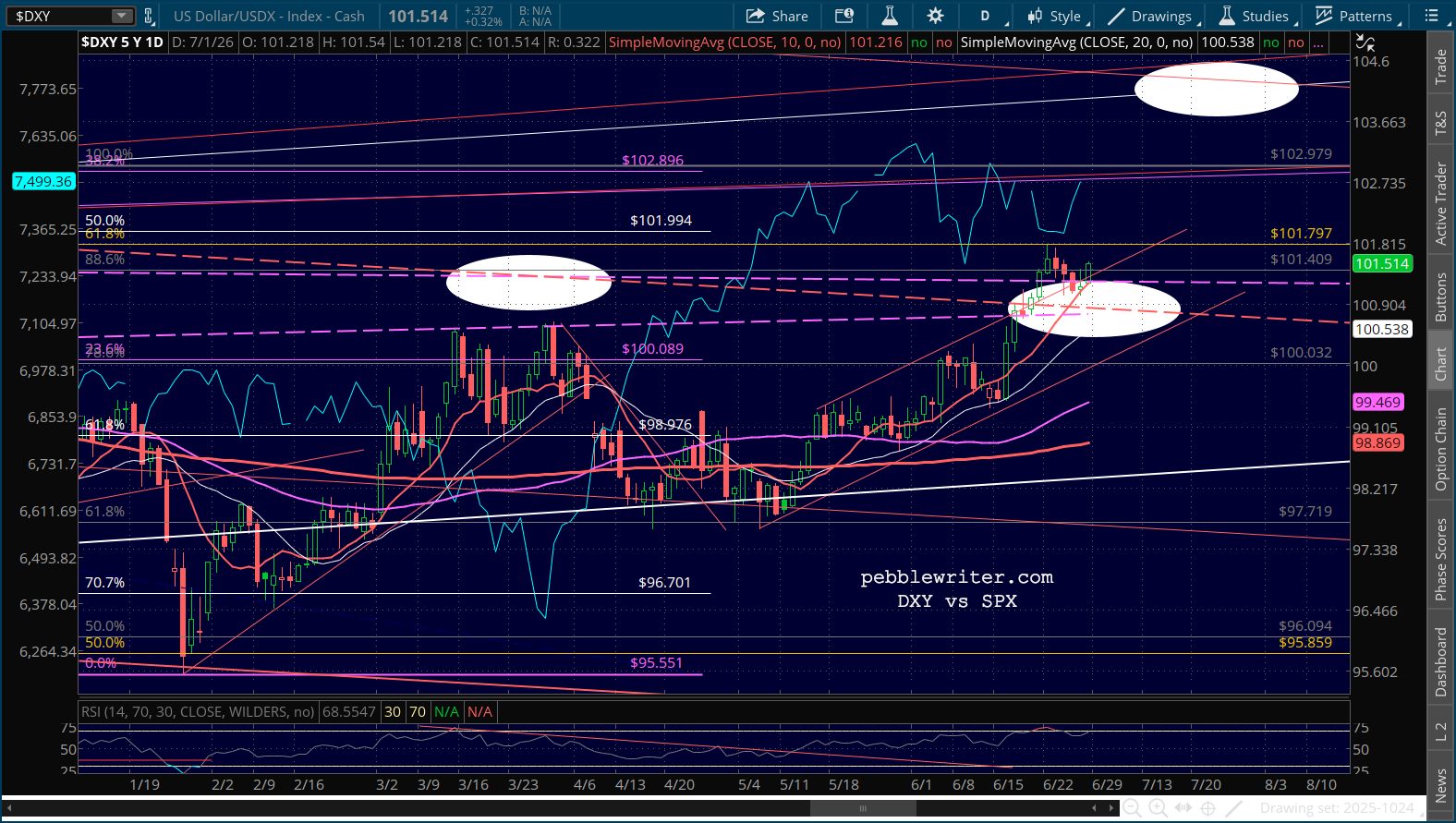
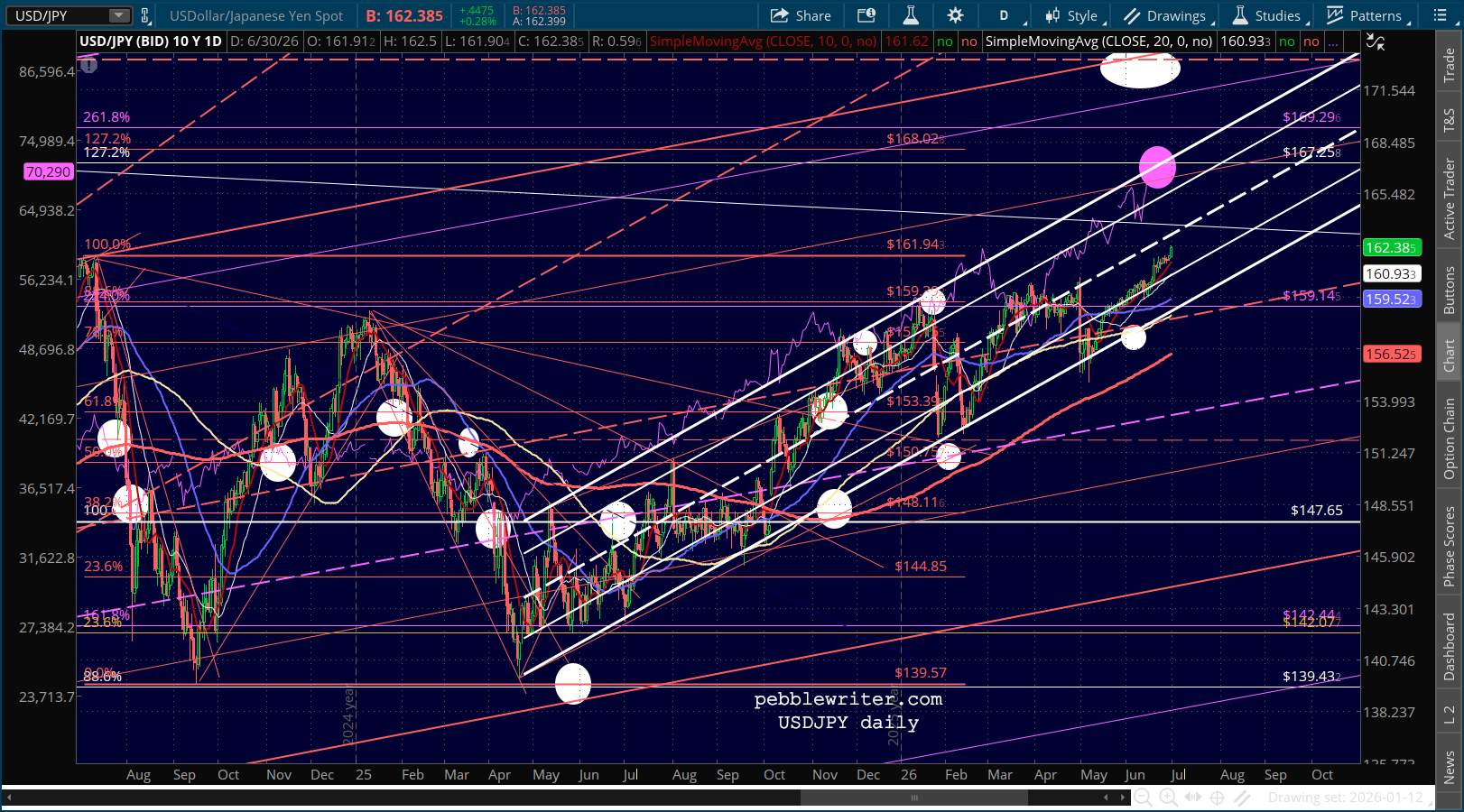
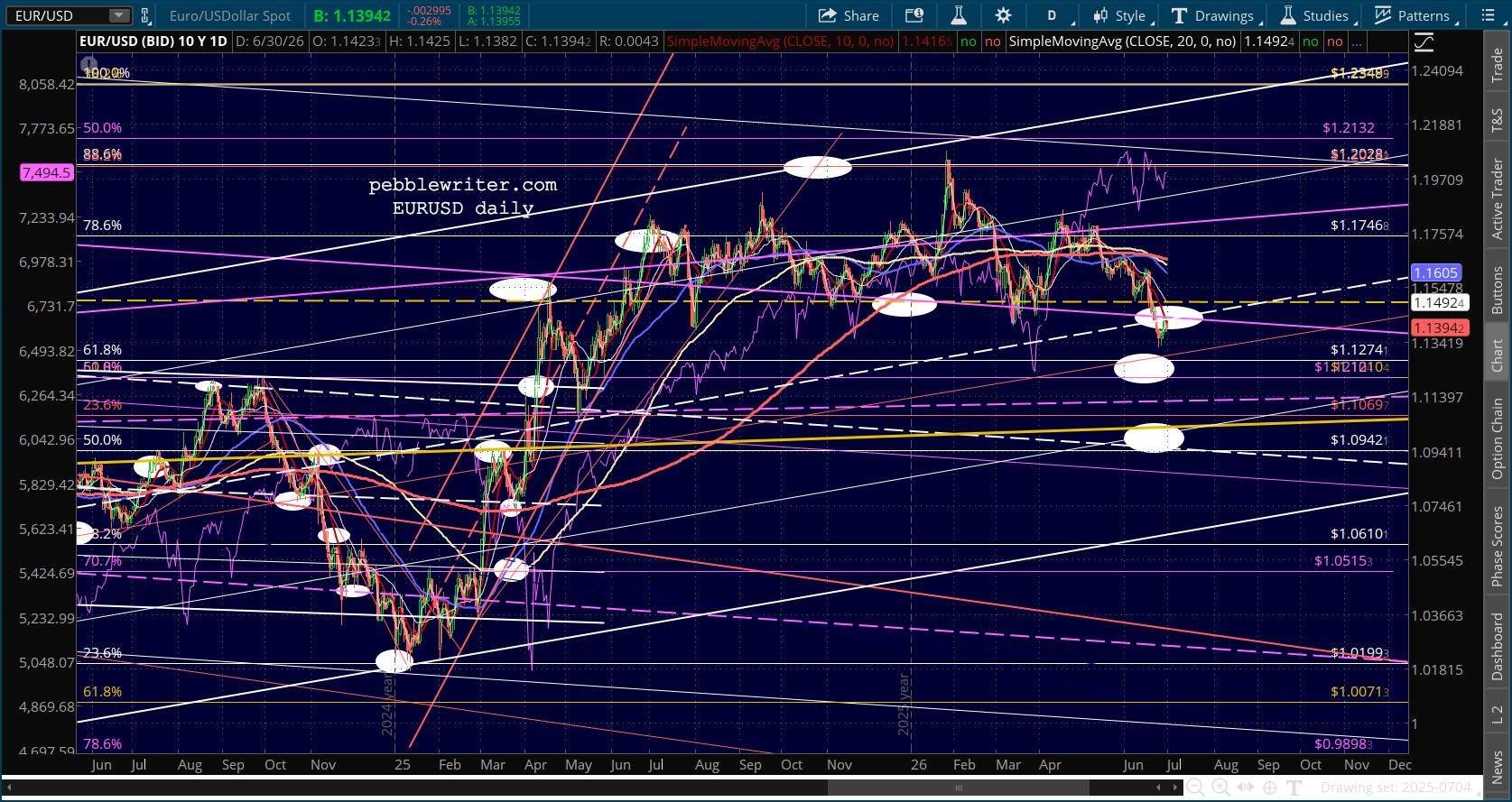
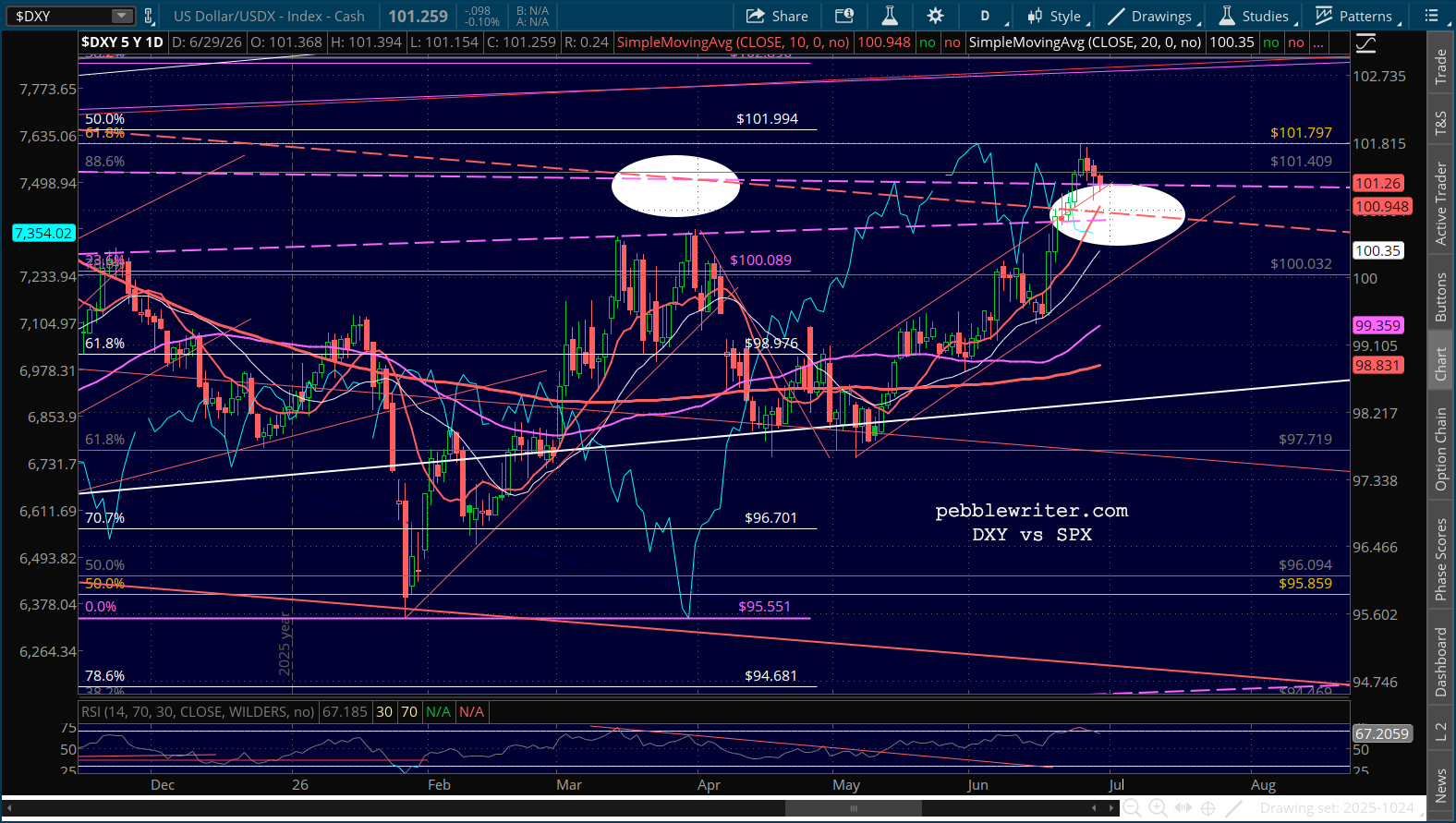
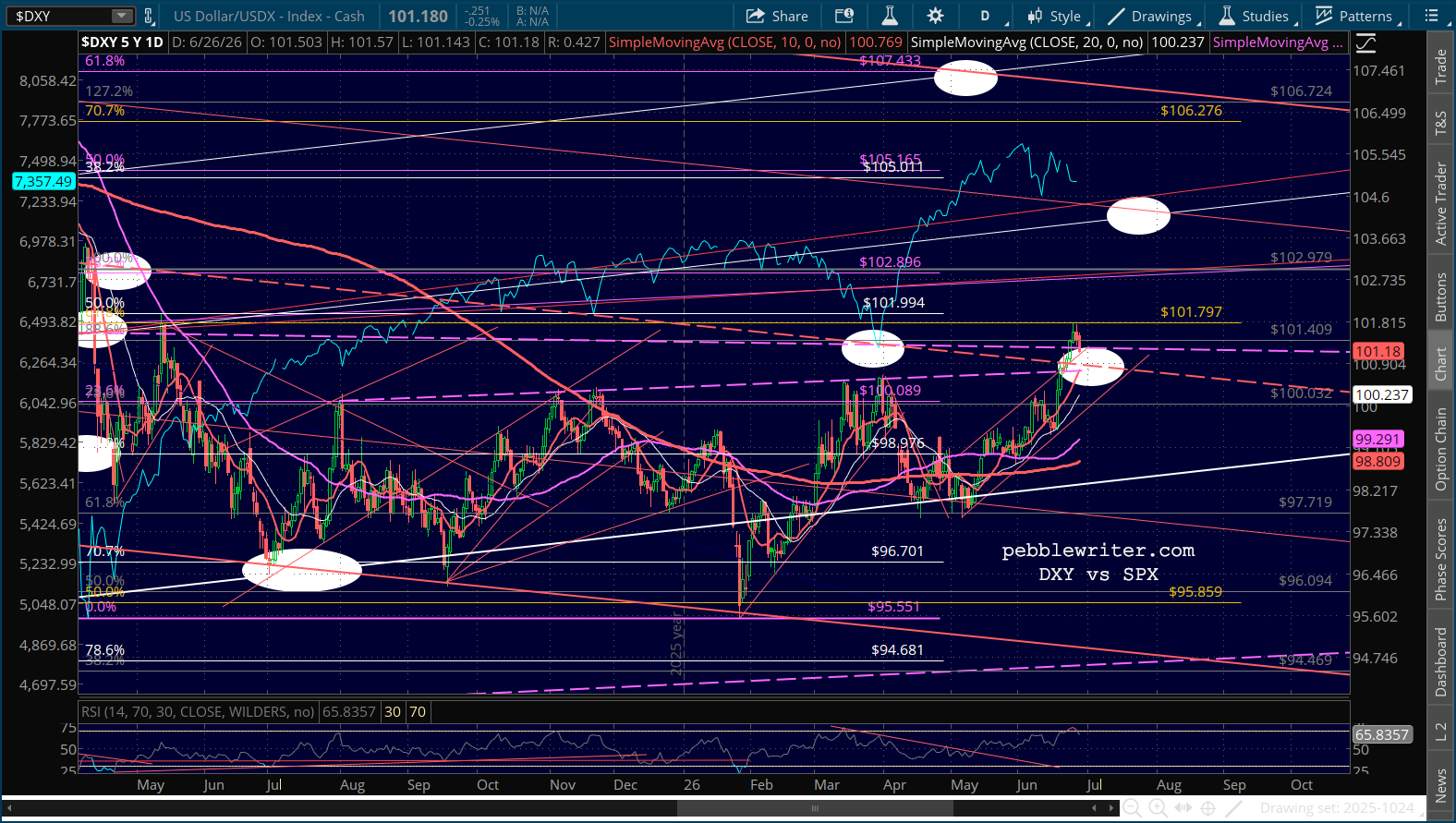
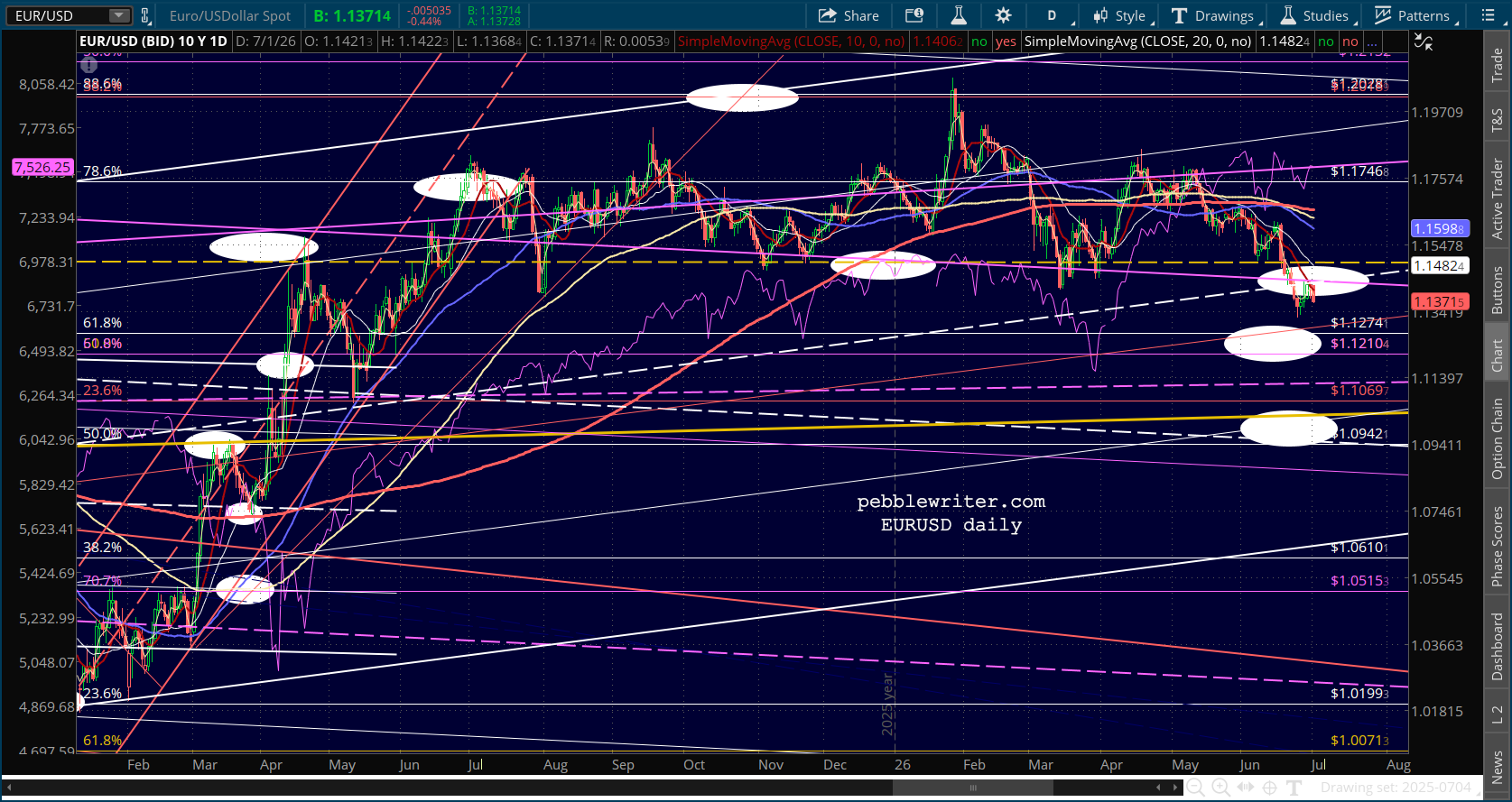
    The USD is still consolidating against both the euro and the yen…


    …while oil and gas continue their stealth breakouts thanks to the credible threat of a shooting war with oil producer Iran.


    It remains to be seen whether a wag-the-dog exercise in the Middle East is even necessary any more, as the tariff turmoil has kicked the Epstein matter off the front page for the time being.

    Meanwhile, the strong recent PCE data drove Fed governor Waller to ponder whether a rate hike might be in order in March.

  • Stagflation: More Than a Whisper

    Annualized Q4 GDP came in much lower than expected: 1.4% versus 3.0%. At the same time, December PCE (ex food and energy) heated up from 2.8% to 3.0% YoY (0.4% MoM.)  These data don’t necessarily scream stagflation, but they more than whisper it.  We’ll see if the algos are listening.


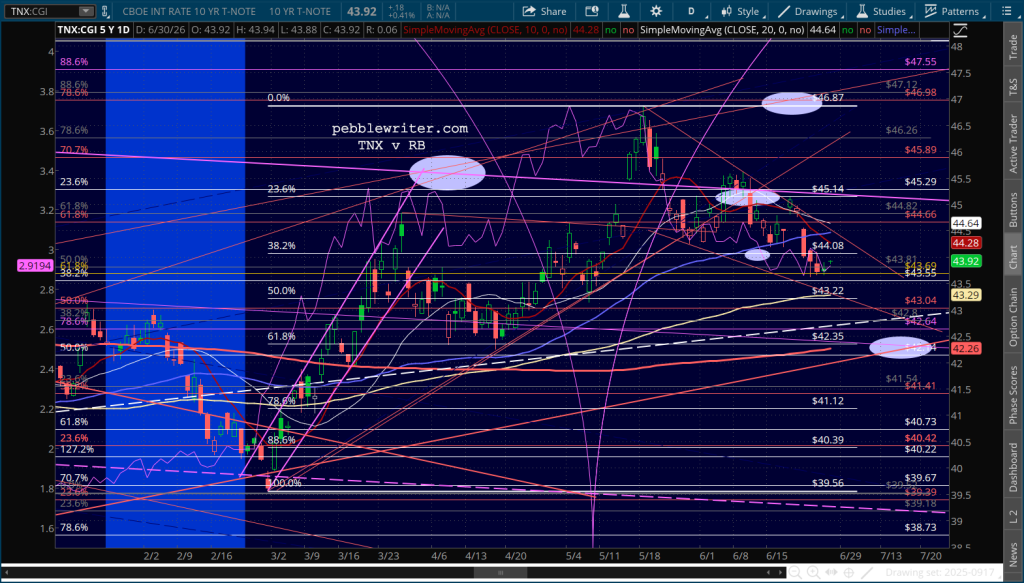
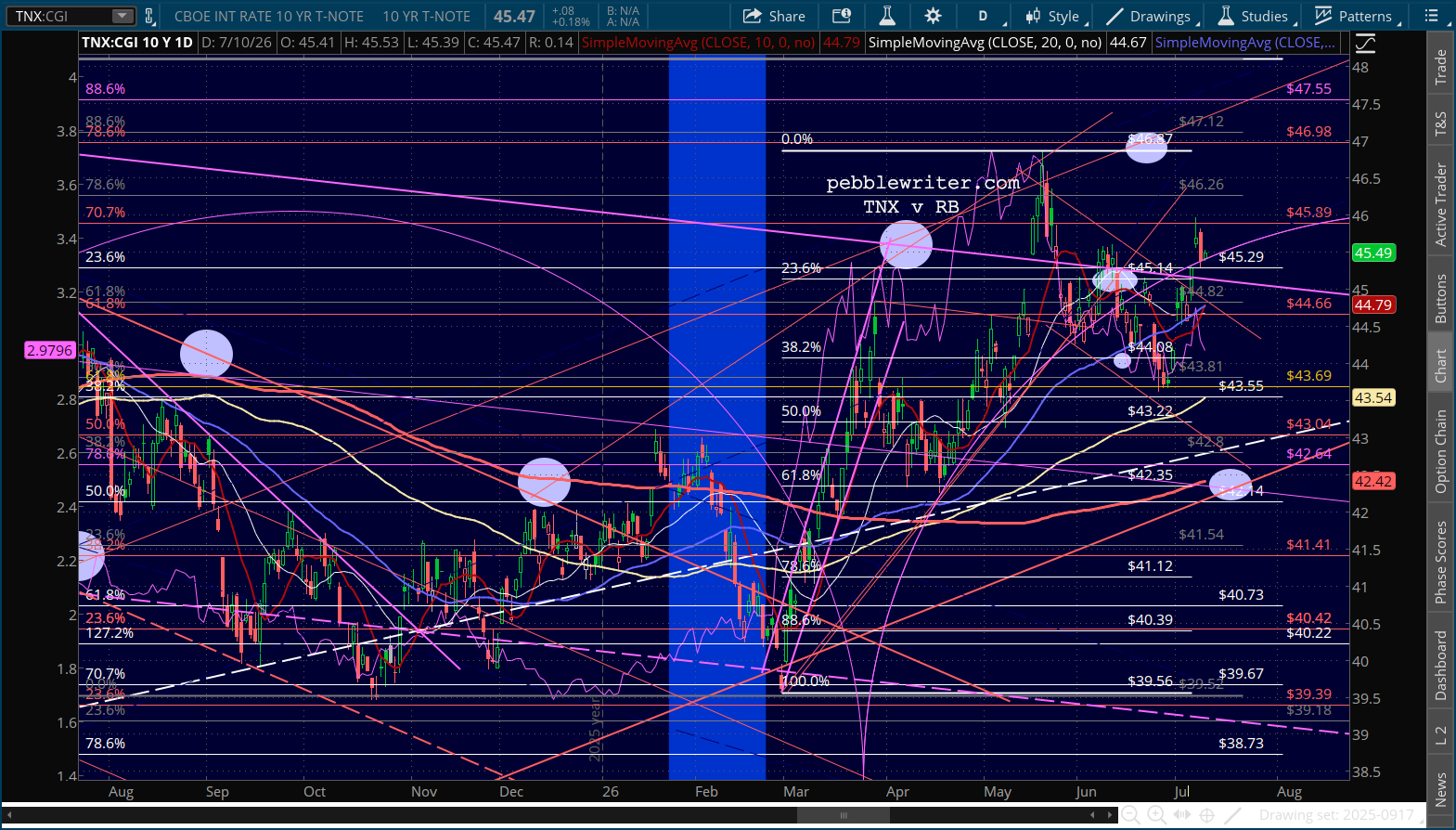
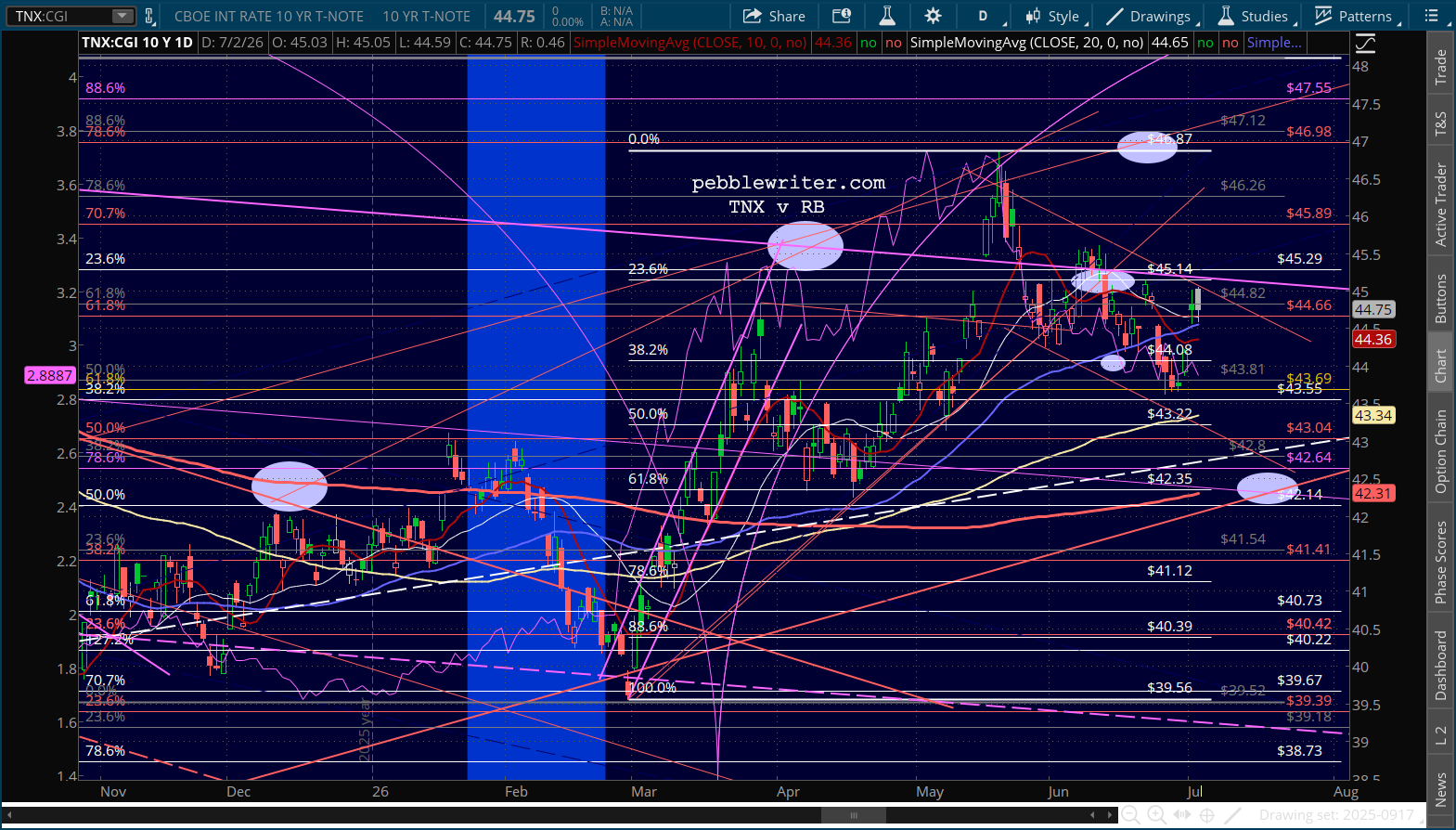
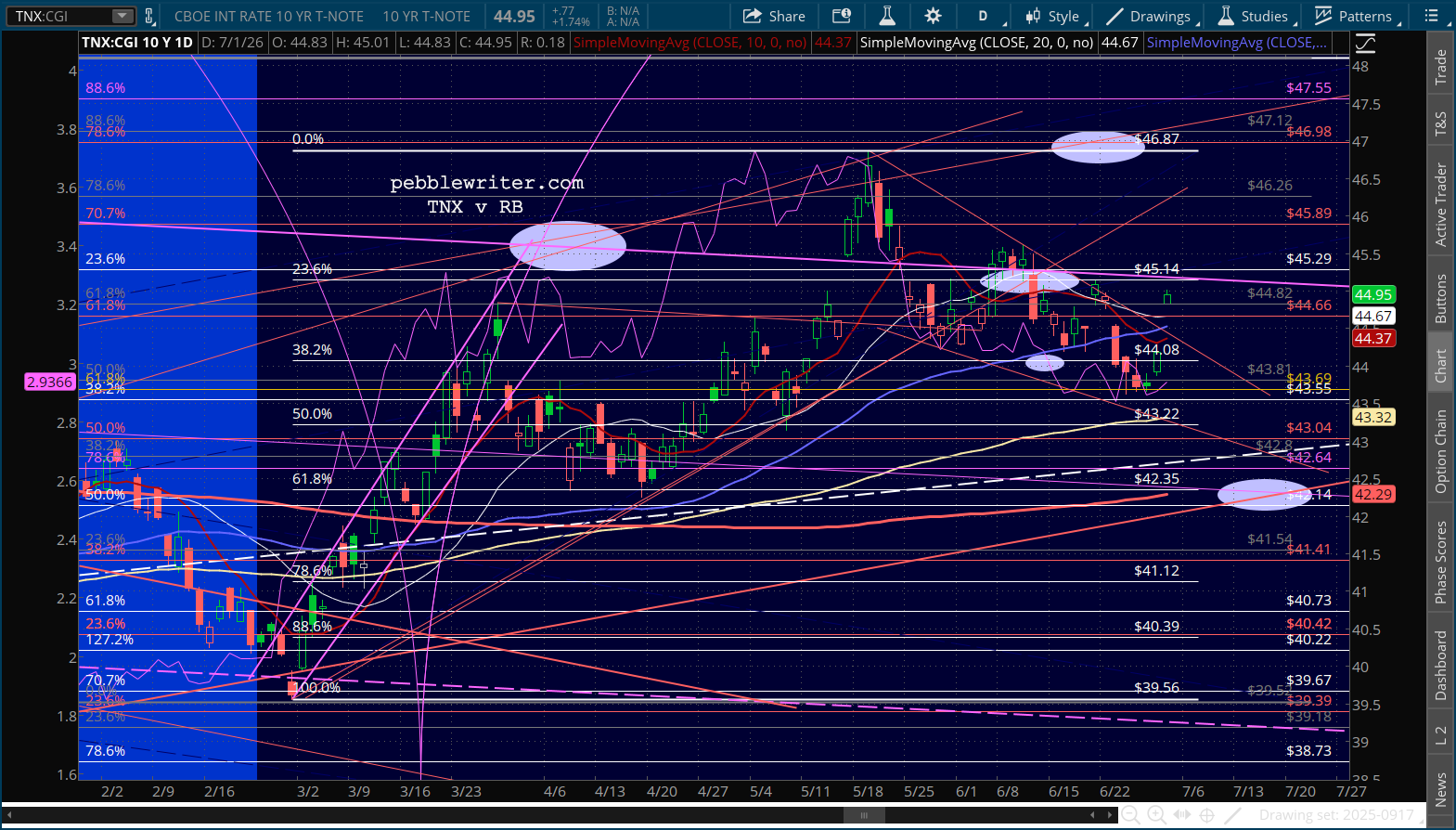
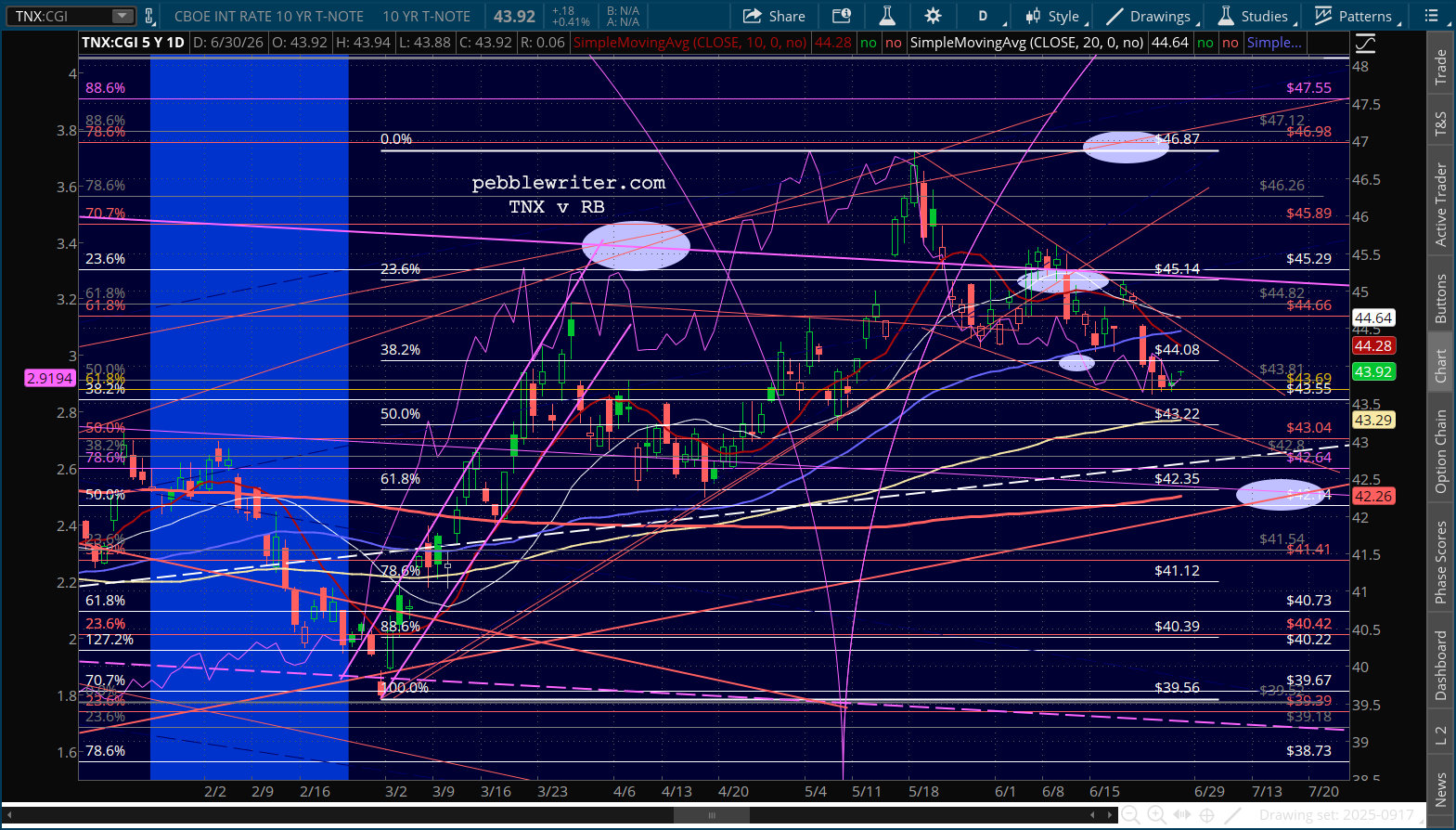
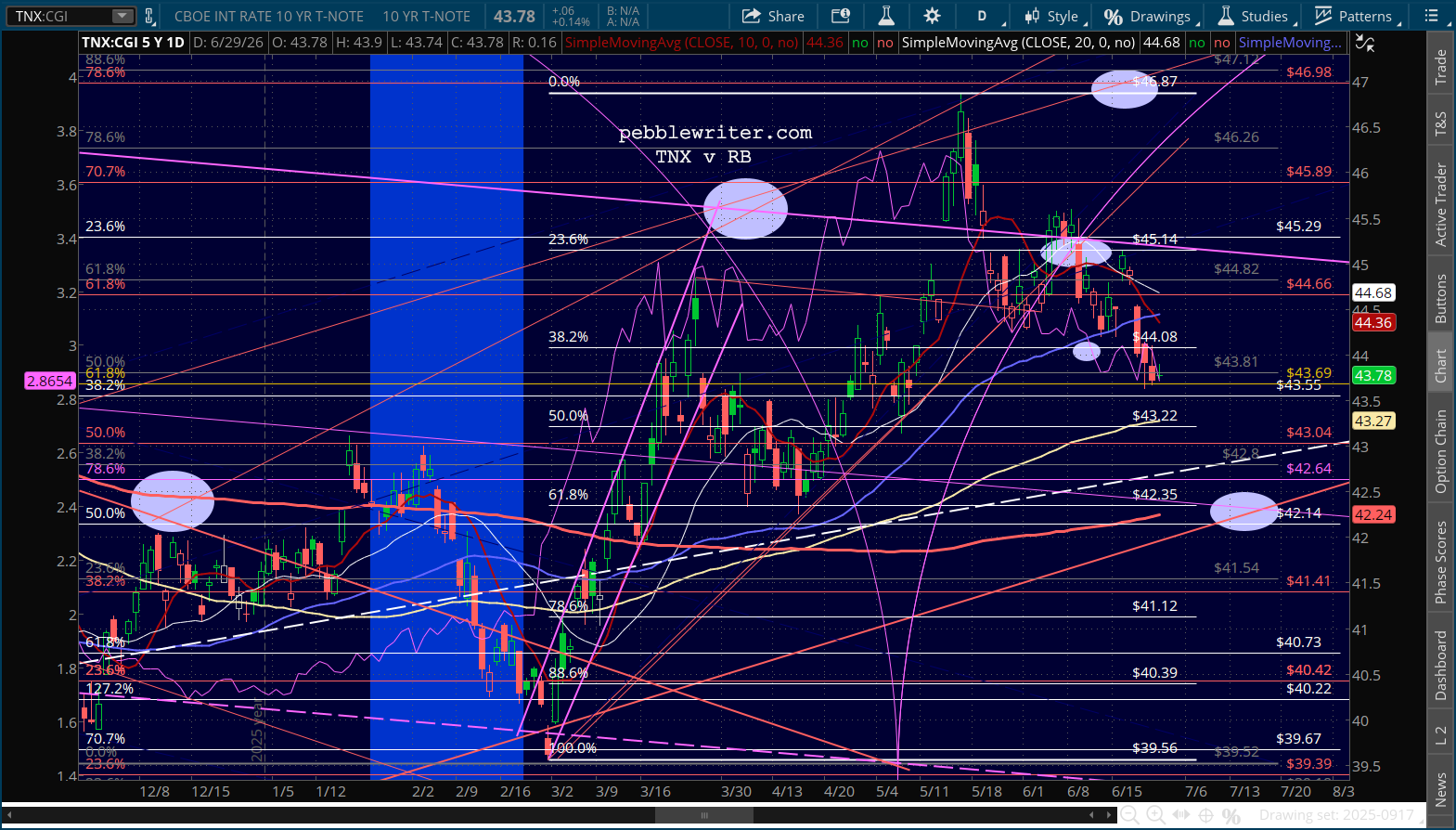
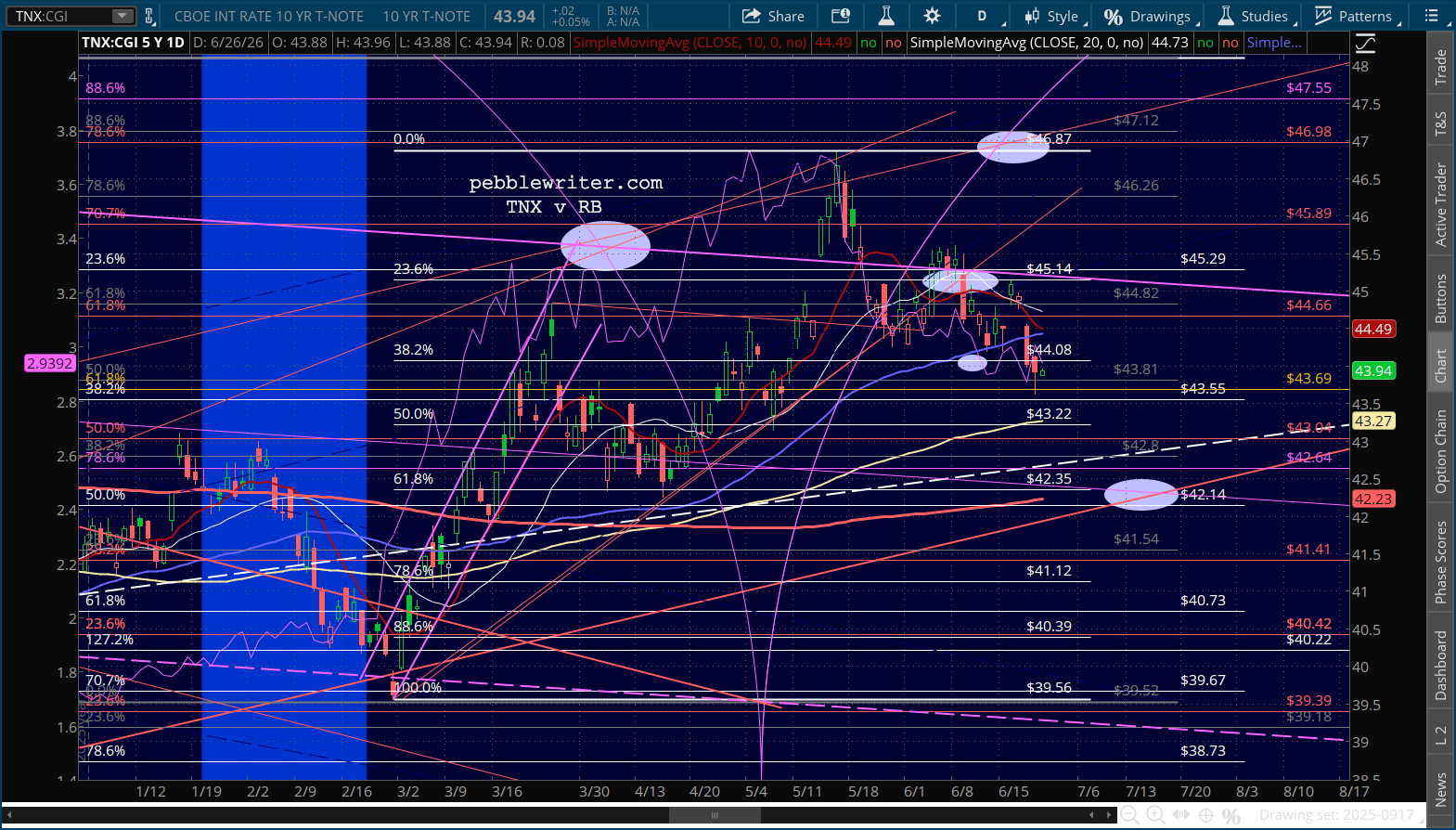
    Interesting goings on in the bond market, as the 10Y continues to counter oil/gas.

    They’re usually in lock step. As YoY gas prices drop, CPI generally keeps pace.

    But, RBOB futures are up 22% since Jan 5. The 10Y kept up until Jan 20, but has been plunging ever since.

    It might be because it’s diverged so much from CPI. Looking at the chart below, you have to wonder whether the risk implied in the 10Y is problematic.  There’s no question that CPI is understated.  But, does that explain the growing divergence between the 10Y and CPI?

    Historically, it’s an unusual phenomenon, code for “is this time different?” There are only a dozen instances over the past 80 years where the 10Y remained in as tight a band as it has since June 2023 (108 bps.) It’s worth noting that no prior episode with a band this tight has such elevated CPI to begin with. It’s also worth noting that the divergence between the two is building, which is unusual in the sense that most prior divergences peaked sooner.

    Of the four most comparable episodes over the years, three had positive equity returns: Jul 96 – Dec 97 (+27.8%), Sep 05 – Aug 07 (+10.2%), and Dec 74 – Sep 76 (+26.7%.) The market fell about 20% in 1977 following the 1974-76 period.  It was relatively flat following the 1996-97 period. And, it was a disaster following the 2005-07 period. It tumbled 12% in early August, rebounded until October, then crashed 58%. But, it’s the fourth episode which might be the most comparable.


    continuing…