
Tag: interest rates

  • Inflation Coming Home to Roost

    We’ve been writing about the current inflation problem for years.  In December 2019 for instance [see: Inflation Games], we noted that CPI was about to top 2% again and that this realization had prompted the Fed’s shift from a 2% target to a range in excess of 2% to make up for past shortfalls.

    Without harping on geopolitical considerations [see: Coincidences and Consequences] all over again, it’s obvious that the Fed’s effort to keep interest rates low is dependent on keeping inflation under control which, in turn, is dependent on keeping the annual change in gas prices under control.

    That is why the Fed is considering formal changes to the way it evaluates inflation as (not) detailed in the official gobbledygook offered last month. It also explains the various comments made by Fed officials – first suggesting that inflation should target a range rather than a specific level (i.e. 2.0%) and more recently suggesting that inflation should be allowed to “run hot.”

    CPI crept up to 2.49% over the next several months. But, the correction in oil/gas we had forecast at the time accelerated into a rout thanks to the COVID crash in March-April 2020. Oil and gas prices plunged below zero, and inflation was officially too low again.

    By September 2020 [see: Inflation Tops Estimates] however, it became apparent that the subsequent recovery in oil/gas prices would again contribute to CPI rising back over 2% by early 2021. We reiterated this forecast in December [see: Don’t Ignore Inflation],  writing:

    …the Fed, for all its heroics in “saving” the economy from the pandemic this year, has backed itself into a corner. What the markets don’t seem to appreciate is the implication of the coming spike in YoY price changes in oil and gas. In my estimation, the 3-4% CPI it implies (so far) represents a very significant risk to markets…”

    By March 2021 CPI had reached 2.62% and, according to our research, was headed much higher unless corrective action was taken. In The Big Picture: Oil and Gas we reiterated the dilemma facing the Fed if oil/gas prices continued to rise.

    Given that interest rates are close to zero and must remain near zero out of necessity, and the dramatic increase in oil and gas prices since last April’s crash should result in at least a 40%+ YoY increase, and CPI is very positively correlated with YoY increases in gas prices, and interest rates are very positively correlated with CPI, will politicians and central bankers allow oil/gas prices to remain at these levels? I don’t think so.

    While our inflation forecast was spot on, this is where our oil/gas forecast began to miss the mark. In the mid-60s at the time, WTI continued to rise until reaching the mid-80s in late October. The 10Y, however, remained in the 1.2-1.7% range. Bottom line, we had greatly underestimated the Fed’s ability to suppress interest rates during a very sharp rise in inflation.

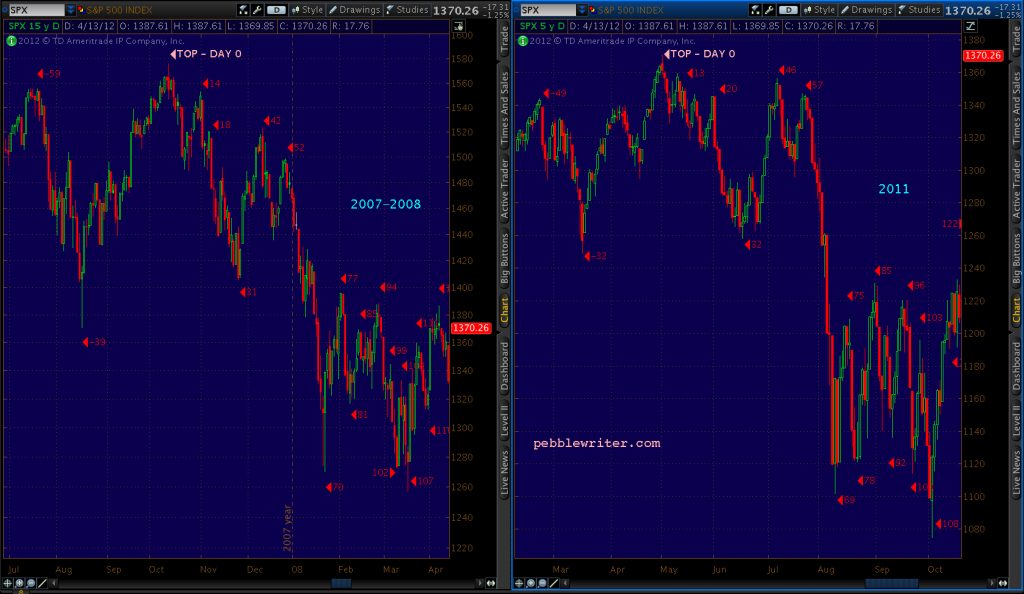
    It is a feat rarely achieved except in situations such as 2007-2008 when the equity market crash caused investors to flee stocks for bonds. With multiple rounds of QE at its disposal, the Fed was able to capitalize on the declines the financial crisis had wrought. Like the BoJ and ECB, the Fed had broken the bond market.

    With no price discovery to worry about, the Fed was seemingly free to pump equity markets higher without consequence. Until now.

    continued for members…
    (more…)

  • No More Free Lunch

    The Fed’s experiment of pouring trillions of dollars into the markets is coming to an inglorious end. Even though an accelerated taper will still results in hundreds of billions in additional liquidity over the next several months, the writing is on the wall.

    Allianz Chief Economic Advisor Mohamed El-Erian said it well yesterday on CBS’ “Face the Nation.”

    “The characterization of inflation as transitory is probably the worst inflation call in the history of the Federal Reserve, and it results in a high probability of a policy mistake. So, the Fed must quickly, starting this week, regain control of the inflation narrative and regain its own credibility. Otherwise, it will become a driver of higher inflation expectations that feed onto themselves.”

    I agree wholeheartedly, though we might differ on whether the Fed’s actions to date have been a “mistake.” In my view, they were taken with the certain knowledge that inflation would be driven much higher – an outcome the Fed must have deemed acceptable even though the brunt of it would obviously fall on the poor and middle class.

    The correction in oil & gas prices is a good start, but it will take much more.

    Higher oil and gas prices, a weaker dollar, ludicrously low interest rates – all contributed to the stock market being where it is today. Without those factors, major indices, commodities and housing prices would be far lower.

    Years from now, economists might debate whether inflating another huge asset price bubble was worth it. But, for now at least, the Fed must figure out how to tap the brakes without causing a pileup among all those tailgating investors.

    Futures are flat as we approach the open.But, this week should see substantial moves in equities, currencies, commodities and yields.

    continued for members(more…)

  • Charts I’m Watching: Dec 6, 2021

    VIX tagged our 34.84 target on Friday – an important breakout in risk – before tumbling back into the safe zone.

    With other factors holding their ground and equities’ 100-DMAs still untagged, it’s not at all clear that the worst is over.

    continued for members(more…)

  • A Death Cross from VIX

    It’s only happened 4 times in the past five years. The last time it happened was on Feb 27, 2020.  SPX had reached a new all-time high of 3393.52 a week earlier and had sold off 12% so far on news of the new coronavirus reaching US shores.  We were in the minority of analysts warning of an imminent selloff.VIX, which had been loitering in the teens for months, had gapped from 17 to 25 a few days before, sending its 50-DMA above its 200-DMA. In technical analysis, this is known as a golden cross. It’s normally a bullish move. But, since a rising VIX is typically bearish for stocks, this was the equivalent of a death cross.

    We all remember what happened next.Note that only half of the prior instances resulted in a large correction. The other half turned out to be insignificant. VIX was hammered into submission within a day or two, unwinding the 50/200 cross and sending stocks scurrying higher.

    Which will it be this time? Was this morning’s dreadful jobs report the keymaster and gatekeeper’s meet cute? The “stag” to the economy’s “flation?”

    Unlike Nigerian Air Force Lance Corporal Ogah Bercy, we have at least been warned.We should know soon enough.

    continued for members(more…)

  • The House That Jay Built

    You know things are getting real when ES closes below its 50-day moving average.  It has bounced at that support 9 times in the past year. When the 50-DMA fails, the 100-DMA has provided support 6 times since Jun 2020.

    With ES closing below its 50-DMA yesterday and likely to reach its 100-DMA today, is it finally time for a test of the 200-DMA?

    The stakes are high, as VIX pulled back after reaching important resistance at our 32.50 target yesterday.

    Meanwhile…inflation, the Fed policy choice that pundits are mistakenly calling a “mistake.” Sure, it delivered a body blow to the have-nots, but It provided record high stock and real estate prices to the rest of us.

    November CPI is due out next Friday, and we are still looking for it to mark a turning point in this cycle. WTI is off 23% from its highs – technically a bear market.  And agricultural commodities have backed off their breakout and are eyeing a potential breakdown.

    Our assumption remains that CPI will be back below 3% by the time the taper is complete. Sorry savers, but there probably won’t be any need to raise rates any time soon, if ever.

    continued for members

    (more…)

  • Charts I’m Watching: Dec 1, 2021

    The algos have been busy overnight again, driving futures up 50+ points as we head into the open. Omicron shutdowns, botched responses and Powell’s admission that the Fed might accelerate the taper seem to have been forgotten.

    ES came close to our next downside target, but whiffed. Is the correction over?

    continued for members(more…)

  • This is Not Going to Be Good

    Futures are off sharply on comments by Moderna CEO Stéphane Bancel on the effectiveness of existing vaccines against the omicron variant:

    “I think it’s going to be a material drop. I just don’t know how much because we need to wait for the data. But all the scientists I’ve talked to . . . are like, ‘This is not going to be good’.”

    Bancel’s comments might also apply to this morning’s testimony from Jay Powell and Janet Yellen who head to Capitol Hill to explain why 6.5 inflation is nothing to be concerned about.

    BTW, WTI made it official overnight, tagging our 66.81 target.

    continued for members

    (more…)

  • Update on Oil & Gas: Nov 29, 2021

    Almost a year ago we noted that the rapidly rising price of oil and gas would contribute to alarming CPI prints [see: Don’t Ignore Inflation.]

    Punch line? Oil and gas will have to fall significantly by April or we’re looking at a 20%+ YoY increase in gas prices – which has historically produced 2.4-2.7% annual inflation and a 2%+ 10Y.

    At the time, it was clear that the base effect would ultimately generate YoY deltas in gasoline that would exceed 40% and, if the correlation held, generate CPI over 3.5%. We were being too conservative. November’s delta should be around 62% and October CPI reached 6.22%.

    Then…

    …and now.

    When inflation spilled over into stickier categories such as food, shelter and wages, CPI accelerated more than the rise in oil/gas prices alone would justify. As the chart above illustrates, CPI’s rate of change outpaced that of gasoline alone.

    Investors finally began to notice. Maybe inflation wasn’t transitory after all.  Rising interest rates suddenly became a concern rather than a bullish confirmation of the reflation trade.

    In our last update on oil and gas [see: Nov 19 Update] we reiterated the fact that oil and gas deltas would need to be held in check if inflation and interest rates were to stabilize.

    Regardless of where this correction peters out, November should mark a turning point in CPI, with December and future months declining back towards an “acceptable” level. The trick is to keep interest rates from breaking out, which means the Fed must put the brakes on inflation right here and now.

    Friday’s plunge was a good start. CL came within 0.8% of our downside target, shedding nearly 14% on the day and over 21% from its October highs.

    It’s too early to say whether the omicron variant will feature the sort of transmission and mortality rates that could send the global economy into another tailspin. But, one thing is clear: non-OPEC+ countries are breathing a sigh of relief at the correction in energy prices – even if it means more downside for equities.

    continued for members(more…)

  • The Japanification of the US Markets

    If you blinked, you might have missed the S&P 500’s 1.1% plunge last Wednesday… …following the highest CPI print since 1990.The print was followed two days later by the lowest consumer sentiment reading in 10 years, a result driven primarily by…wait for it…inflation fears.  Stocks actually rose on the day.Until a few months ago, the market’s non-reaction might have been driven by the “bad news is good news” meme. Translation: bad economic news will prompt the Fed to pour a few more trillion into the markets.

    But, the Fed recently announced that it is trimming its $120 billion in monthly stimulus by $15 billion per month, with an eye toward raising interest rates sometime in 2022. Shouldn’t that mean “it’s different this time?”

    Even with the taper, the Fed still has $105 billion to play with this month — plenty enough to move markets and stoke further inflation. And, with his job on the line, Jay Powell is unlikely to allow markets to experience a long-overdue correction, no matter how justified such a reaction might be.

    It’s not entirely Powell’s fault. He’s simply following in the footsteps of his predecessors, both here and abroad. Central banks’ policy mistakes have been years in the making, based on the erroneous assumption that markets can be manipulated indefinitely without consequence.

    The all-time champion of market manipulation, of course, is the Bank of Japan. Japan has ¥1.2 quadrillion in debt (about $12 trillion USD), which is roughly 277% of its GDP. Its annual budget deficit is approximately 14% of GDP. It pays about 40% of every tax dollar it collects to service just the interest on its mountain of debt.

    The country has managed to stay (nominally) afloat only because the Bank of Japan, the GPIF and large Japanese banks purchase nearly all of Japan’s debt issuance — artificial demand for securities which arguably don’t merit any demand at all.Last night, the Japanese Cabinet Office announced that Q3 GDP had declined at an annualized rate of 3% vs -0.7% expected. Below the surface, the data was even worse. Private consumption fell at an annualized pace of 4.5%, capital spending dropped 14.4%, and exports fell 8.3%. How did the market react?

    The Nikkei 225 futures dipped less than 0.5% intraday and are back in the green as we go to press.

    What do we mean by “Japanification?”

    The US’ $29 trillion in debt is about 126% of GDP. The budget deficit, almost $3 trillion in 2021, is roughly 13% of GDP.  Interest on the debt is roughly 9% of taxes collected — more than the federal spending on food and nutrition services, transportation, housing, or education.

    Thanks to the Fed’s intervention, however, interest rates are near all-time lows. Equities, real estate, and nearly all other asset classes are at or near all-time highs. About the only thing falling with any consistency is vol, particularly when any overhead resistance is met.

    While arguably better off than Japan, the US is clearly following in Japan’s footsteps when major economic missteps result in minuscule market reactions. It might take time for the economic tax imposed by the Fed’s inflation policies on lower and middle-income Americans to show up in the data, let alone the financial markets. But, the absence of price discovery exposes the same stunning lack of market integrity seen in Japan.


  • Charts I’m Watching: Nov 15, 2021

    VIX collapsed in the nick of time yet again, busting ES’ latest falling channel.

    Has the run to the year-end barn begun already? (more…)