When it comes to algorithms, two favorite quotes from two famous Georges come to mind:
When Spanish philosopher Santayana wrote those words in 1905, he probably wasn’t thinking about algorithmic trading. Nevertheless, he captured the essence of what accounts for over 90% of trading volume today: (1) what has produced a particular result in the past? (2) let’s watch very closely to see if it happens again so we can properly position our portfolio.
Fundamental analysts have always looked to such factors as changes in earnings, interest rates, and inflation to guide their investment forecasts and decisions. Quants have taken that process and, well, quantified it. By studying correlations between interest rates and stock prices, for instance, one might logically implement an algorithm which places purchase orders whenever the Fed lowers the discount rate. Similar buy/sell decisions might be made based on economic data such as inflation, employment or housing starts.
Such decisions are now made millions of times every day by investors all around the world. While they might differ in the design and execution of their algorithms (e.g. trend following, mean reversion, arbitrage, etc.) the majority would agree on the importance of such closely-followed macro factors as inflation, interest rates, flows, and volatility.
But there are other, less well understood factors which play an important role in triggering buy/sell decisions. Two of my favorites are the price of oil and the USDJPY. Oil prices are very highly correlated with stock prices, as the chart below illustrates.
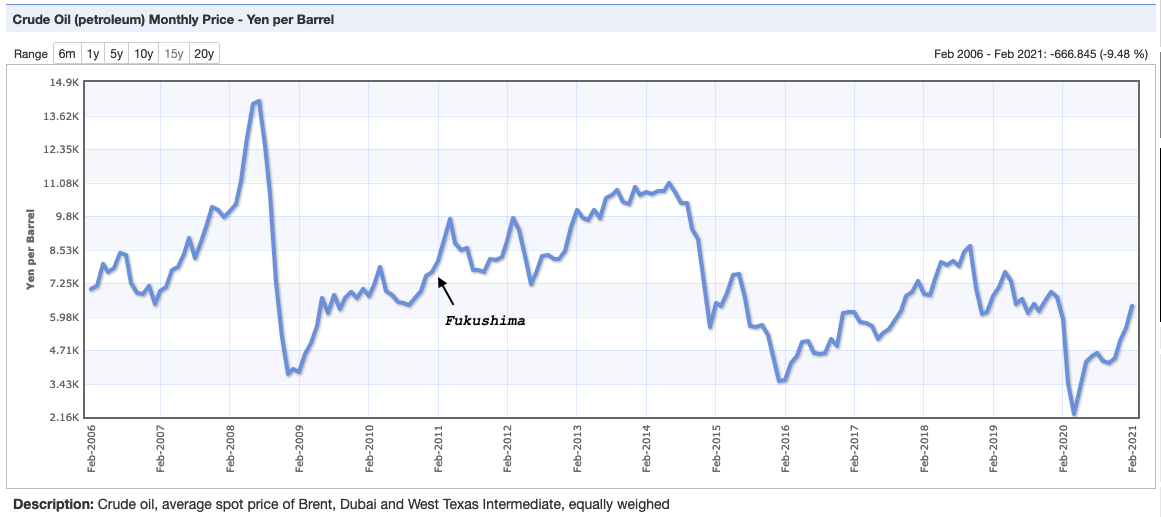
 The USDJPY, the chief factor in the yen carry trade, is just as powerful and has played an important role in many rallies and corrections over the years. Perhaps the most notable example was in the wake of the Fukushima disaster 10 years ago today. The rising USDJPY (falling yen) was instrumental in preventing a much worse downturn and facilitating the subsequent rally.
 Like oil prices, however, the USDJPY has its limitations. After Fukushima, for example, Japan shut down its nuclear reactors, which had previously provided 29% of its power needs. Dependency on fossil fuels spiked from 62% to 88%.
Since oil is priced in US dollars, the plunging yen amplified the cost of energy. Oil priced in yen, for instance, rose nearly 50% by mid-2014…
 …causing inflation to spike to nearly 4%.
  Needless to say, this was problematic for the BoJ, which was relying on zero or negative interest rates in order to cope with debt which had already soared past 200% of GDP.
 The problem was how to reduce oil prices without also crashing the stock market. The solution was elegant, really: a breakout in USDJPY which “conveniently” began the very day oil prices broke down.
 The bearish effect of falling oil prices was more than offset by the bullish effect of the rising USDJPY. The S&P 500 even rose nearly 12% in the process. The maneuver carried the side benefits of: (a) punishing OPEC and Russia, both off which had been misbehaving at the time, and (b) prompting US CPI and interest rates to also break down.
 Even long-time readers might be wondering by now, “why the history lesson?” For the answer, we turn again to our friend George W. Bush. He was referring to Social Security when he spoke of “catapulting the propaganda,” but he may as well have been talking about the stock market.
The economic narratives have shifted significantly since the GFC. Remember when “bad news” — which in the old days was just, well, bad — became “good news?” The notion was that the Fed would be more likely to step in and save the market (they did) if economic data disappointed (it did.) “Buy the f’ing dip!” evolved from a humorous quip to a bona fide investment strategy.
Similarly, the notion that “falling oil prices indicate contracting economic conditions” evolved to one of “falling oil prices will encourage the Fed to increase QE and lower interest rates, thereby supporting stocks.”
It wasn’t all that simple to convince carbon-based investors, especially those who had been trained in classical economics or had a decade or two of trading experience under their belts. The algos, however, gobbled this stuff up. It was easy to understand, easy to detect, and easy to program.
The only complication was the old-timers who insisted there was such a thing as too much debt and too high interest rates. But, like Dubya said, sometimes you just have to repeat things over and over for the “truth” to sink in.
Jerome Powell and his colleagues at the Fed know full well that the US is heading for a spike in inflation. We figured it out and started posting about it last summer. Trust me, the MIT grads at the Fed can run laps around me from both an intellectual and technological standpoint. They had this stuff programmed a year ago while yours truly was still squinting and
The only thing they haven’t figured out for sure is how the rest of us will respond.
continued for members… (more…)
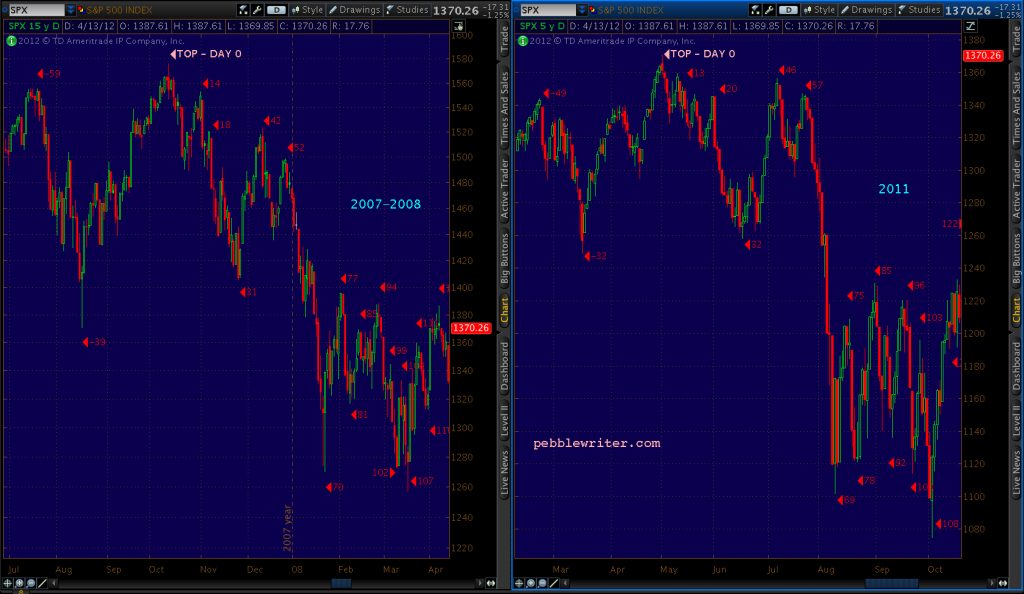

 And, there’s no reason it should. With yields continuing to push through resistance, the writing is on the wall.
 Rising rates might not affect all those megacap companies that can and have borrowed all they need at historically low rates or issue stock at inflated multiples. But, they will affect nearly every other segment: small and mid-cap public companies, small businesses, individuals with credit card debt, home buyers, car buyers…the list goes on.