It was thoughtful of eurostat to include the US in their chart. Funny, that’s not the chart one would picture based on the MSM’s steady drumbeat of “recovery!”
Germany, which had previously taken an ambivalent attitude about the soaring euro, might change its tune following its worst GDP print since Q408. The main culprit? Exports, which fell 15.4% from November – the worst monthly decline since 2007 – and 5.7% YoY. Straight from the Bundesbank:
Housing figures for Q4 should be out soon, but look for a continuation of the slide.
A falling euro might increase exports, but make oil even more expensive – the same energy/export conundrum in which Japan finds itself.
UPDATE: 12:20 PM
SPX continues to move sideways. The H&S pattern completed yesterday busted, completed again, busted, and is working on completing a third time. This is a very ugly pattern, with hardly anything normal about it — especially the 3 right shoulders.
It should have already paid off yesterday with a trip down to 1511ish. The red channel I drew yesterday is holding nicely so far, but a departure to the downside this morning was quickly erased. It even fell through the larger red channel midline but rebounded.
Clearly, the bulls are trying valiantly to defend the 1520 level. But, can they?
It was worth watching the SOTU last night just to see Boehner’s contortions, trying to scowl in a dignified, statesman-like way. Nothing much new in the speech or the response.
More interesting was Mitch McConnell’s comment on CNBC last night that the sequester will go into effect. I don’t know any reputable economist who believes we can go through sequester without a sizable hit to GDP.
But, the market is ignoring the tenuous economic situation and continues to edge higher. What gives? Aside from the $85 billion mainlining into the banks every month courtesy of the Fed, that is…
Zerohedge ran a BofAML study last night that pretty much says it all. The market is currently reflecting bullish sentiment that’s higher than almost any time since 2002. I imagine it’s even a little higher this morning.
Most past ventures into this sentiment range have not ended well for the markets – especially when there is a huge divergence between soaring markets and faltering economic backdrops, as the charts below show.
Notably, the market is ramping these past few days on negative divergence in every single time frame – from weekly on down to 5-minutes. And, it has completed some very significant harmonic patterns at the very top of a massive ending diagonal/rising wedge that’s precisely aligned with several previous tops (Jul 2011, Apr 2012, Sep 2012.)
SPX surpassed our IHS target of 1522.60 from yesterday. I’m closing out longs here at 1524 and will play the downside.
UPDATE: 3:15 PM
Getting a nice little push to the downside here — now 7 points off the daily high. The white channel line that had been providing support is now providing resistance at around 1518.60 (the purple Crab’s 1.618 Fib is 1518.57.)
SPX just completed a little H&S pattern that targets about 1510.80.
It was a beautiful weekend here on the central California coast. Seems like everyone was out surfing, golfing, taking walks on the beach — at least that’s what I heard. I spent the weekend poring over ECRI’s Weekly Leading Indicators for the past 30 years.
Okay, in the interest of fair disclosure, Friday night was the annual Father-Daughter dance at my 10-year-old’s elementary, and I needed a couple quiet days off my feet. If you’ve ever been in a room full of screaming prepubescent girls for two hours of JB and 1D, you know what I mean.
Bottom line, the WLI research bolstered my confidence that our current position is the right one — whether or not the US economy is still in a recession, about to double dip, or is on the mend. The key takeaway is this chart, showing the QE-fueled market continuing to pull away from the underlying economy (as measured by the WLI.) Check out the article HERE.
This morning, I’m hearing more and more talk about the market being frothy. This is somewhat reassuring, as shorting at tops based on Harmonics often leaves one feeling very lonely. I mentioned that SPX 1518 was at least an interim top to several other dads at the dance (guys who are in the biz) and they looked at me like I’d had too much fruit punch.
I could have talked for hours about how applying derivations of a golden ratio based on 2,400-year-old mathematics enables effective market timing, but for some reason they had a sudden urge to go find their daughters and dance. Funny how that always happens, and just when I’m getting to the good part…
Of course, frothiness is what leads to overbought conditions — which, of course, is what you want when you short the S&P 500. So far, the market is behaving itself — selling off a little while trying to sort out economic data, quantitative easing, currency wars and the upcoming sequester battle.
ECRI’s Weekly Leading Indicator (WLI) came out Friday at 130.2 — up from 129.6 the week before. Further, they reported that the index’s annualized growth rate increased from 8.2 the previous week to 8.9% — the highest since May 2010. I wondered: are they retracting their Sep 2011 recession forecast? Are things really getting better?
CAN’T WE ALL JUST GET ALONG?
There’s currently an argument raging between various economists and analysts as to whether the US is still in/dipping back into a recession or is on the mend. ECRI is pretty sure we’re in one, while folks like Doug Short and, of course, the mainstream media think not.
There’s no question that we’ve seen an uptick in several economic measures. My own thesis is that most of these have been not secular, but cyclical swings. In other words, I don’t yet see evidence of a sustainable trend change, only natural swings from one side of a channel or wedge to the other.
Here’s an example I posted last week. Total Confidence has traced out a pretty solid-looking channel, while the Present and Expectations indices have formed expanding wedges (and are nowhere near their upper bounds, especially given the recent downturns.)
underlying chart from briefing.com
Hardly a day goes by when I don’t second guess myself. Is all the “good news” just one big, well-coordinated head fake or am I missing something? I spent much of the weekend studying ECRI’s historical WLI (who says technical analysts don’t live exciting lives!?) and found a lot to think about. First, a brief primer on Harmonics.
HARMONICS
Regular readers of pebblewriter.com (heck, even the irregular ones) know all about Harmonics and that the corrections experienced in April 2010, May 2011 and Sep 2012 correspond to the important Fib levels of 61.8%, 78.6% and 88.6%.
For the uninitiated, measure the drop from SPX 1576 (Oct 2007) to 666 (Mar 2009) and multiply it by a Fibonacci 61.8% and you get 1228.74. SPX reached 1219.80 in April 2010 (within 10 points) and promptly sold off by 17% over the next three months.
In May 2011, SPX peaked about 10 points away from the 78.6% Fib level (completing a Gartley Pattern) and plunged 21.6%. And, in September 2012, SPX reached the 88.6% Fib level (completing a Bat Pattern) and corrected by almost 9%.
Those of us who follow Harmonics were well aware of each of these downturns well in advance [see: HERE, HERE and HERE] and profited nicely from the market’s plunges. Those who rely solely on fundamentals or [involuntary shudder] the mainstream media…not so much.
THINGS THAT MAKE YOU GO “COOL!”
While I had noticed the WLI’s channel-like general decline before, I never noticed that it also complied with the rules of Harmonics. From its all-time high of 143.73 in Jun 2007, the WLI plunged to a low of 105.40 in Mar 2009.
Like SPX, it found its footing (thanks to QE1) and started higher. Its first big pause was in Oct 2009 at the 61.8% Fib level. It paused again in Jan 2010 near the 70.7% Fib, and eventually reached the 78.6% level in April — completing a Gartley Pattern as SPX had finally retraced 61.8% of its drop.
One could infer from the mismatched Fib levels that the economy — as measured by ECRI’s leading indicators — was ahead of the market at this point. The WLI had retraced 78.6% of its drop, while SPX had only retraced 61.8%. In any case, they both suffered from the removal of the QE drip – SPX shedding 17% and WLI 11%.
When the Fed realized their patient would flatline without more QE, they were back with QE2. The market took off, reaching the 78.6% Fib in May 2011. This also completed a Crab Pattern, a 161.8% extension of the amount of the Apr-Jul 2010 slide.
The WLI, however, retraced only 78.6% of its slide since its 2010 high. In other words, the market was now officially ahead of the economy.
Following the expiration of QE2, SPX plunged 21.6% to 1074 through October 2011, while WLI gave up 8.9%. From there, SPX climbed to 1474 primarily on Fed jawboning and promise of more QE — which it finally delivered the day before the 1474 high.
The timing was no doubt an effort to send the SPX soaring right through the 88.6% Fib retracement of the 1576 – 666 crash. I seriously doubt that “two points over” was what they had in mind (the market sold off anyway, correcting a respectable 8.8% to 1343.)
The WLI, in the meantime, topped out at 127.77 — only an 88.6% retracement of its decline from its previous high in 2011. Again, the market was outpacing the economy.
IS IT OR ISN’T IT?
The world of market prognosticators is, as always, divided. There are those who believe the economy is improving, and the market – as a leading indicator itself – is all the proof we need. Then, there are those who believe the market is priced well in excess of levels justified by the underlying economy — which remains in or is dipping back into a recession.
Whether QE has “saved” the economy or not, I don’t know of any respected economist or technician who doubts that it has significantly goosed (i.e. “manipulated”) the markets. And, we should pay attention to the disconnect between the markets and the economy as evidenced by the SPX/WLI comparison.
The WLI just hit an important Fib level (88.6%) after demonstrating that it does, indeed, pay attention to such things. This occurred at the same time that the S&P 500 hit several important Fib levels and is thus, by my reckoning at least, poised to correct [see: Satisfaction.]
We all know the old truism “the market isn’t the economy.” However, another quarter of negative GDP following the tax hikes recently enacted and spending cuts in the works would certainly remind investors that the market and economy are, indeed, joined at the hip.
I care about the economy because I have children. The Fed’s unprecedented experiment in QE will quite possibly end very badly for the country, for my children and for yours. But, there ain’t much We the People can do to influence Fed policy. They don’t answer to us or our political “leaders.” So, we play the cards we’re dealt.
As an investor, my goal is to capitalize on whatever the market throws at us — regardless of how manipulated it might be, and regardless of what economists call the current business cycle. If depression or hyper-inflation come along, we’ll hopefully see it coming and be well-positioned.
Are we still in or dipping back into a recession? Will the current QE4-ever result in another 2009-2011 run, or does the market’s yawn last September signal the end of QE’s effectiveness? We’ll find out in time. In the meantime, we have some very good tools at our disposal that have provided excellent returns in a very difficult market. I’ll continue to call it as I see it, and appreciate having you all along for the journey.
E-mini futures are up big overnight, but have yet to exceed Wednesday’s high.
A positive revision in BLS’s Nov and Dec employment numbers makes 2012 look better than it did, but I’m not sure how it helps today’s 12.3 million unemployed or 8 million underemployed or 2.4 million marginally attached…
Markit Mfg PMI actually a little lower than Jan 24 flash numbers.
Verdict: not chasing this ramp job unless it exceeds recent highs — which I don’t believe it will, at least not from this news.
Lots more economic data out today. Unemployment claims jumped 38,000 – much higher than expectations, but personal income also beat (thought to be explained by income shifting by those concerned about higher 2013 tax rates.)
Real Consumer spending is probably the data set that best settles the conflict — up an anemic 0.2% in December (real) versus 0.6% in November. So, either everyone did their Christmas shopping early this year, or retail sales fell off a cliff.
Against this mixed picture, January Chicago PMI came out at 55.6 versus consensus of 50.5 and December’s 50.0 (revised down from 51.6.) Employment and new orders shot up, but so did inventories (after contracting for several months). While, deliveries, prices paid and backlogs continued to contract. In short, this looks like a rebound from the November slow down largely blamed on the fiscal cliff.
Also, not that this is a regional, not national, survey. It sometimes offers a somewhat, but not always, predictive view of the important national ISM Mfg Index due out tomorrow. In fact, many of the other regional surveys have shown increasing weakness. The Chicago vs the national data are compared below.
The market sold off early following the employment data, but rebounded a bit as investors digest the PMI report. All eyes are on the important data being released tomorrow:
Markit Flash PMI (covering about 85% of respondents) released on Jan 24 showed an acceleration of output, new orders and employment, but a deceleration of export orders, backlogs and purchases. Output prices barely moved, and inventories actually increased.
Remember, this is only a survey of purchasing managers. So, it doesn’t, for instance, differentiate between an expansion based on overly optimistic expectations or one justified by an upturn in demand. Thus, while it tracks mfg output (as reported by the Fed) in general, respondents’ perceptions are often more optimistic than was ultimately justified by actual outcomes.
We’ll revisit the data tomorrow, but for now it has the appearance of series of lower highs and lower lows, i.e. a falling channel.
There’s no telling what the economic data will look like tomorrow, let alone how the market will react. But, it’s interesting that the last Flash PMI data, which was generally regarded as very positive, was good for an 8-pt rally on the opening (which was quickly negated for a flat close.)
I’ll also be keeping an eye on construction spending, which has been trending down as shown in the Briefing.com charts below. Spending on commercial construction has been increasing at a declining rate for some time, and recently began contracting.
The rate of increase in residential construction also recently turned down, so it’ll be interesting to see if this is a trend in the making.
The market has been relatively quiet this morning. After reaching the lower end of our upside target range yesterday, SPX broke through the red trend line and the white channel midlines we discussed, back-testing the white channel as expected.
Since then, it declined to test the next lower channel bound. The pattern from here gets very interesting, especially when one considers the RSI channels.
Alice laughed: “There’s no use trying,” she said; “one can’t believe impossible things.” “I daresay you haven’t had much practice,” said the Queen. “When I was younger, I always did it for half an hour a day. Why, sometimes I’ve believed as many as six impossible things before breakfast.” ― Lewis Carroll, Alice’s Adventures in Wonderland
The market never ceases to amaze me. Despite all the ingredients being in place for a sizable correction, it’s sailing along as though everything were copacetic.
Negative divergence abounds. The correlated currencies are all selling off. Gold is down. Silver is down. Even AAPL is down. Numerous indices have completed bearish Harmonic or Chart Patterns.
The Fed let slip yesterday that the adrenaline drip will soon be removed — leaving banks without a buyer for their underwater mortgages and the stock market without any downside protection. They’ve finally admitted what we’ve all known for some time: QE’s effect is diminishing, and the risk is growing.
The budget showdown is still ahead (the part of the fiscal cliff that really matters.) The most fractured Congress in modern history, which utterly failed to resolve the important issues, will now turn the task over to an arguably more partisan Congress.
The country’s AAA credit rating is hanging by a thread at both Moody’s and Fitch. A downgrade by either would require massive selling by institutions which require at least two AAA ratings in order to comply with their investment policies (especially insurance companies.)
Unemployment has reportedly declined, but only because we no longer count the dejected job seekers who are leaving the work force in droves. Include them, and the actual picture is startlingly bleak. (source: Shadowstats.com)
The EU is officially back in a recession (though it never really left.) Its banks are being kept afloat by the ECB/ESM, which is exchanging (somehow AAA) paper backed by shaky sovereigns for junk sovereign debt as fast as it can. Meanwhile, unemployment continues to soar.
The big 2013 headline that isn’t (yet) is the global derivatives debacle: $700 trillion — over 10 times the global economy — of unregulated, unpriced, unreported private contracts which have been sliced and diced so many times that no one has the slightest notion what the risk really is — except that it dwarfs the capital of the banks that hold it.
In my opinion, the onlythings keeping the economy and the market afloat are the unrelenting screech of MSM fairy-tale “good news” and the Bernanke Put (the Fed’s money printing and plunge protection operations.)
As long as these two factors can outweigh the negative fundamental picture, the market stands a good chance of rising. Take one of them away, and the resulting crash will be swift and severe.
That said, I’ve spent the past two days assessing the current state of our analog and forecast. I’ve quantified it as best I can in an attempt to eliminate my admittedly negative bias. I’ll lay it out over the next several hours, a few charts at a time.
If you’d rather skip to the punchline, I’m still bearish. In the absence of a push through 1474, I think we’re in for a sizable correction and remain short from 1462. If 1474 is broken, everything changes.
For members who enjoy getting their fingers dirty, stay tuned.
* * * * * * * *
About an hour ago, we completed a Bat Pattern which is nestled inside of a Bat Pattern which is nestled inside of a Bat Pattern.
UPDATE: 3:15 PM
RSI channels show how much is riding on this moment. A push through the top of the purple channel brings the red channel mid-line into play. Could it correlate with 1474, or maybe just the next channel line on the intra-day?
I’m not sure. The intra-day 1.272 is 1468.17 and the 1.618 is 1471.61. A double-top would be a real nut-buster.
All I know is there’s still negative divergence across the board, so I don’t expect the red mid-line to be broken.
My apologies for the delay in getting the forecast charts up. They’ll have to wait until after the close. I’ve been distracted by the melt-up, checking and re-checking my charts to see what I might be missing.
Today was one of those kumbayah days when even lousy housing data, consumer confidence and Dallas Fed data couldn’t depress equity prices. The market spent all day reinforcing my faith in our forecast. Ah, those were the hours…
As everyone knows, the euro zone whack-a-mole game has been focused on Spain lately. So, the print-our-way-to-happiness bunch was understandably enthused when Spain announced they would truck $24 billion in Spanish sovereign debt over to failing Bankia — Spain’s second biggest bank — which would then exchange said debt to the ECB for something worth the paper it’s printed on. Presto chango, ipso facto… the boo-boo’s all better.
A perfect plan — except for one small detail: the ECB wants nothing to do with it. According to the Financial Times, the ECB wants Spain to implement (stop me if you’ve heard this one) a serious austerity plan and start living within its means — maybe even inject some real live capital. (more…)
In response to several requests from readers across the pond, I’m taking a crack at the FTSE 100. For some reason, Think or Swim (my trading platform) doesn’t quote the FTSE itself, but does the FTSE 100 mini — 1/10 of FTSE’s value — that goes by the symbol UKX.
UKX had retraced a little over .786 of its 2007-2009 plunge when it topped in February 2011 at 609.58 (.786 is the normal completion point for a Gartley.) It subsequently fell 20% to 486.86 last July, then retracing about .886 to reach its recent high of 598.67 in March.
The April 2010 drop came at the Fib .707, which isn’t a legitimate Point B for a Gartley. The harmonic implications of a .707 Point B are a Bat pattern that completes at .886 (635.84) or a Crab that completes at the 1.618 (874.90.) We’ll put a pin in 635.84, because its not that far from the current reality, and see if it lines up with any other indicators.
Besides the harmonics, a couple of patterns are worth examining. First, fan lines from the 2007 top (yellow) and 2009 bottom (purple) have been pretty effective at guiding prices. At present, there’s a purple fan line that — if it holds — should help support prices. If it fails, watch out for a 10%+ drop.
Secondly, the faint red channel lines that have provided a lot of support and resistance in between the fan lines are indicating possible support at the same spot.
Third, the weekly RSI chart shows support at these levels (the dashed yellow line above.) Breaking this line is a virtual guarantee of 8-10% more downside, but it did a pretty good job of supporting previous slides, even without the added benefit of a fan line.
Likewise, the daily RSI should offer support. Even though RSI has fallen in a pretty steep channel over the past 7 months, there are two internal trend lines (purple and yellow above) that intersect with current values that could be supportive.
Don’t get me wrong: I am not bullish on the FTSE. But, it’s important to recognize that it has reached a critical level of support according to several different measures. The economic picture is bleak, so any little nudge could send it tumbling into the abyss. In fact, I view the entirety of the euro zone as only one press release away from financial disaster.
But, if it’s able to hold on, we could see a decent rebound. Holding on no doubt means cranking up the printing presses — a game that is doomed long term, but one which TPTB have shown they have reservations about playing.
When faced with situations like this, I usually punt. There’s not a compelling enough reason for me to place hard-earned cash at risk until the picture is a little clearer. But, we’ll keep an eye on it, and see if the picture clarifies in the coming days.
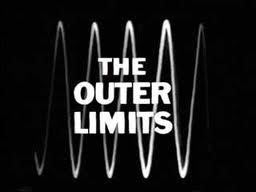
I can picture it clearly: It’s 1963 and 10-year old Benny Bernanke sits staring at the black & white Zenith in the living room of his East Jefferson Street house, captivated by the voice of Vic Perrin…
“There is nothing wrong with your television set. Do not attempt to adjust the picture. We are controlling transmission. We will control the horizontal. We will control the vertical. We can change the focus to a soft blur, or sharpen it to crystal clarity. For the next hour, sit quietly and we will control all that you see and hear. You are about to participate in a great adventure. You are about to experience the awe and mystery which reaches from the inner mind to the outer limits.”
click on the image for a trip down memory lane
These were the formative years for the future leader of the financial world. The idea that anyone could completely alter someone else’s reality must have captivated him then, as it clearly does now.
How else to explain the market’s rise after one of the world’s biggest banks admitted to [tip: think icebergs] a $2 billion trading loss on what they insisted was a matched book?
Now, $2 billion isn’t going to ruin JP Morgan Chase. They have $1.2 trillion in assets and $112 billion in Tier 1 capital. The ruinous aspect of this news is that they, as some of the smartest guys in the room, have lost control of their derivatives trading.
As every aspiring muppet-master knows, JPM has the largest derivatives portfolio of any US bank — an astounding $78 trillion as of June 2011. This represents a startling 663 times their Tier 1 capital, meaning a miniscule 0.15% move in the value of their derivatives portfolio would wipe out all Tier 1 capital [see: The Wipeout Ratio.]
Needless to say, the Plunge Protection Team has been mobilized. In yesterday’s conference call, Jamie Dimon as much as admits that the worst is yet to come:
“Net income in Corporate likely will be more volatile in future periods than it has been in the past.”
It’s as clear as the worry lines on Blythe Masters’ face that they have no idea how ugly this might get [read: much, much worse.] And, if this guy — the Prince of Wall Street — has such tenuous control on the goings-on in his Chief Investment Office, what are we to think about the rest of his $78 trillion in derivatives? How about the other $630 trillion held by other bankers? [see: City of Dreams]
click on the above to watch
In one of Bernanke’s first televised post-fed meeting interviews, Dimon joined in the Q&A, bashing Bernanke for the litany of regulations and reforms that were preventing the financial community from recovering from the financial crisis. Needless to say, there was no mention made of his role leadership in creating the crisis.
This is analogous to bailing your kid out of jail, only to have him complain about how long the drive home is taking. I was impressed by Bernanke’s restraint as he provided a thoughtful response, while no doubt thinking: “I saved your sorry ass, and this is how you repay me!?”
There’s an old adage in banking: if I owe you $100 and can’t repay it, I’m in trouble. If I owe you $1 million and can’t repay it, you’re in trouble. While the TARP loans have long since been repaid, Wall Street’s survival is still very much in the hands of its enablers — the Fed.
As the guy ostensibly at the controls, Bernanke must feel more than a little perturbed that things aren’t going according to plan. I wonder if Vic Perrin’s words ran through his mind yesterday as listened to the JPM call. I wonder, as he called Dimon to lay down the law (“no, really, I mean it this time — no more bailouts!”) whether he heard those familiar words from the other end of the line…
“There is nothing wrong with Wall Street. Do not attempt to adjust the picture. We are controlling transmission….”




 A falling euro might increase exports, but make oil even more expensive – the same energy/export conundrum in which Japan finds itself.