Inflation drives interest rates. Though the Fed probably wishes it didn’t, it’s an inconvenient truth. There are much tighter correlations, but consider the strong positive correlation between CPI and 10Y notes.
 This matters, of course, because with $22 trillion in debt, the US faces the same problem as the ECB and Japan: High interest rates on rising debt levels (the blue bars below) would lead to insolvency. The slight increase in average interest rates (the black line) between 2018 and 2019, for instance, sent interest expense (the red line) soaring.
 There are only two ways to keep interest expense from consuming untenable slices of the budget: cut back on spending or bring interest rates back down and keep them down. Since the government isn’t likely to cut spending any time soon, this means focusing on interest rates.
Japan and the ECB have coped with runaway debt by manipulating rates below zero — negative interest rates where you pay the government money to borrow from you. Though not there yet, the US is on the same path, seen most notably lately in the repo market through Not-QE.
The government plays lots of games with inflation. There are many different definitions, some of which include or exclude different expenses such as food, gas prices and rent. Although just as flawed as any, I like good old-fashioned CPI as it includes food and gas prices — things that affect the budget of almost every American and is factored into many important calculations such as cost of living increases.
CPI can be influenced in some very predictable ways, some of which are subject to manipulation such as oil and gas prices. Without harping on geopolitical considerations [see: Coincidences and Consequences] all over again, it’s obvious that the Fed’s effort to keep interest rates low is dependent on keeping inflation under control which, in turn, is dependent on keeping the annual change in gas prices under control. How so?
CPI (which, remember, is a measure of the rate of change in prices) has averaged +1.74% through October 2019, while YoY changes in the price of gas have averaged -6.79%. Months such as January and February, when CPI registered 1.55% and 1.52%, corresponded with the largest YoY drops in gas prices: -13.05% and -10.65%. In April, the only positive YoY change in gas prices (+1.58%) produced the highest CPI measure of the year: 2.0%.
The chart below illustrates the relationship so far in 2019 which simple regression analysis reveals is:
CPI = (0.0263 x YoY change in gas prices) + 0.01918.
 In November, the rate of change in gas prices was only -3.16%. All else being equal, this suggests CPI will come in around 1.84% – a modest uptick. However, the first reading in December (unless gas prices fall) would indicate a 9.8% YoY increase in gas prices and a CPI reading of +2.18% or greater.
That, folks, is why the Fed is considering formal changes to the way it evaluates inflation as (not) detailed in the official gobbledygook offered last month. It also explains the various comments made by Fed officials – first suggesting that inflation should target a range rather than a specific level (i.e. 2.0%) and more recently suggesting that inflation should be allowed to “run hot.”
As the Financial Times reported:
The Federal Reserve is considering introducing a rule that would let inflation run above its 2 per cent target, a potentially significant shift in its interest rate policy.
The Fed’s year-long review of its monetary policy tools is due to conclude next year and, according to interviews with current and former policymakers, the central bank is considering a promise that when it misses its inflation target, it will then temporarily raise that target, to make up for lost inflation…
If the Fed adopts this so-called “make-up strategy”, it would mark the biggest shift in how it carries out its interest rate policy since it began to target 2 per cent inflation in 2012.
Most economists would probably suggest that the Fed has been working hard over the years to get inflation up to 2%. I strongly disagree and believe the Fed has used the constant shortfalls as the primary rationale for accommodative monetary policy – the purpose of which is to keep interest rates low and support equity prices.
This latest prevarication is intended to provide cover for the fact that oil and gas prices have been propped up in the lead up to the Aramco IPO. Now that the IPO is in the rear view, we’ll find out whether central banks can really stomach 2.2% CPI or gas prices are about to tumble a good 6-8%.
 If the past is any indication, the Fed won’t take a chance on CPI over 2.0% and we’ll see oil and gas prices drop substantially over the next couple of weeks. The White House wouldn’t complain, especially if it helps keep interest rates low.
If I’m wrong, and inflation heads back above 2% (remember, the next tariff is scheduled to arrive on Monday) then we face bigger problems in January (when December CPI is reported.) I’ll post oil and gas price targets below the break.
Meanwhile, it’s Tuesday and futures were off substantially overnight, so of course there’s news on the trade front – particularly in light of the impeachment goings on. S&P futures have spiked 25 points off their overnight lows, but have yet to break out of the falling white channel that leads to a 3.5% correction.
 continued for members… (more…)
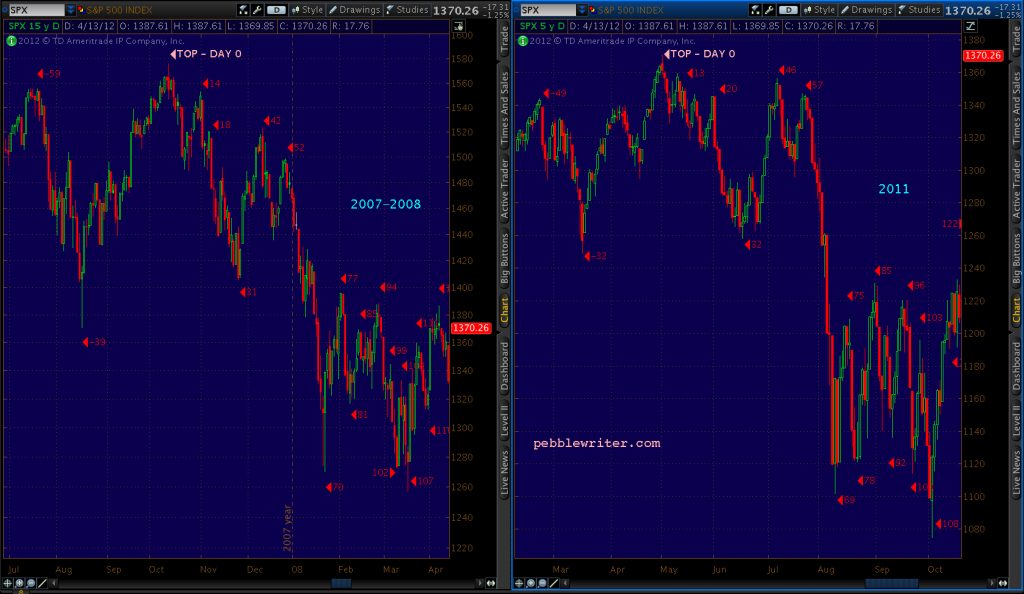

 There are still a few of us carbon-based chartists who, having seen this game played eleventy billion times before, are a bit more skeptical.
 …and USDJPY and CL pushing higher.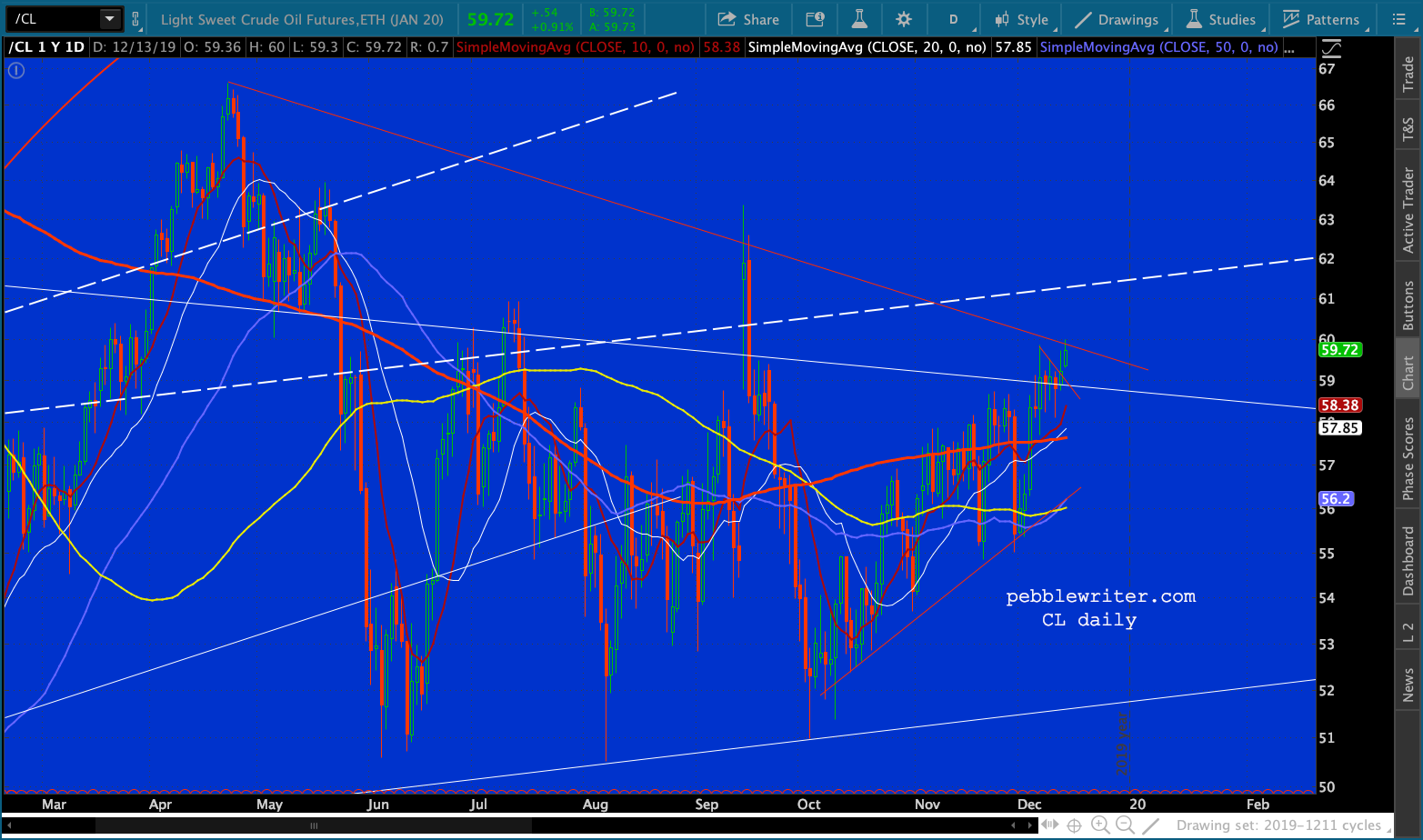

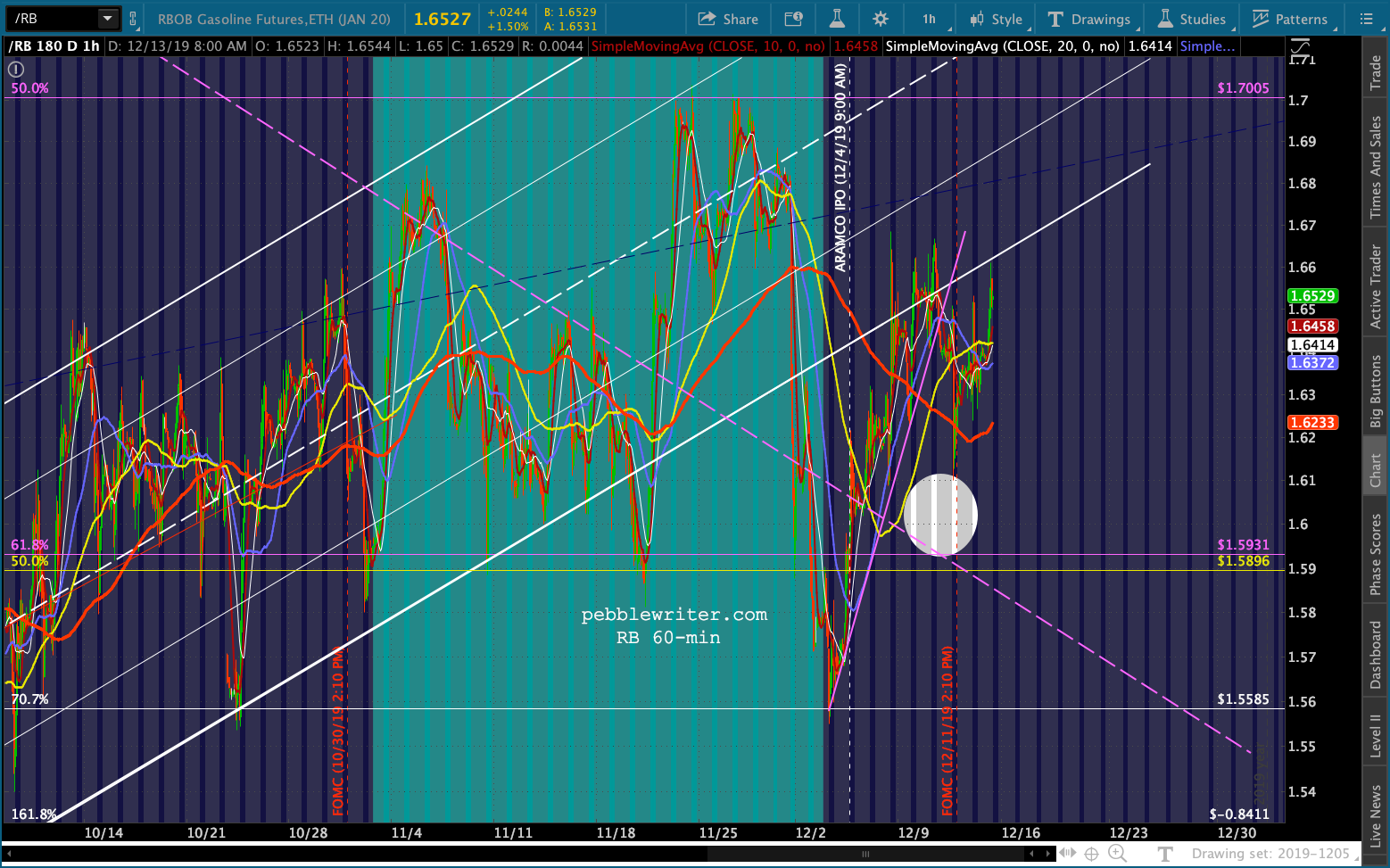
 For its part, RB is higher but still backtesting the broken white channel.
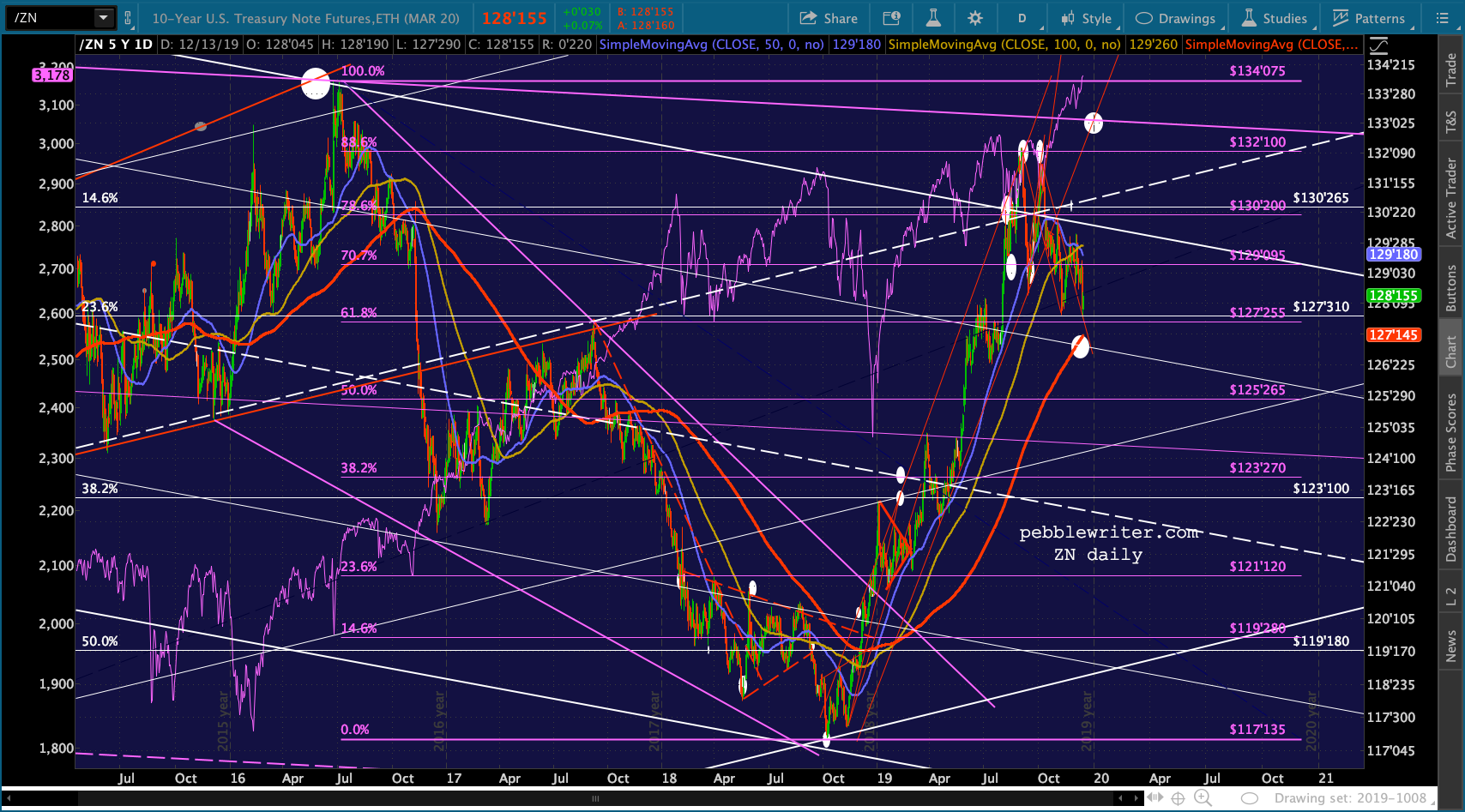
  This leaves SPX “broken out” again – an uncomfortable place to be for bears — even though the last breakout failed, initially shedding 84 points.
 As we’ve discussed, everything remains in place to “save” the market as often as necessary — as long as there isn’t a full-on panic.
 The line in the sand remains ES’ SMA10 now at 3134 (it turned up again after starting to roll over yesterday.)


